Home security does not require a fortune or a fortress mentality. Most break-ins are crimes of opportunity, which means the goal is simple: make your home a harder, less appealing target than the alternatives. You can do most of that for free, and the rest for very little.
Here is a calm, layered approach that starts with habits and builds to low-cost upgrades.
Start with the free stuff
The most effective security measures cost nothing:
- Lock everything, every time — doors, windows, the garage. A surprising share of break-ins involve unlocked entries.
- Don't advertise. Keep valuables out of window sightlines, and avoid posting that you are away.
- Make it look occupied when you are out — a light on a timer, a car in the drive, mail collected.
- Know your neighbors. A neighborhood that watches out for each other is the cheapest alarm system there is.
Cheap upgrades that punch above their price
- Reinforce your doors. Most doors fail at the frame, not the lock. A door reinforcement kit with longer strike-plate screws makes a door dramatically harder to kick in — one of the highest-value, lowest-cost upgrades you can make.
- Add motion-activated lights. Motion lights at entries and dark sides of the house remove the cover that opportunists rely on. Inexpensive and very effective.
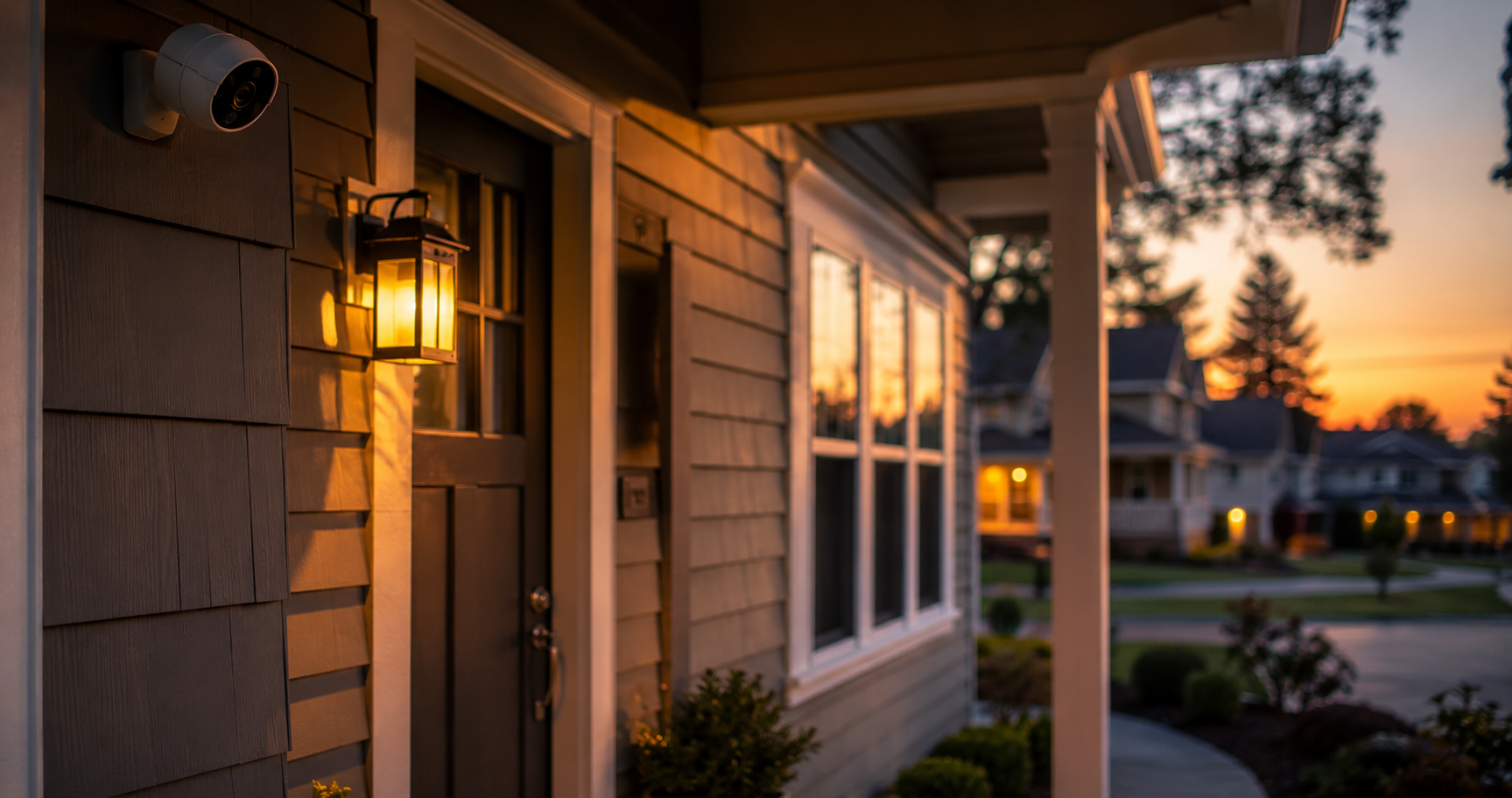
- Use visible deterrents. A camera or even a sign signals "harder target." A simple Wi-Fi security camera adds real monitoring and recorded evidence for a modest price.
Layer your security
Think of security in rings, from the street to the inside:
- Perimeter: lighting, trimmed shrubs near windows, visible cameras.
- Entry points: reinforced doors, solid locks, secured windows.
- Interior: a safe place for valuables and documents, and a plan for where your household goes and who they call.
You do not need all of it at once. Each layer you add makes your home a less attractive target.
The preparedness mindset
Security overlaps with the rest of preparedness: have a household plan for emergencies, keep communication options for when the grid is down (see Communication), and keep light and power available (see Power & Light). A prepared household is a more secure one, because it is not caught off guard.
A note on tone: the goal here is reasonable, proportionate security and peace of mind — not paranoia. The point is to remove easy opportunities, not to live on edge.
Frequently asked questions
What is the most cost-effective home security upgrade?
Reinforcing your exterior doors. Most doors give way at the frame, so longer strike-plate screws and a reinforcement kit cost little and make forced entry far harder. Motion-activated lighting is a close second.
Do security cameras actually deter break-ins?
Visible cameras and signs do deter many opportunistic intruders, who prefer easier targets. Cameras also provide recorded evidence and remote awareness, which is valuable even when they do not prevent an attempt.
Do I need a monitored alarm system?
Not necessarily. Many households get strong protection from layered basics — good locks, reinforced doors, lighting, and a self-monitored camera — without a monthly contract. A monitored system adds convenience and response, but it is optional.