
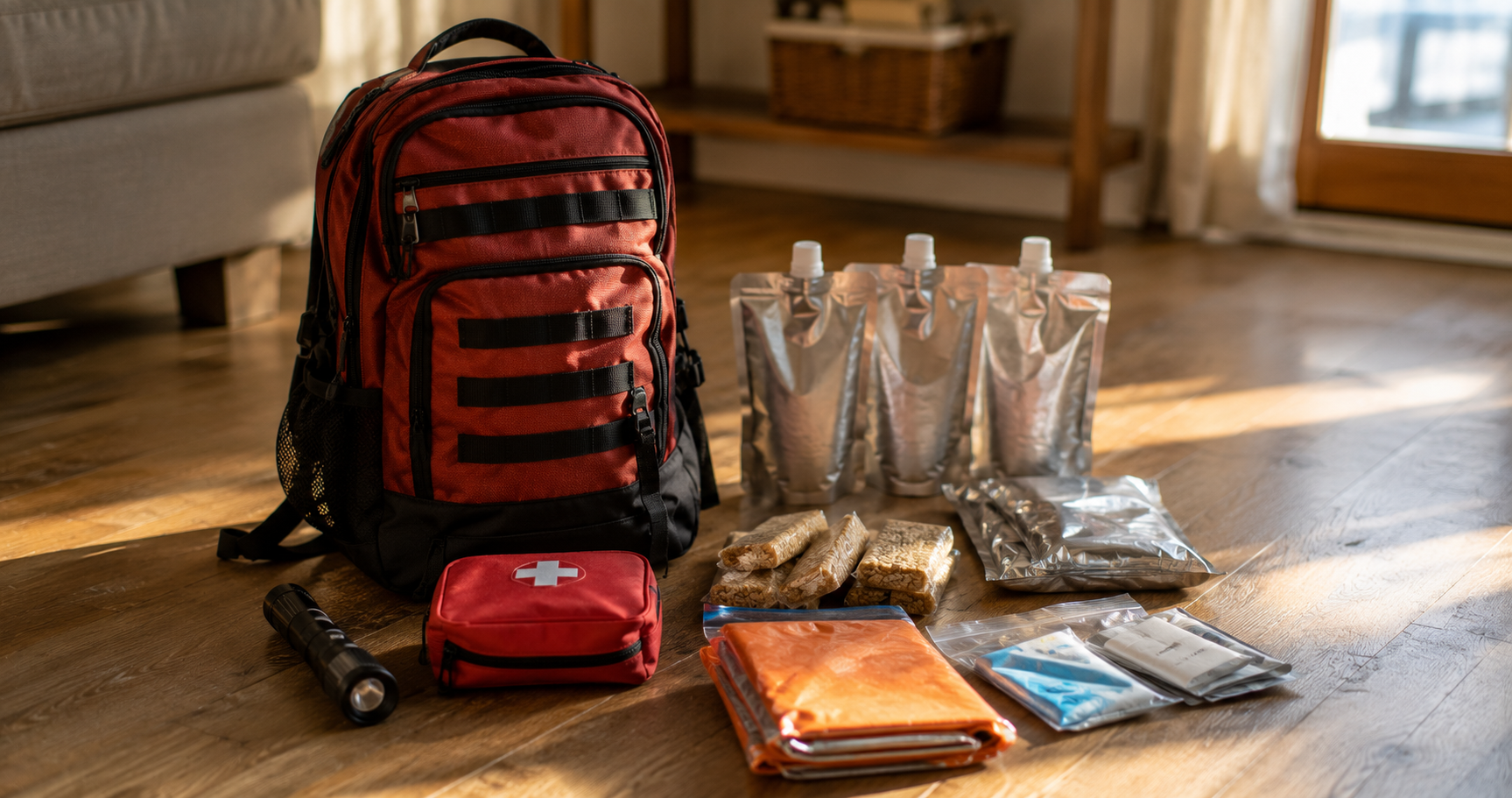
When the power goes out, the water stops, or an evacuation order comes through, the first 72 hours are the ones that matter most. That window is exactly how long emergency planners tell you to be ready to handle on your own before help, power, or supply chains catch up.
A pre-made 72-hour kit is the fastest way to cover that window without assembling everything piece by piece. The problem: most kits are padded with cheap filler so the item count looks impressive on the box. We compared the leading options on the things that actually keep you safe for three days — water, food, warmth, first aid, and light — and ranked the ones worth your money for households of one to four.
Related guides: How to Start Prepping: The Complete Beginner's Guide · Best Water Filters for Emergencies · Best Portable Power Stations for Outages · Get the free 72-Hour Emergency Kit Checklist
What separates a good 72-hour kit from filler
Before the picks, here is what we weighted. If you ever build or upgrade a kit yourself, this is the same checklist to run it against.
- Water and purification. Three days means roughly one gallon per person per day. No kit packs that much weight, so the good ones include a filter or purification tablets to stretch a small supply.
- Real calories with a long shelf life. Look for meaningful calories per person per day from food rated for years of storage, not a handful of energy chews.
- Warmth and shelter. Mylar blankets at minimum; the better kits add a poncho or emergency bivvy.
- A genuine first aid kit, not three bandages in a sleeve.
- Light and a way to charge a phone, ideally hand-crank or solar so you are not dependent on batteries that die.
- The right size for your household. A two-person kit split among four people lasts a day and a half, not three days.
- A bag you would actually carry and a maintenance plan, since food, water pouches, and batteries all expire.
How we chose these kits
We focused on kits that are widely available, come from established brands, and balance their contents toward the essentials rather than gimmicks. We weighted real-world usefulness — would the contents actually help during a three-day emergency — over how many individual items a kit could advertise. We also looked at how easy each kit is to maintain, since a kit you never refresh is a kit that fails you when it matters. Prices and exact contents change over time, so we focused on what each kit is built around rather than a snapshot spec sheet.
At a glance: our ranked picks
| Kit | Best for | Household | Standout |
|---|---|---|---|
| Sustain Supply Co. Comfort2 / Premium | Best overall | 2 to 4 people | Balanced, genuinely useful contents |
| Uncharted Supply Co. Seventy2 Pro | Best premium design | 1 to 2 people | Organized, high-quality components |
| Ready America 72-Hour Kit | Best budget starter | 1 to 4 (by size) | Covers the basics affordably |
| First My Family 4-Person | Best for families | 4 people | Built around a full household |
| ReadyWise Survival Backpack | Best food-forward | 1 to 2 people | Long shelf-life meals |
| Judy "The Safe" | Best for easy upkeep | 1 to 4 (by size) | Clean organization, simple refresh |
1. Best overall: Sustain Supply Co. Comfort2 / Premium
The Sustain Supply Co. Comfort2 and Premium packs hit the best balance of any kit we looked at. Instead of stuffing the bag with throwaway trinkets, they lean into the things you will actually reach for: multi-day food pouches, a water filtration straw, a real first aid kit, warmth, and light. The two-person Comfort2 suits a couple or a small household; the four-person Premium scales it up for a family.
What makes it our top pick is that nothing in it feels like padding. The food is calorie-dense and shelf-stable, the water filtration means you are not relying solely on the included pouches, and the first aid component is actually usable rather than a token handful of bandages. It is the kit we would hand to someone who wants one solid purchase and minimal second-guessing.
Best for: Anyone who wants one solid purchase that covers the essentials without a lot of editing.
Worth knowing: Like every kit, it skews light on water volume, so pair it with stored water at home.
sustain-supply
2. Best premium design: Uncharted Supply Co. Seventy2 Pro
If you want a kit that is organized to the point of being foolproof, The Seventy2 Pro from Uncharted Supply Co. is the one. Its components are laid out in a clear, labeled system so that in a stressful moment you are not digging blindly through a duffel. The build quality is a clear step above the budget kits, and it is designed to grab and go in seconds.
This is the kit for people who care about design and durability and are willing to pay for it. The organization is genuinely useful, not just attractive — when you are stressed, being able to find exactly what you need without thinking is worth a lot. It is sized for one to two people rather than a whole family, so it suits individuals, couples, or as a primary kit you supplement for a household.
Best for: One or two people who value design, durability, and fast access, and don't mind paying more for it.
Worth knowing: It is a premium-priced kit, and it is sized for one to two people rather than a whole family.
seventy2-pro
3. Best budget starter: Ready America 72-Hour Kit
The Ready America 72-Hour Emergency Kit is the easiest way to go from "nothing" to "something" without overthinking it. It covers the basic categories — food bars, water pouches, a light, and basic first aid — in a grab-and-go bag, and it comes in sizes from one person up to four.
We recommend it as a foundation, not a finished kit. The included food and water are basic, and the first aid kit is minimal, but that is the tradeoff for the low price. The smart play with this kit is to buy it as your baseline, then upgrade the weak spots over time — add a better water filter, a real first aid kit, and a way to charge your phone. For someone who wants to get protected today on a tight budget, it is a sensible starting point.
Best for: First-time preppers who want baseline coverage now and plan to upgrade the weak spots later.
Worth knowing: The included food and water are basic, and the first aid kit is minimal. Treat it as a foundation, not a finished kit.
ready-america
4. Best for families: First My Family All-in-One 4-Person Kit
Most kits are built for one and then "scaled" by adding a few extra pouches. The First My Family 4-Person kit is designed around a household from the start, with food and water portioned for four and enough warmth and light to go around.
If you are outfitting a family, this matters more than it sounds. A kit that was designed for one person and bulked up tends to run short on the things four people actually need at once. This one accounts for a household from the ground up, which makes it a cleaner single purchase for families of three to four.
Best for: Families of three to four who want a single kit that genuinely accounts for everyone.
Worth knowing: A four-person kit is heavy. Plan for who carries it, or split contents across two bags if you may need to move on foot.
first-my-family
5. Best food-forward: ReadyWise Emergency Survival Backpack
If your biggest worry is running out of food, the ReadyWise Emergency Survival Backpack leads with long shelf-life meals built around their freeze-dried and dehydrated food, which is rated for years of storage. It is a strong pick if you already have water and first aid handled and want the food side done right.
The advantage here is shelf life and calories — you can buy it, store it, and largely forget about it for years, which is exactly what you want from emergency food. The tradeoff is that it is food-led, so you will want to round it out with a sturdier first aid kit and a water filter to make it a complete 72-hour solution.
Best for: People who want maximum food coverage and long, set-and-forget shelf life.
Worth knowing: It is food-led, so round it out with a sturdier first aid kit and a water filter.
readywise-backpack
6. Best for easy upkeep: Judy "The Safe"
A kit you never maintain is a kit that fails you when it matters. Judy's "The Safe" is organized into clearly separated kits — warmth, safety, food and water, tools, and first aid — which makes it simple to see what you have and to swap out anything that has expired. It comes in sizes for one to four people.
The organization is the real selling point. Because everything is grouped and visible, doing a six-month check takes minutes instead of being a chore you avoid. The raw contents are comparable to other mid-range kits, so you are paying partly for the system that keeps you actually maintaining it — which, for a lot of people, is exactly the thing that makes the difference.
Best for: Anyone who knows themselves well enough to want maintenance made easy.
Worth knowing: The clean organization is the selling point; the raw contents are comparable to other mid-range kits.
judy-safe
How to choose the right one for you
- Start with household size. Match the kit to the number of people it actually needs to cover for three full days, not the optimistic number on the box.
- Decide how much you'll customize. If you want one purchase and done, go with the Sustain Supply or Judy kits. If you enjoy building things out, a budget base like Ready America plus your own upgrades costs less.
- Be honest about mobility. If there is any chance you evacuate on foot, weight and carry-ability matter more than item count.
- Plan the refresh. Whatever you buy, set a calendar reminder to check it every six months.
What even the best kits leave out
No pre-made kit is truly complete, and the brands know it. The most common gaps we see:
- Enough water. Every kit is light on water by necessity. Store your own and add a filter. (See our guide to the best emergency water filters.)
- Power for your devices. Most kits include a small light but no real way to keep a phone alive for three days. A portable power station closes that gap.
- Personal and medical items. Prescriptions, glasses, baby or pet supplies, and copies of key documents are on you to add.
For a full, printable rundown of everything to stock, grab our free 72-Hour Emergency Kit Checklist and use it to fill whatever your kit is missing.
Frequently asked questions
How long should a 72-hour kit really last?
Three full days per person it is meant to cover. Emergency planners use 72 hours as the baseline window you should be able to handle on your own before outside help or services return.
Is it cheaper to build my own kit?
Usually, yes — especially at the family size. The tradeoff is time and the risk of forgetting something. Pre-made kits buy you speed and completeness; building your own buys you savings and control.
How often should I replace the contents?
Check every six months and replace anything expired. Food, water pouches, medications, and batteries are the usual culprits. A kit that is never maintained can quietly fail right when you need it.
How many people does one kit cover?
Match the kit's rating to your actual household. A kit labeled for two people covers two people for three days — splitting it among more people shortens how long it lasts. For families, choose a kit sized for everyone or combine multiple kits.