
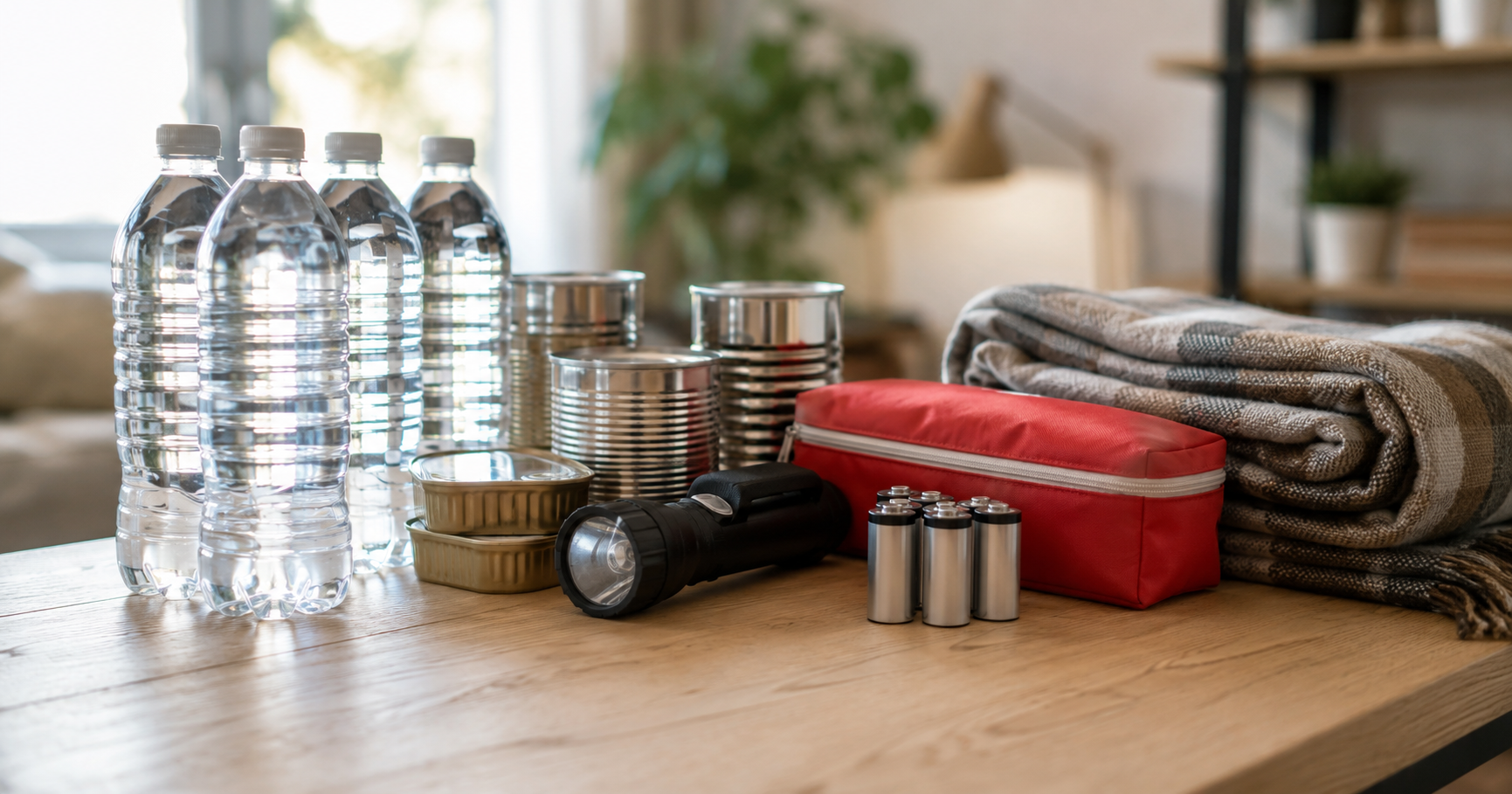
If the idea of "being prepared" feels overwhelming, you are not alone — and that feeling is exactly why most people never start. The good news is that real preparedness is not about bunkers or stockpiling for the end of the world. It is about being able to handle the first few days of a disruption — a storm, an outage, an evacuation — calmly and on your own.
This guide is the same sequence we would give a friend or family member who is just getting going. Six core areas, in priority order, with no fear marketing and no assumption that you have unlimited time or money.
Start with 72 hours, then build to two weeks
Most short-term emergencies are resolved within about three days. That is why emergency planners use 72 hours as the baseline you should be ready to handle without outside help. Build that first, get comfortable, then scale up toward two weeks as your budget allows. Trying to prep for months on day one is the fastest way to burn out and quit.
The six core areas
Everything in preparedness fits into six categories. Cover the basics in each before chasing anything exotic.
- Water — roughly one gallon per person per day for drinking and hygiene. Store what you can and have a way to filter or treat more. See our Food & Water guides.
- Food — a few days of shelf-stable food that needs no cooking, then build toward a longer supply. Start with our guide to building a food supply on a budget.
- First aid — a genuine kit plus any prescriptions your household relies on. See First Aid.
- Light and power — a flashlight or headlamp per person, spare batteries, and at least one way to charge a phone off-grid. See Power & Light.
- Communication — a way to get emergency information when the cell network is down, like a NOAA weather radio. See Communication.
- Shelter and warmth — the ability to stay warm and dry if the power is out or you have to leave. See Shelter.
The priority order that actually works
- Water and food first. These are the two things you cannot improvise and cannot live without. Start here, always.
- First aid and medications next. A minor injury or a missed prescription becomes a real problem fast in an emergency.
- Light and power. Being in the dark makes everything harder and more stressful.
- Communication and a plan. Knowing what is happening — and having a family plan — matters more than most gear.
- Shelter and warmth. Critical in cold climates and during evacuations.
The mistakes new preppers make
- Buying gear before basics. A fancy gadget does nothing if you do not have water and food handled first.
- Prepping for the wrong thing. Focus on what is actually likely where you live — storms, outages, evacuations — not movie scenarios.
- Never maintaining it. Food, water, batteries, and medications expire. A kit you never check can quietly fail when you need it.
- Forgetting the plan. The gear matters less than knowing what your household will do: where to meet, who to call, who grabs what.
What to do this week
- Fill a few containers with water and set aside three days' worth per person.
- Buy a few days of no-cook food you will actually eat.
- Put a flashlight and spare batteries somewhere you can find them in the dark.
- Download our free 72-Hour Emergency Kit Checklist and work through it one line at a time.
- Pick one of the six categories and finish it before moving to the next.
Frequently asked questions
How much does it cost to get started?
Less than most people think. The first 72 hours can be covered for the cost of a few grocery runs — water, shelf-stable food, batteries, and a basic first aid kit. You build from there at whatever pace your budget allows.
What should I prepare for first?
Whatever is most likely where you live. For most households that means power outages, severe weather, and short evacuations — not rare worst-case scenarios. Prepare for the common disruptions first.
Do I need a bunker or a year of food?
No. Start with three days, build toward two weeks, and only go further if you want to. The vast majority of emergencies are short-term, and being ready for those covers most of the risk.