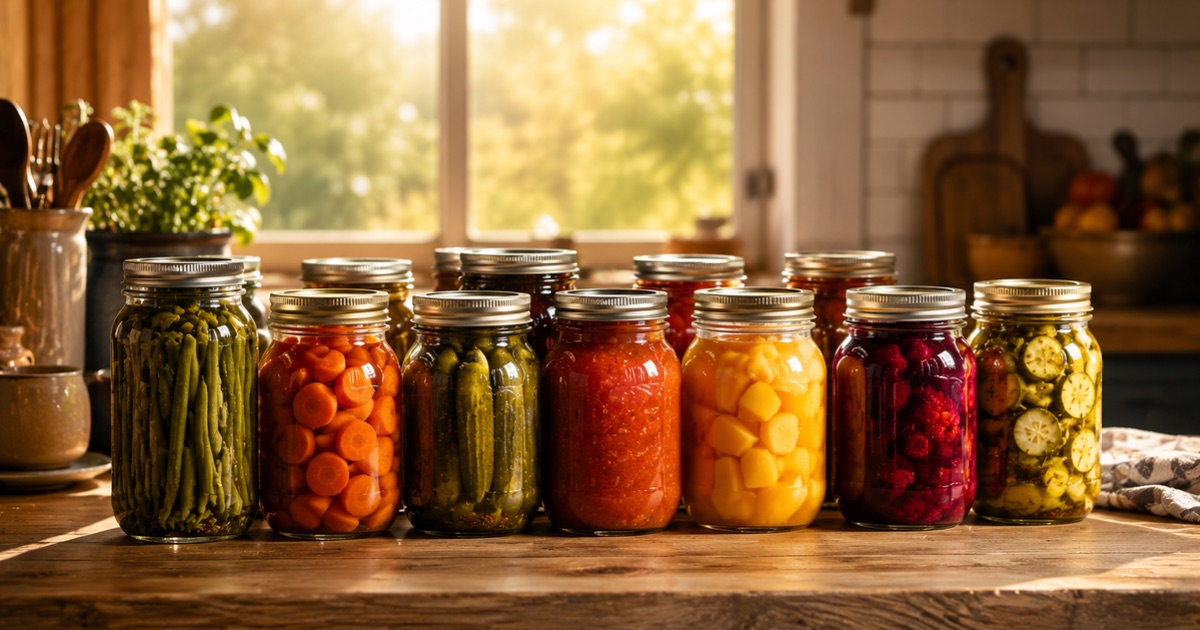
A month of food on hand sounds expensive and complicated. It is neither, if you build it the way most experienced preppers actually do: with ordinary, affordable groceries bought a little at a time, stored properly, and rotated so nothing goes to waste.
This is a plain-English plan for a 30-day supply for one person that you can scale to your household and your budget. No bulk-bunker spending required.
Why 30 days
Three days covers the typical short emergency. Two weeks covers most serious ones. Thirty days is the point where you are genuinely insulated from supply-chain disruptions, job loss, illness that keeps you home, or a longer regional event. It is a comfortable target that does not require a warehouse.
The budget approach: build it slowly
The trick that keeps this affordable is not buying it all at once. Add a few extra shelf-stable items to each normal grocery trip. Over a couple of months you will have a full supply, spread across many small purchases instead of one painful one.
- Each shopping trip, buy two or three extra non-perishable items you already eat.
- Watch for sales on staples and stock up then.
- Buy generic — store brands are usually identical for storage purposes and far cheaper.
What to buy
Focus on calorie-dense, shelf-stable foods that need little or no cooking and that your household will actually eat.
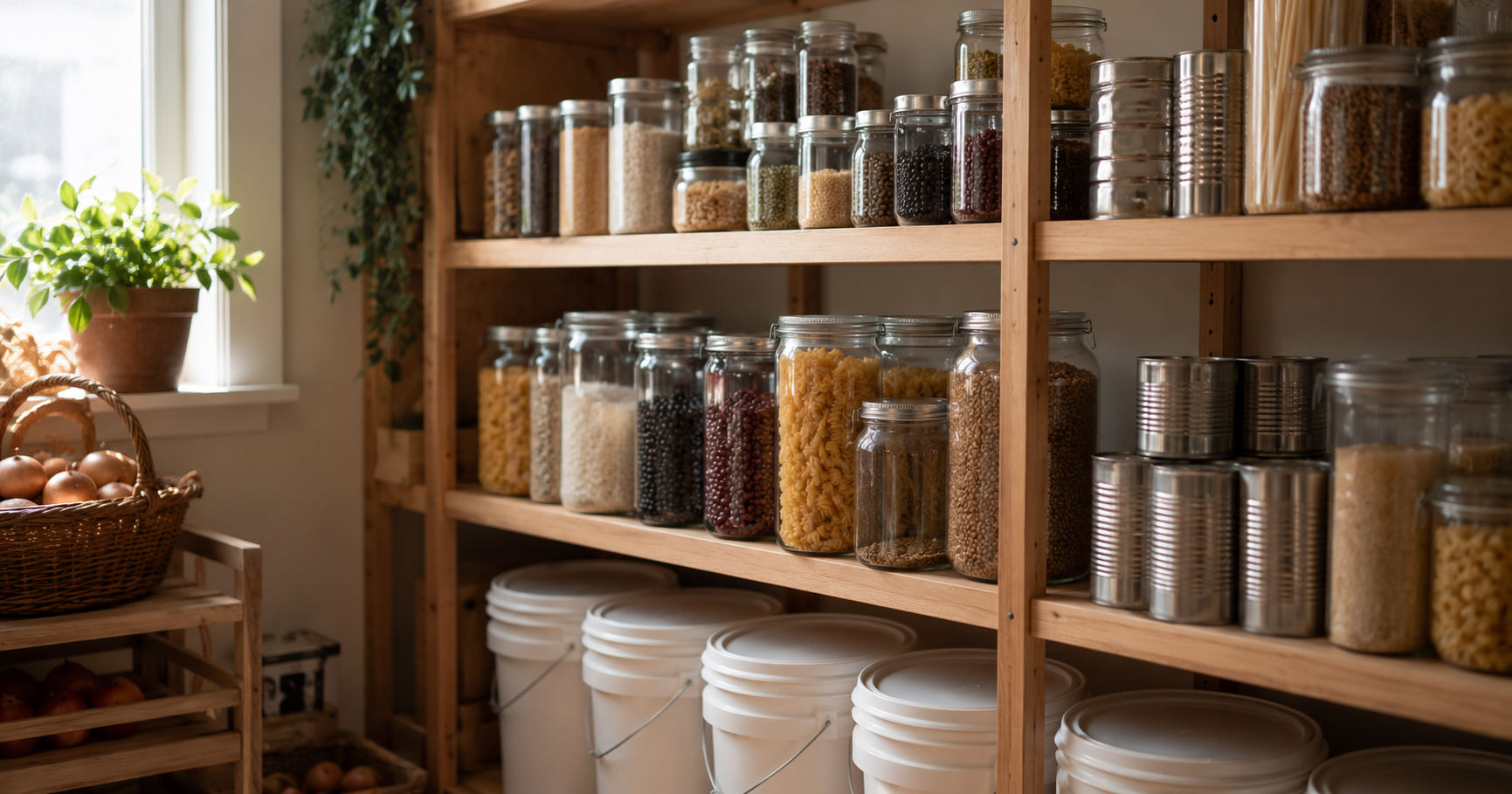
- Staples (cheapest calories): white rice, dried beans, pasta, rolled oats, flour. Bought in bulk, these cost very little per meal and store for years when packaged right.
- Canned protein and meals: beans, chili, soups, tuna, chicken, stews. Ready to eat, long shelf life.
- Fats and calories: peanut butter, cooking oil, nuts. Important — fat is calorie-dense and easy to under-stock.
- Comfort and morale: coffee, tea, hard candy, shelf-stable treats. Morale matters in a stressful stretch.
- Long-term backbone: for set-and-forget coverage, freeze-dried or dehydrated buckets like the Augason Farms emergency bucket store for decades and round out a supply built mostly from groceries.
Do not forget a manual can opener, and store extra water for cooking the dry staples.
How to store it so it lasts
Bulk staples like rice and beans will last for years — but only if you protect them from air, moisture, light, and pests. The standard method:
- Seal dry staples in mylar bags with oxygen absorbers to block air and moisture.
- Place the sealed bags inside food-grade buckets for pest and crush protection.
- Store in a cool, dark, dry place — a closet or under a bed beats a hot garage.
Canned goods need no special treatment, just a cool, dark spot and attention to dates.
Rotate so nothing is wasted
A supply you never touch will quietly expire. The fix is simple: store what you eat, and eat what you store.
- Label everything with the purchase date.
- Put newer items behind older ones (first in, first out).
- Cook from your supply occasionally and replace what you use.
Frequently asked questions
How much food is a 30-day supply?
A common planning figure is roughly 2,000 calories per person per day, so about 60,000 calories for one person for a month. Building around calorie-dense staples like rice, beans, and oils makes hitting that affordable.
How long does stored food last?
Properly sealed dry staples like rice and beans can last 10 to 30 years. Canned goods are typically good for several years past their date if stored cool and dry. Freeze-dried bucket foods often store for 25 years or more.
Do I need special equipment?
For canned and packaged goods, no. For long-term storage of bulk dry staples, mylar bags, oxygen absorbers, and food-grade buckets are inexpensive and dramatically extend shelf life.