Every time a major storm is forecast, the same scene plays out: shelves empty within hours, prices on essentials jump, and the people who waited are left with whatever's left. El Niño's stormy 2026 winter will trigger that cycle several times over. The way to beat it isn't to join the panic-buying rush the day before a storm — it's to build a steady, sensible pantry stockpile now, gradually and calmly, so you're never part of the scramble. Here's the no-waste approach to a storm-season pantry. This is part of your El Niño prep guide.
Buy extra of what you already eat
The single smartest stockpiling principle is to simply keep a deeper inventory of the normal groceries your family already uses. On each regular shopping trip, buy one or two extra of the non-perishable items you eat anyway — an extra few cans here, an extra bag of rice there. Over a few weeks this quietly builds a substantial buffer with no special "survival" purchases, no exotic foods, and no big single expense. And because it's food you actually eat, none of it goes to waste.
Build toward two weeks of staples
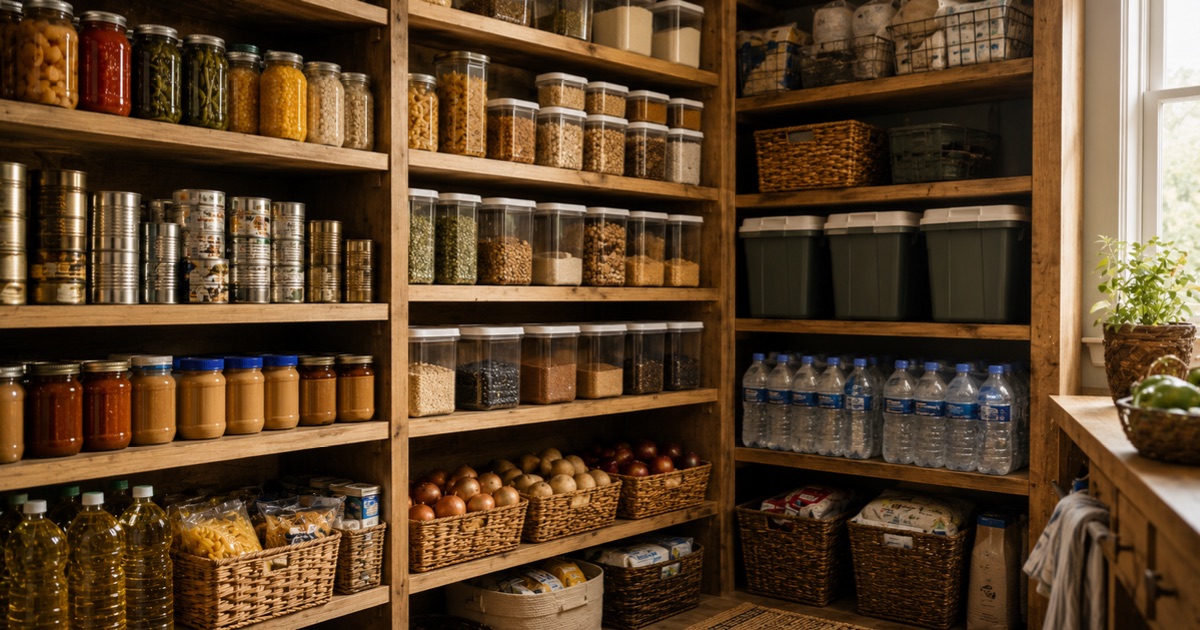
Set a clear target: two weeks of meals per person built from shelf-stable staples. Think canned goods, rice, pasta, dried beans, oats, nut butter, shelf-stable milk, cooking oil, and basic seasonings. Prioritize items that need little or no cooking, since storms often mean power outages. For a deeper, longer-lasting reserve, sealing dry staples in 1 Gallon Mylar Bags with Oxygen Absorbers (50 Pack) inside 5 Gallon Food Grade Bucket with Airtight Lid (Pack of 3) keeps them good for years, and a ready-made supply like the ReadyWise 120-Serving Emergency Food Supply lets you add weeks of meals in a single purchase when you want to jump-start the process.
Track expiration dates and rotate
A stockpile is only valuable if it's actually edible when you need it, so rotation is essential. Date your items, store newer purchases behind older ones, and use the oldest stock first in your everyday cooking, replacing as you go. This first-in, first-out habit means your stockpile stays fresh and continuously useful rather than slowly expiring into wasted money in the back of a cabinet.
Don't stockpile food alone
Food is only part of the picture. Include stored water — the foundation of any emergency supply — following the guidance in how much water to store. Add a few morale-boosting comfort foods, since a long, gray storm stretch is exactly when familiar treats matter most, especially for kids. And remember the non-food essentials that vanish from shelves just as fast: toilet paper, hygiene items, batteries, pet food, and any medications or baby supplies your household depends on.
Keep a written inventory
You can't manage what you don't track. Keep a simple inventory — a notebook, a whiteboard, or a note on your phone — listing what you have and roughly how much. It tells you at a glance what to restock, prevents you from accidentally buying duplicates of things you're already deep in, and shows you the gaps before a storm reveals them the hard way. It takes minutes to maintain and saves both money and stress.
Restock before, not during
The whole point of a stockpile is to take you out of the last-minute rush, so maintain it that way. Top off your supplies at the start of storm season and after each time you draw it down — not when a storm is already in the forecast and the shelves are bare. Buying ahead of demand means lower prices, full shelves, and no stress, which is the entire advantage of stockpiling in the first place.
A sample two-week pantry
If a blank shopping list feels daunting, here's a simple framework to build from for one person for two weeks, then scale up by household size: rice and pasta for filling staples; canned beans, tuna, and chicken for protein; peanut butter and nuts for calorie-dense no-cook fuel; canned vegetables, fruit, and soup; oats and shelf-stable milk for breakfasts; crackers and granola bars for grab-and-go; and cooking oil, salt, and basic seasonings to make it all palatable. Add coffee or tea and a few comfort snacks for morale. This isn't rigid — swap in the foods your family actually eats — but it shows how quickly a real two-week supply comes together from ordinary groceries.
Frequently asked questions
How is sensible stockpiling different from hoarding?
Stockpiling is steady, planned buying of modest extras over time, building a reasonable buffer without disrupting anyone. Panic-hoarding is last-minute bulk buying that strips the shelves for everyone else. Build gradually, well ahead of any storm, and you sidestep the rush entirely while everyone else fights over the last cans.
How much should I stockpile?
Two weeks of food and water per person is a solid, achievable target for storm season. Build it from staples and ready-to-eat items you already eat, and add longer-term storage items like mylar-sealed grains as your budget allows. You can extend beyond two weeks if you have the space and want more cushion.
Won't a stockpile just go to waste?
Not if you rotate it. Store what you normally eat, date everything, and cook your oldest items first while replacing them. Done this way, your stockpile is just a deeper version of your regular pantry that's constantly cycling through, not a forgotten stash quietly expiring in a corner.
What non-food items should I stockpile for storm season?
Stored water first and foremost, plus toilet paper and hygiene supplies, batteries, flashlights, any prescription and over-the-counter medications, first aid supplies, pet food, and baby items if relevant. These essentials disappear from shelves as fast as food when a storm is coming.
When is the best time to build my stockpile?
Now — well before storm season peaks. Building ahead of demand means full shelves, normal prices, and zero stress. Then simply maintain it by restocking what you use, so you're always ready without ever having to make a panicked, expensive run before a storm.