A long power outage can turn a full fridge into a few hundred dollars of spoiled food, and worse, into a food poisoning risk if you guess wrong about what's safe. The good news: with a little prep and a few simple rules, you can keep most of it cold for days and know exactly what to toss.
Here's how long food really lasts, how to stretch it, and how to tell what's still safe, based on USDA food safety guidance.
How Long Food Stays Safe
These are the numbers to remember, and they only work if you keep the doors closed:
- Refrigerator: about 4 hours.
- Full freezer: about 48 hours.
- Half-full freezer: about 24 hours.
Every time you open the door to check, you let the cold out and shorten those times. So decide what you need, grab it fast, and close the door.
Before the Storm: Set Yourself Up
A few minutes of prep makes a big difference:
- Put appliance thermometers in your fridge and freezer. They're cheap, and they take the guessing out of "is this still safe?" Your fridge should be at 40°F or below, and your freezer at 0°F or below.
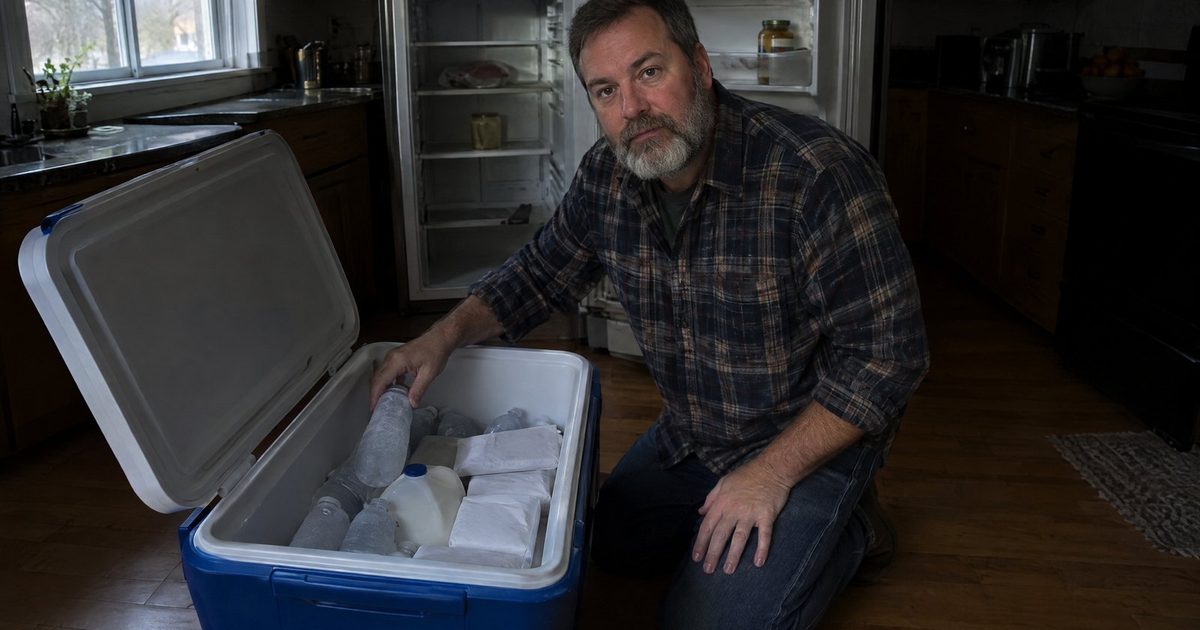
- Freeze water. Fill containers or zip-top bags with water and freeze them. They fill empty freezer space, which helps everything stay frozen longer, and they double as ice packs or drinking water later.
- Turn the fridge and freezer to their coldest settings a day before a big storm.
- Group food together in the freezer. Packed-together food stays cold longer than scattered items.
- Have a cooler ready, along with a plan for where to buy ice or dry ice.
The Quarter Trick
Here's a simple trick for when you leave home during a storm. Freeze a cup of water solid, set a coin on top of the ice, and put it back in the freezer. When you come home:
- The coin is still on top: your freezer stayed frozen.
- The coin sank partway: food partially thawed and refroze.
- The coin is at the bottom: everything thawed completely. Throw out the perishables.
It's the easiest way to know what happened while you were gone, even if the power came back on and the freezer feels cold again.
During the Outage: Stretch the Cold
- Keep the doors shut. This is the single most important rule.
- Eat the fridge food first, then the freezer food. The fridge warms up fastest.
- Move dairy, meat, and leftovers to a cooler with ice if the outage is going to last more than four hours.
- Use dry ice for long outages. USDA guidance says about 50 pounds of dry ice should keep a full 18-cubic-foot freezer cold for about two days. Always handle dry ice with gloves and keep the area ventilated.
- Use block ice over cubed ice in coolers. It lasts much longer.
Backup Power for the Fridge
A portable power station can run a refrigerator for a while, which may be enough to get you through a shorter outage. A unit like the Jackery Explorer 1000 v2 Power Station can power a fridge in cycles: run it for a bit to bring the temperature down, then unplug it. Fridges pull extra power when they start up, so check that your power station can handle that surge. Our Power Outage Essentials for El Niño Storm Season explains how to size one.
If you use a gas generator instead, it must always run outdoors, far from windows and doors.
After the Outage: What to Keep and What to Toss
Follow the USDA's simple rule: when in doubt, throw it out. Never taste food to check if it's safe.
Toss perishable food that's been above 40°F for more than 2 hours, including:
- Meat, poultry, seafood, and deli meats
- Milk, soft cheeses, yogurt, and cream
- Cooked leftovers, cooked pasta, and rice
- Eggs and egg dishes
- Opened mayonnaise, tartar sauce, and creamy dressings
Usually fine even when warm:
- Hard cheeses
- Butter and margarine
- Whole fruits and vegetables
- Ketchup, mustard, jelly, peanut butter, and most condiments
- Bread
Frozen food that still has ice crystals, or that's been kept at 40°F or below, can usually be refrozen safely, though the texture may suffer.
Plan Meals Around No-Cook Foods
The best way to avoid wasting food in an outage is to not depend on the fridge in the first place. Keep a stash of shelf-stable, no-cook foods like canned proteins, peanut butter, crackers, and shelf-stable milk. Our emergency food stockpile guide shows how to build two weeks of meals that don't need a fridge or stove.
Frequently Asked Questions
How long will food last in the fridge without power?
About 4 hours if you keep the door closed. After that, move perishables to a cooler with ice.
How long does a freezer stay cold without power?
About 48 hours if it's full and about 24 hours if it's half full, as long as the door stays closed.
Can I refreeze food that thawed during a power outage?
If it still has ice crystals or has stayed at 40°F or below, it can usually be refrozen safely. If it's been above 40°F for more than 2 hours, throw it out.
How do I know if my food thawed while I was gone?
Use the coin trick: freeze a cup of water, put a coin on top, and check where the coin is when you get home. If it sank to the bottom, your food fully thawed.