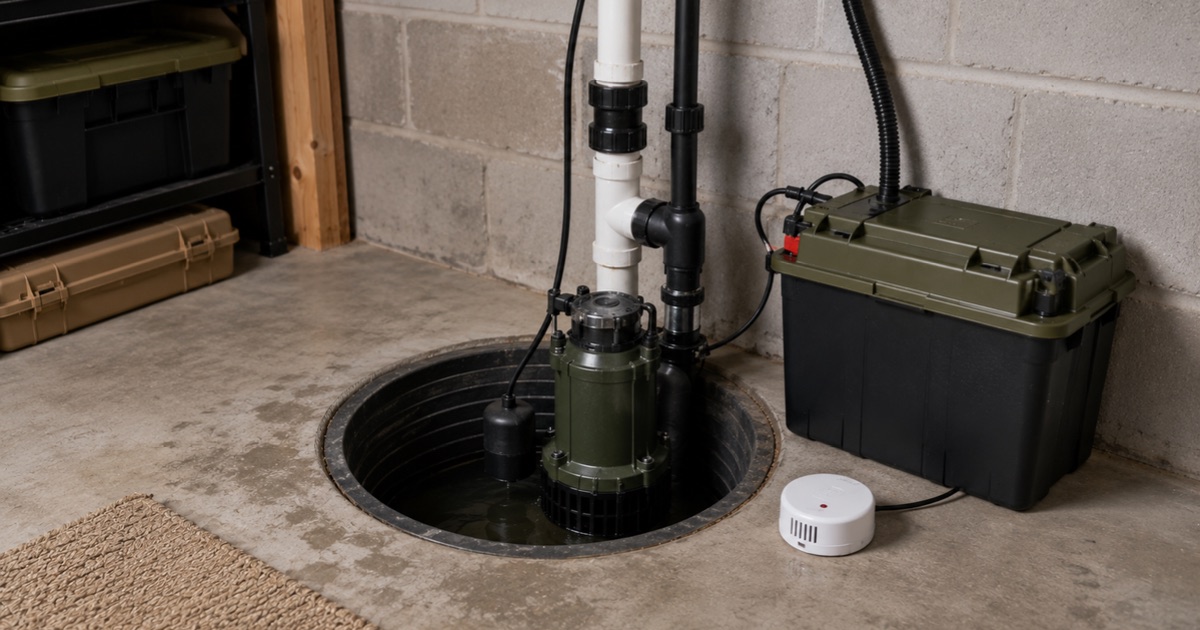
A strong El Niño winter means more storms across the southern U.S., and more storms means more downed trees, more downed lines, and more nights in the dark. Most outages are short. Some last days. The difference between a short outage being a nuisance and a long one being a crisis is what you have ready before the lights go out.
This list covers the essentials, from a $30 power bank to a full backup setup, organized by what each one does. Everything here is saved in our Power Outage Essentials list on Amazon.
1. Backup Power: A Portable Power Station
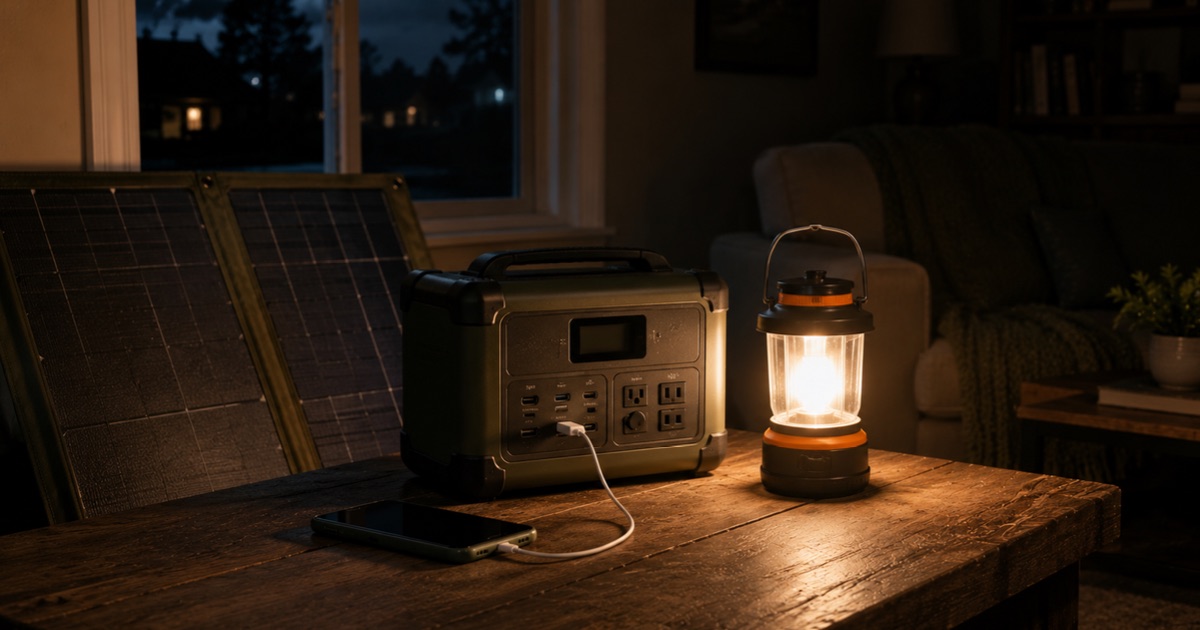
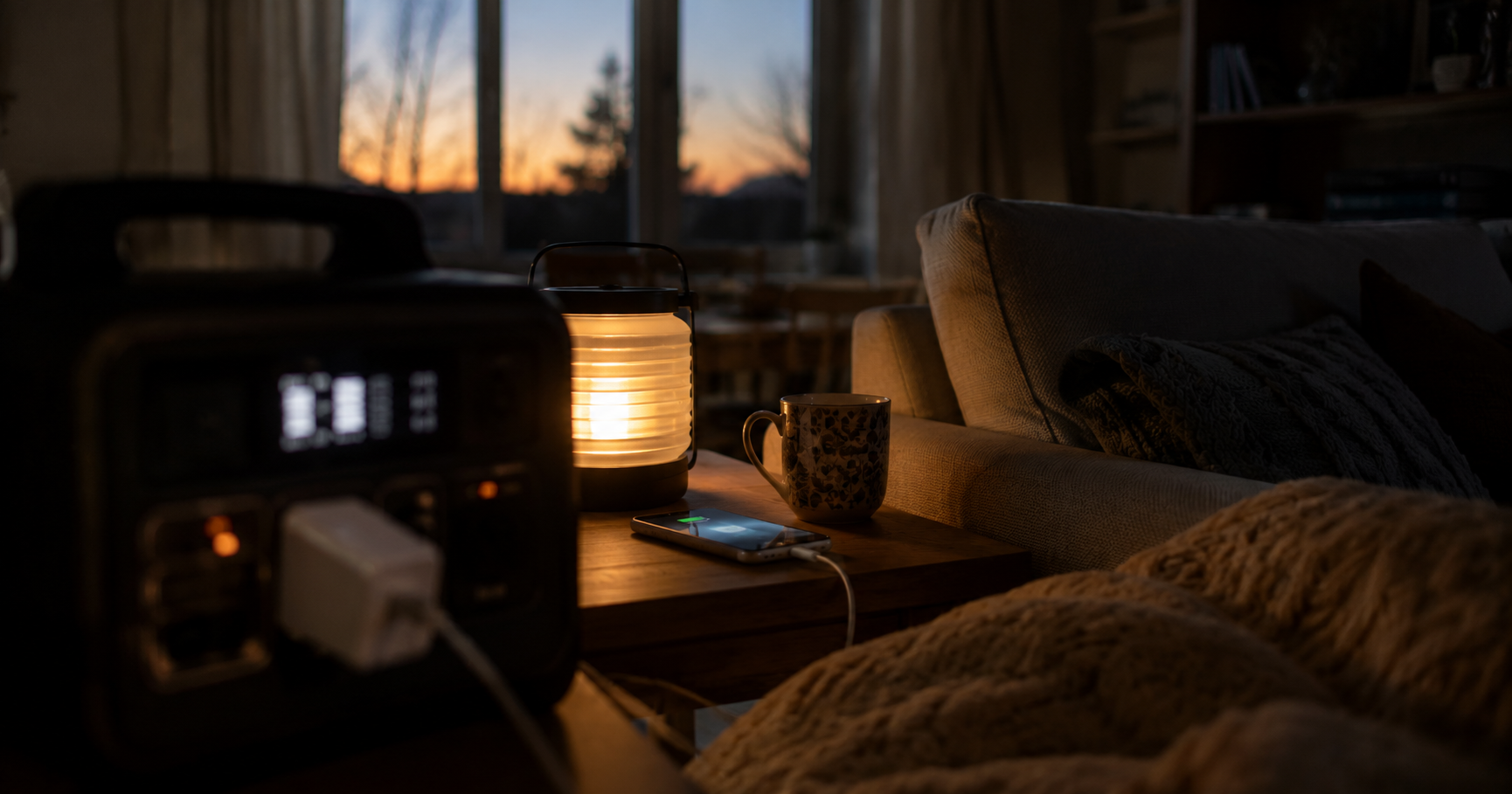
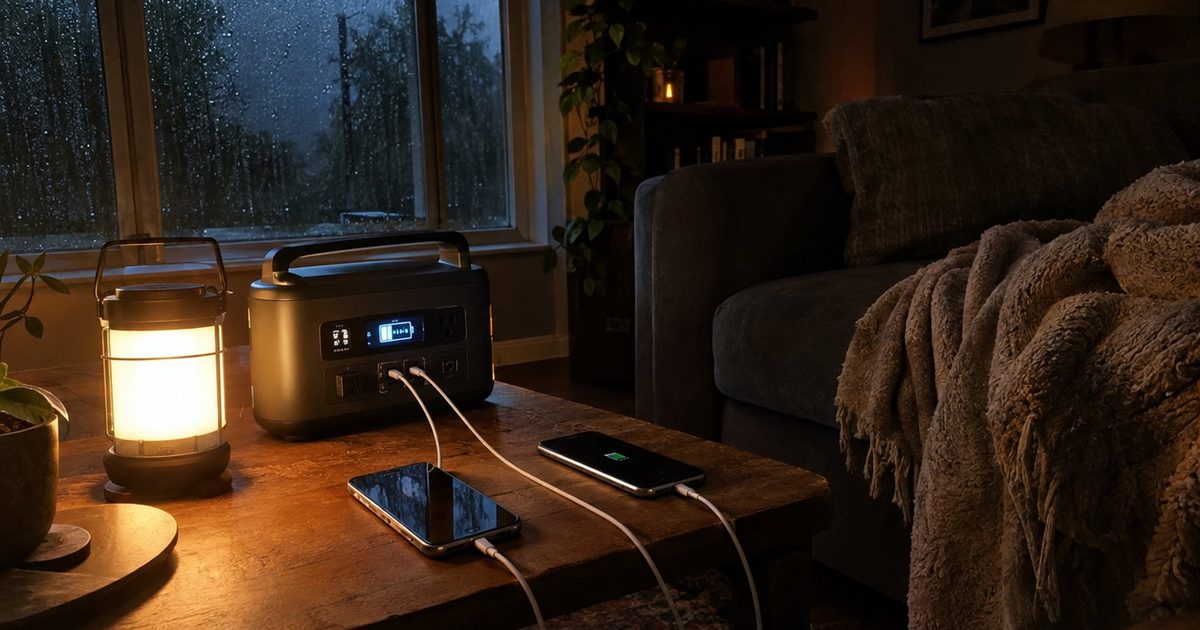
A portable power station is a big rechargeable battery with regular outlets and USB ports. It's the single most useful outage purchase for most households, because it's silent, makes no fumes, and is safe to use indoors, unlike a gas generator.
- For most homes: the Jackery Explorer 1000 v2 Power Station runs phones, lights, a Wi-Fi router, a CPAP machine, and even a mini fridge for a while.
- For bigger needs: the EcoFlow Delta 3 Power Station is another strong option with fast recharging.
Not sure what size you need? Add up what you want to run and for how long. A Wi-Fi router uses roughly 10 watts, so 10 hours is about 100 watt-hours. A CPAP without its heated humidifier often uses somewhere around 30 to 60 watts, so a full night might take 300 to 500 watt-hours. A few phone charges add a little more. Add it up, leave some extra room, and you'll know whether a mid-size or large unit fits your home. Our portable power station guide compares models side by side.
2. A Way to Recharge: Solar
A power station is only as good as your ability to refill it. In a multi-day outage, a folding solar panel like the Renogy 100W Folding Solar Panel recharges it during daylight, even on a cloudy day, though more slowly. Pair the two and your essential power can last as long as the sun keeps coming up.
3. Phone Power: A Large Power Bank
Your phone is your flashlight, your news, and your line to family. A pocket-size Anker 20,000mAh Power Bank charges most phones several times over. Keep it charged year-round, and top it off whenever a storm shows up in the forecast. For more ideas, see how to keep your phone and essentials powered.
4. Light: Lanterns and Headlamps
Every storm season, candles start house fires. Battery LED lighting is safer and brighter.
- Lanterns: a multi-pack like the Lichamp LED Camping Lanterns, 4 Pack lets you put one in each room and one in the bathroom.
- Headlamps: an Energizer PRO-260 LED Headlamp keeps your hands free for cooking, checking the breaker box, or carrying a toddler to the bathroom. Give one to every adult.
5. Batteries That Last
Disposable batteries go stale in a drawer. Rechargeable AAs like the Energizer Rechargeable AA Batteries, 16 Pack can be topped off from your power station or a solar panel, so your lanterns and radio keep running through a long outage.
6. Information: A Weather Radio
When the power's out and the cell network is overloaded, a radio tells you what's happening, which roads are closed, and when the power might be back. The FosPower Solar Hand-Crank NOAA Radio picks up NOAA alerts and can be powered by its solar panel, a hand crank, or batteries. It can even give your phone a small emergency charge.
7. Safety: A Carbon Monoxide Alarm
This is the one people skip, and it's the one that saves lives. Every outage season, people are poisoned by generators, grills, and camp stoves used in or near the house. A battery-powered alarm like the Kidde Battery-Powered CO Detector still works when the power's out. Put one on every level of your home and near the bedrooms.
Three Setups for Three Budgets
- Basic: power bank, lanterns, headlamps, weather radio, CO alarm. Covers a typical overnight outage.
- Comfortable: add rechargeable batteries and a power station. Now you can run a router, a CPAP, and lights for a day or more.
- Multi-day: add the solar panel. This is the setup for rural homes, the end of a power line, or anyone with medical devices.
What to Do When the Power Goes Out
- Check whether it's just your house (look at your breaker panel) and report the outage to your utility.
- Keep the fridge and freezer closed. A full freezer can hold food safely for about 48 hours if you leave the door shut.
- Switch to lanterns and headlamps, never candles.
- Unplug sensitive electronics to protect them from a surge when power returns, but leave one light on so you know when it's back.
- If you run a generator, keep it outside, far from windows and doors.
For the full checklist, see power outage prep for storm season.
Frequently Asked Questions
What's the most important thing to have during a power outage?
A reliable light source and a way to charge your phone. LED lanterns and a charged power bank cover most short outages.
Is a power station better than a generator?
For most households' essentials, yes. Power stations are quiet and safe indoors. Gas generators make more power but must always run outside, at least 20 feet from the house.
How long will a power station last in an outage?
It depends on its size and what you plug in. A mid-size unit can keep phones, lights, and a router going for a day or more, and a solar panel can stretch that much further.
Do I really need a carbon monoxide alarm?
Yes. Outages lead to more generator, grill, and heater use, and CO poisoning is a leading cause of outage deaths. Use a battery-powered alarm so it works when the power's out.
Shop the full list on our Amazon storefront