When the power goes out, the thing most people miss first is not heat or even light — it is the ability to keep a phone alive. Your phone is your link to emergency information, family, and help. Keeping it and a few other essentials powered through an outage is simpler and cheaper than most people assume, if you build it in layers.
Think in layers, not one big purchase
The smart approach is several backups that scale with how long the outage lasts:
- Layer 1 — power banks for phones and small devices (hours to a couple of days).
- Layer 2 — a way to recharge when the banks run down (solar, hand-crank, or your car).
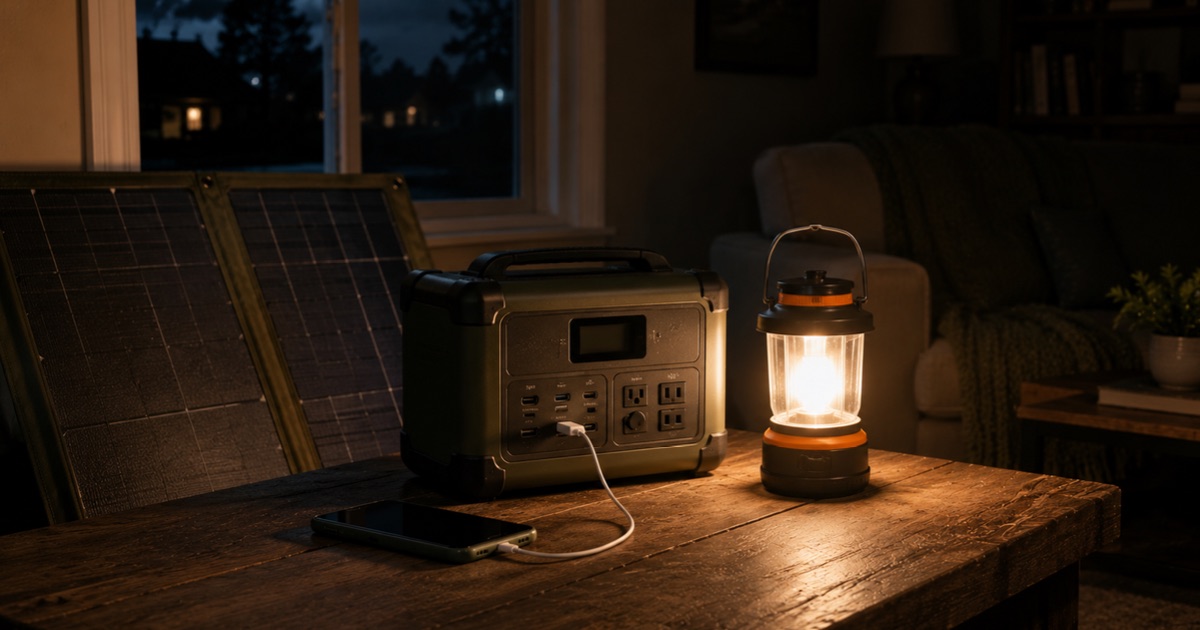
- Layer 3 — a power station for running lights and bigger essentials over a longer outage.
You do not need all three at once. Start with layer 1 and build outward.
Layer 1: Power banks
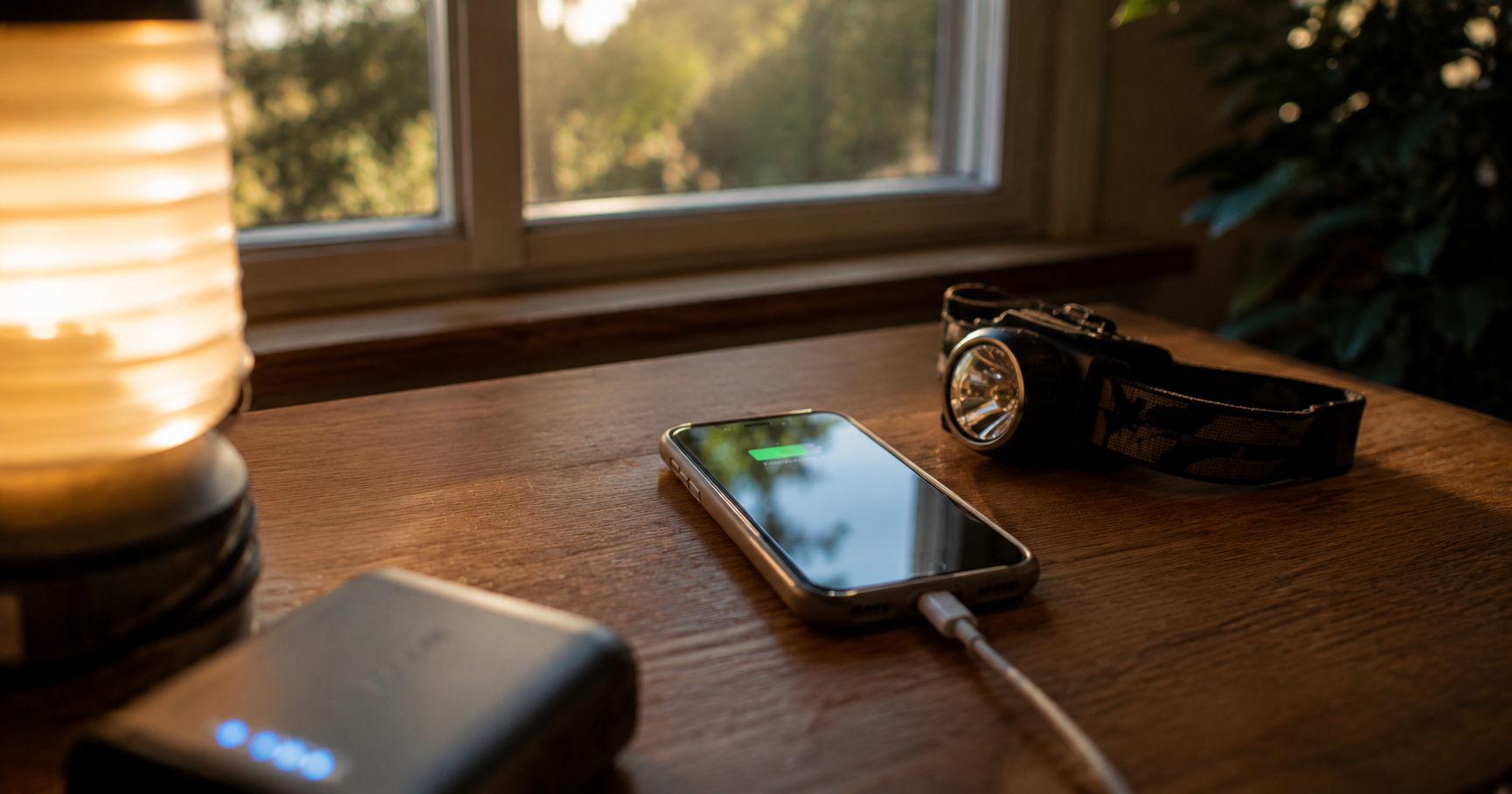
A couple of high-capacity power banks, kept charged, will refill a phone several times over. This is the cheapest, easiest first step and covers the majority of short outages.
- Buy at least one large-capacity bank per person.
- Keep them topped up — check every month or two.
- Store charging cables with them so you are not hunting for cords in the dark.
Layer 2: A way to recharge
Power banks run down, so you need a way to refill them when the grid is out:
- Solar: a folding solar charger recharges banks and phones whenever the sun is out — ideal for outages lasting more than a day.
- Hand-crank: a hand-crank charger/radio gives you emergency power and weather information with no fuel or sun required — a reliable fallback.
- Your car: a vehicle is a large battery — you can charge devices from it (run it safely, outdoors only, and briefly).
Layer 3: A power station for bigger needs
For longer outages or essential devices — a CPAP, medical equipment, lights, a router, fridge stints — a portable power station does what power banks cannot. It is the upgrade once you have the basics covered. See our best portable power stations guide for picks.
Don't overlook the simple stuff
- Charge everything when a storm is forecast — phones, banks, laptops, the power station.
- Switch your phone to low-power mode and dim the screen to stretch the battery dramatically.
- Keep a headlamp per person so you are not draining your phone for light.
- Have spare batteries for flashlights and your weather radio.
Frequently asked questions
How can I charge my phone during a power outage?
A charged power bank is the simplest answer and covers most outages. For longer events, recharge the bank with a folding solar panel, a hand-crank charger, or your car. Switching your phone to low-power mode makes any of these last much longer.
How big a power bank do I need?
A large-capacity bank (often in the 20,000 mAh range or higher) will recharge a typical phone several times. One per person is a good baseline; add more or a power station if you have higher needs.
Is it safe to charge devices from my car?
Yes, with care. Your car can charge devices through its outlets, but never run the engine in an enclosed space like a garage — carbon monoxide is deadly. Run it outdoors and only as needed.