Here's the cruel irony of basement flooding: the same storm that floods your basement is the storm that knocks out the electricity your sump pump needs to run. Your pump and the power grid fail at the exact same moment, for the exact same reason. If you have a basement anywhere El Niño is bringing heavy rain in 2026, sump pump readiness — and specifically backup power for it — is not optional. Here's how to make sure your basement's last line of defense actually works when the water rises. This supports the flood preparedness checklist.
How a sump system actually works
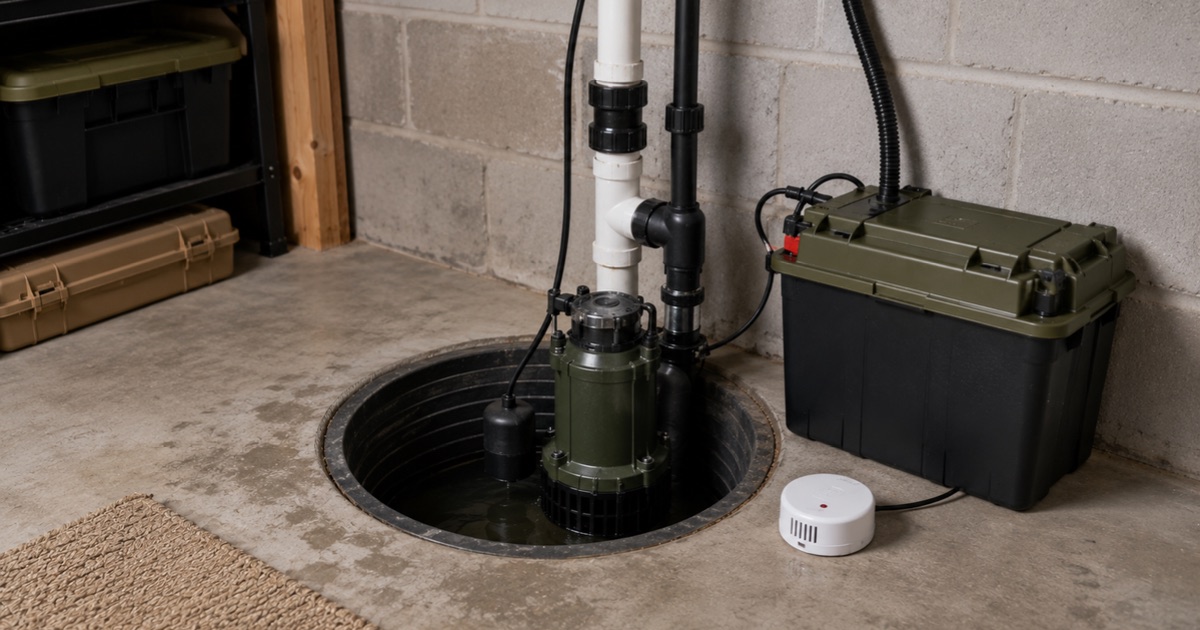
Understanding the chain helps you find its weak links. Groundwater collects in a pit (the sump basin) at the lowest point of your basement or crawlspace. As water rises, it lifts a float switch, which triggers the pump. The pump then pushes the water up and out through a discharge pipe that carries it away from your foundation. Every link in that chain — the pit, the float, the pump, the power, and the discharge path — has to work, and power is the one that fails first in a storm.
Test your pump before storm season
Don't wait to discover a dead pump while your basement fills. Test it now: slowly pour a five-gallon bucket of water into the pit and confirm the pump switches on, drains the water, and shuts off cleanly. Listen for unusual noises and watch that the float moves freely. Do this at the start of every storm season and again before any major forecast event.
Add a battery-backup pump
The gold standard is a primary pump plus a dedicated battery-backup pump. When the power fails, the backup kicks in automatically and keeps pumping for hours on its own battery — covering you through exactly the outage that threatens to flood you. These systems run intermittently for roughly 5 to 24 hours depending on how often the pump cycles and how heavy the inflow is. In a high-risk home, this is the most important upgrade you can make.
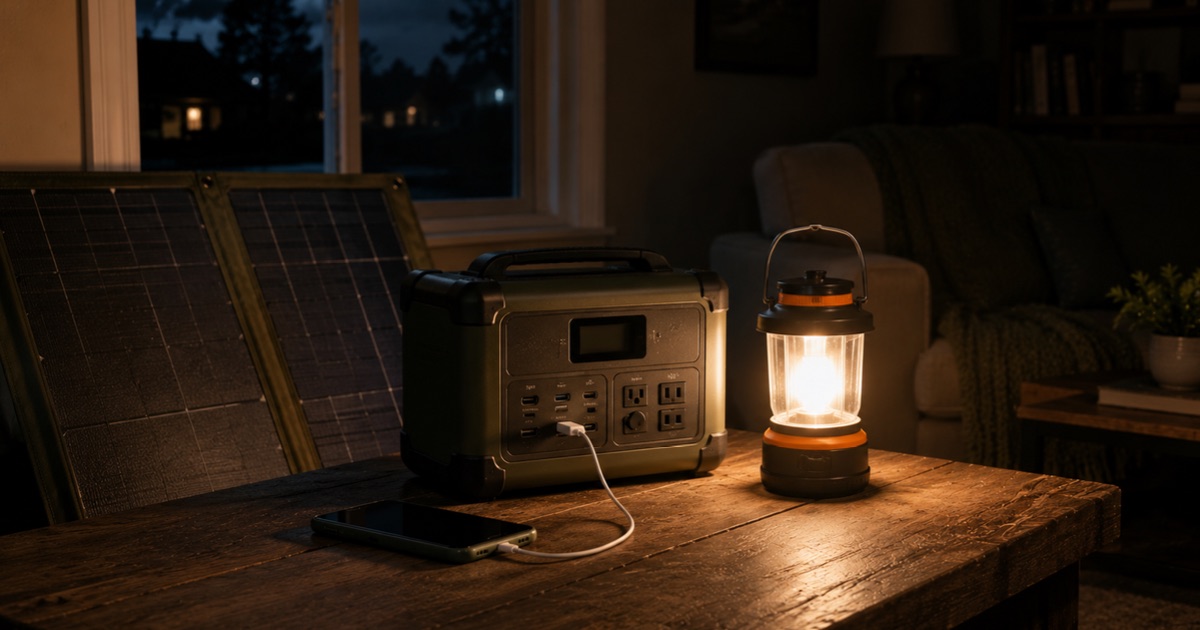
A battery power station such as the jackery-1000 can also run a sump pump in a pinch, provided its continuous output covers the pump's running and startup surge — check both numbers, because pumps draw a spike of power the instant they start. Keep a power-bank-large charged too, so your phone stays alive to monitor weather alerts and water-level notifications.
Install a basement water alarm
A simple, inexpensive water alarm sits on the floor near your pit and sounds the instant water rises above a set level. It gives you a crucial head start — a chance to respond before a slow leak or a struggling pump becomes a flooded floor. Some models even send a notification to your phone. For a few dollars, it's one of the best early-warning investments you can make.
Keep the pit clear and the discharge open
Debris, gravel, and silt are a pump's enemies. They clog the intake and can jam the float switch in the "off" position, so the pump never starts even with power. Inspect the pit periodically and clear out any buildup. Outside, make sure the discharge pipe is clear, not frozen, and directs water well away from the foundation — otherwise you're just pumping the same water back to where it came from.
Have a manual backup
When everything electric fails, a manual hand pump or even a wet/dry shop vacuum becomes your last resort. It's slow and laborious, but it beats standing water rising around your furnace and water heater. For serious flood-zone homes, a hand pump is cheap insurance to keep on hand.
Consider a water-powered backup pump
If you have municipal water service, a water-powered backup pump is worth knowing about. Instead of a battery, it runs on your home's water pressure to pump out the pit, which means it never runs out of charge during a long outage — a real advantage when the power may be off for days. The tradeoff is that it uses some municipal water to operate and isn't an option for homes on a well. For many flood-zone homeowners, a battery backup is the simplest choice, but a water-powered unit is a compelling alternative or even a third layer of redundancy for a basement you absolutely cannot afford to flood.
Frequently asked questions
How long does a battery-backup sump pump last?
Most run intermittently for 5 to 24 hours on a single charge, depending on how often the pump has to cycle. Heavy, continuous inflow drains the battery faster, so if you're in a high-risk area, choose a larger-capacity battery or keep a second one charged and ready to swap.
Can a portable power station run my sump pump?
Often yes, as long as the station's continuous wattage output comfortably exceeds the pump's running wattage and can handle its startup surge, which is typically two to three times the running figure. Check both numbers on your pump's label before relying on this.
How often should I test my sump pump?
At least twice a year, and again before any major storm season or forecast event. Pour water into the pit to confirm the pump activates and drains properly, inspect the pit for debris, and verify the discharge line is clear and aimed away from the house.
Why isn't my sump pump turning on even though it has power?
The most common culprit is a stuck float switch — jammed by debris or against the pit wall — so the pump never gets the signal to start. A clogged intake or a tripped breaker are other frequent causes. Regular cleaning and testing catch these before they matter.
Do I need a sump pump if I've never had a flooded basement?
If you have a basement in an area where El Niño is raising flood risk, a sump pump plus backup power is wise insurance even without past flooding, because saturated ground and record rainfall can overwhelm homes that have always stayed dry. Past performance isn't a guarantee in an unusual season.