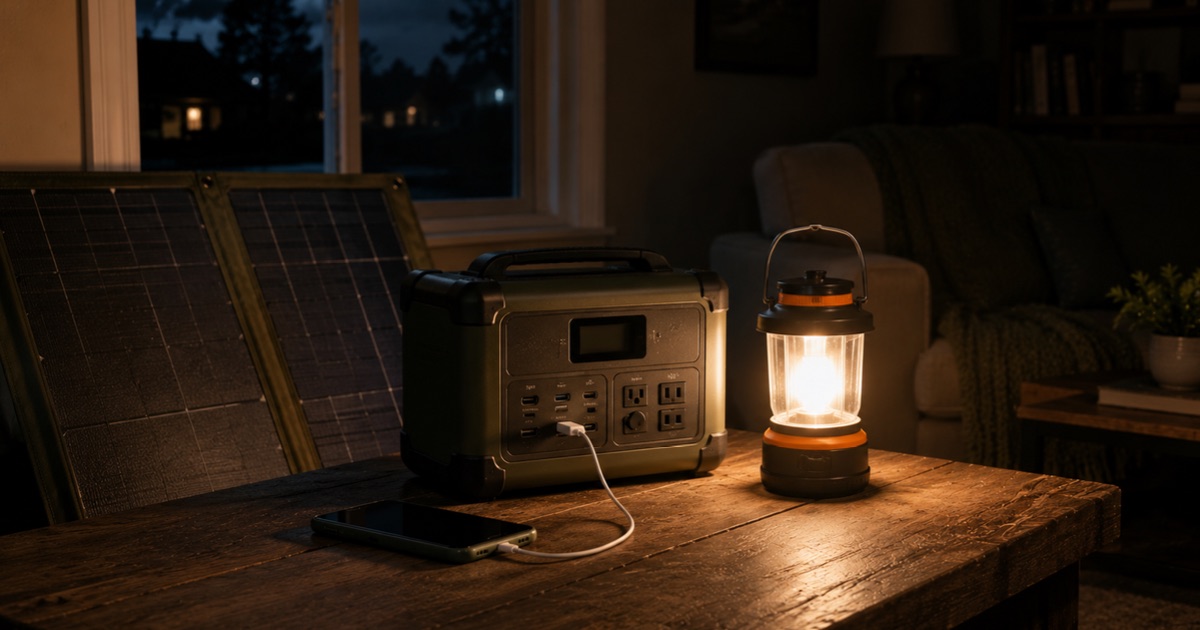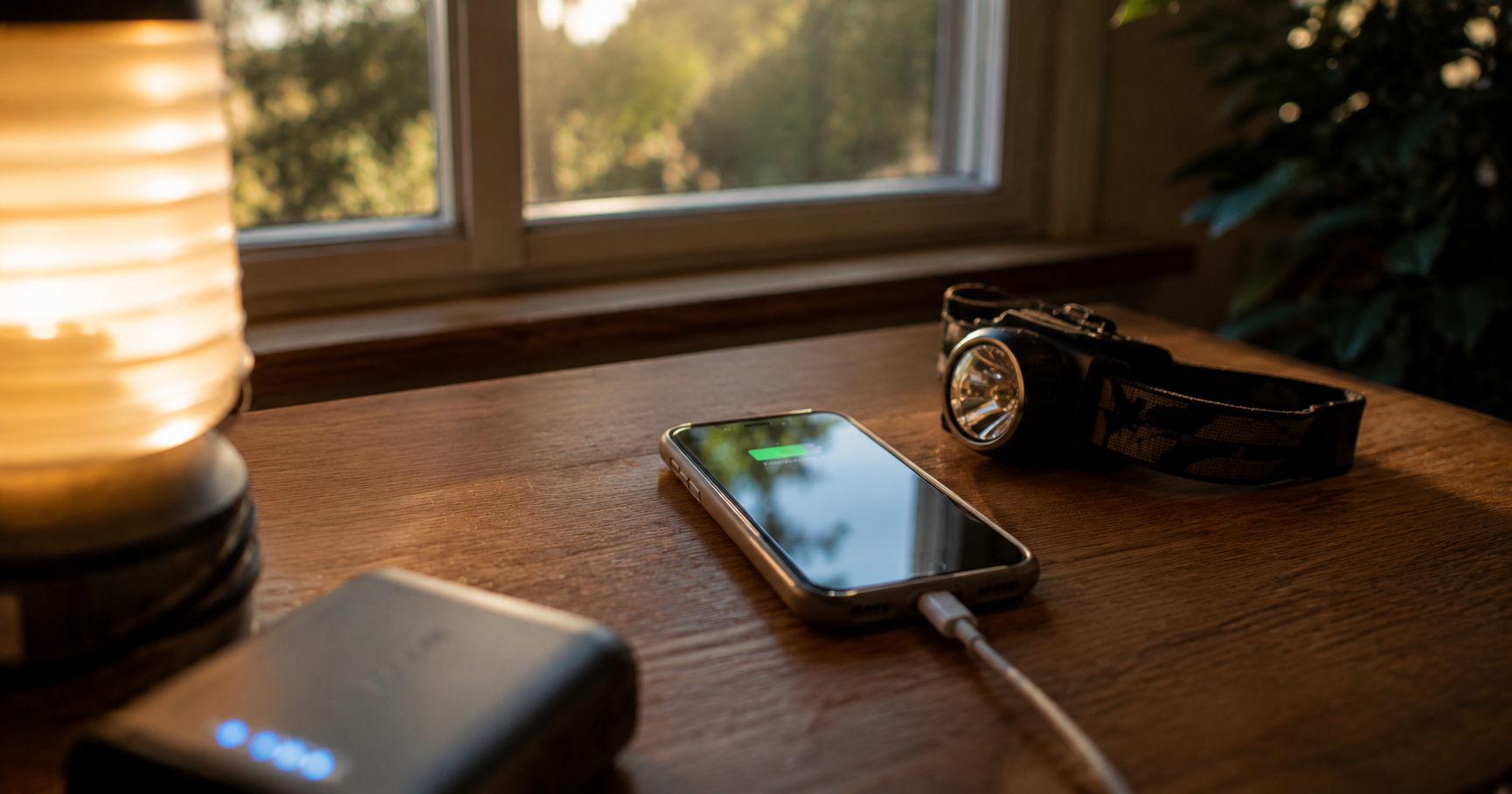
When the grid goes down, a portable power station keeps your phone, lights, medical devices, and small appliances running — quietly, indoors, with no fuel or fumes like a gas generator. They have become one of the most practical preparedness purchases for anyone who lives where outages happen.
We compared the leading units on capacity, output, and value, and ranked them for emergency use.
What to look for
- Capacity (watt-hours, Wh). How much energy it stores — this determines how long it runs your devices. More Wh means more runtime.
- Output (watts, W). How much it can power at once. Phones and lights need little; fridges and appliances need a lot.
- Recharge options. Wall, car, and solar. Solar input matters for longer outages when the grid is down for days.
- Battery type. LiFePO4 batteries last far longer (more charge cycles) than older lithium types — worth it for something you keep for years.
At a glance: our ranked picks
| Unit | Best for | Capacity tier | Standout |
|---|---|---|---|
| Jackery Explorer 1000 | Best overall | Mid-large | Proven, balanced, solar-ready |
| EcoFlow Delta 2 | Best fast charging | Large | Very fast recharge, expandable |
| Bluetti AC180 | Best value LiFePO4 | Mid-large | Long-life battery, strong output |
| Anker 757 | Best longevity | Large | Durable LiFePO4, high output |
| Jackery Explorer 300 | Best budget/starter | Small | Light, affordable, phone-and-light |
1. Best overall: Jackery Explorer 1000
The Jackery Explorer 1000 is our top all-around pick. It hits the sweet spot of capacity and output for an outage — enough to keep phones, lights, a CPAP, routers, and small appliances running, while staying portable enough to move room to room. Jackery is a proven brand, it pairs easily with solar panels, and it is simple to use, which matters when you are stressed.
Best for: Most households wanting one solid unit for outages.
Worth knowing: It will not run large appliances like an electric stove or central AC — that is true of nearly all units this size.
See Details
2. Best fast charging: EcoFlow Delta 2
The EcoFlow Delta 2 recharges remarkably fast from a wall outlet, which is genuinely useful — you can top it up quickly during brief grid windows. It is also expandable with add-on batteries if you need more capacity later. A strong choice if recharge speed and future flexibility matter to you.
Best for: Those who want fast recharging and room to expand.
Worth knowing: Fast charging and expandability come at a higher price point.
See Details
3. Best value LiFePO4: Bluetti AC180
The Bluetti AC180 uses a long-life LiFePO4 battery rated for many more charge cycles than older lithium types, and pairs it with strong output — a lot of capability for the money. If you want a unit you will keep and use for years, the longer battery life makes it a smart value.
Best for: Value-focused buyers who want long battery lifespan.
Worth knowing: It is a mid-large unit — great for essentials, not for whole-home backup.
See Details
4. Best longevity: Anker 757
The Anker 757 is built around a durable LiFePO4 battery and high output, with Anker's reputation for solid build quality. It is a "buy it once" unit for someone who wants reliability and a long service life from a trusted electronics brand.
Best for: Buyers prioritizing durability and long-term reliability.
Worth knowing: It is a premium unit at a premium price.
See Details
5. Best budget / starter: Jackery Explorer 300
If you mainly need to keep phones, lights, and small devices going, the Jackery Explorer 300 is an affordable, lightweight entry point. It will not run appliances, but for communication and light during an outage it covers the essentials cheaply, and it is easy to carry.
Best for: Budget buyers and anyone needing phone-and-light backup.
Worth knowing: Its smaller capacity means short runtimes for anything power-hungry — it is a starter, not a whole-essentials unit.
See Details
How to choose
- Phones, lights, and small devices? A Jackery Explorer 300 covers it affordably.
- Essentials for a day or more (fridge stints, CPAP, routers, charging)? Step up to a Jackery 1000, Bluetti AC180, or EcoFlow Delta 2.
- Want it to last for years? Choose a LiFePO4 unit (Bluetti, Anker).
- Outage lasts days? Add a compatible solar panel so you can recharge off-grid.
A quick reality check: no portable unit this size runs your whole home. They run essentials. For what they actually cover during an outage, see our guide to keeping your essentials powered.
Frequently asked questions
What can a portable power station run during an outage?
Phones, laptops, lights, routers, CPAP machines, and small appliances comfortably. Larger units can run a fridge in stints. None of these run power-hungry items like electric stoves, water heaters, or central air — that requires a much larger system.
Are power stations better than gas generators?
For most home use, yes. They are silent, produce no fumes (so they are safe indoors), need no fuel, and require little maintenance. Gas generators still win for very high, sustained power needs, but for keeping essentials running they are louder, dirtier, and riskier indoors.
Do I need solar panels with a power station?
Only if outages in your area can last more than a day or two. For short outages, charging the unit fully in advance is enough. For longer events, a solar panel lets you recharge when the grid is down.