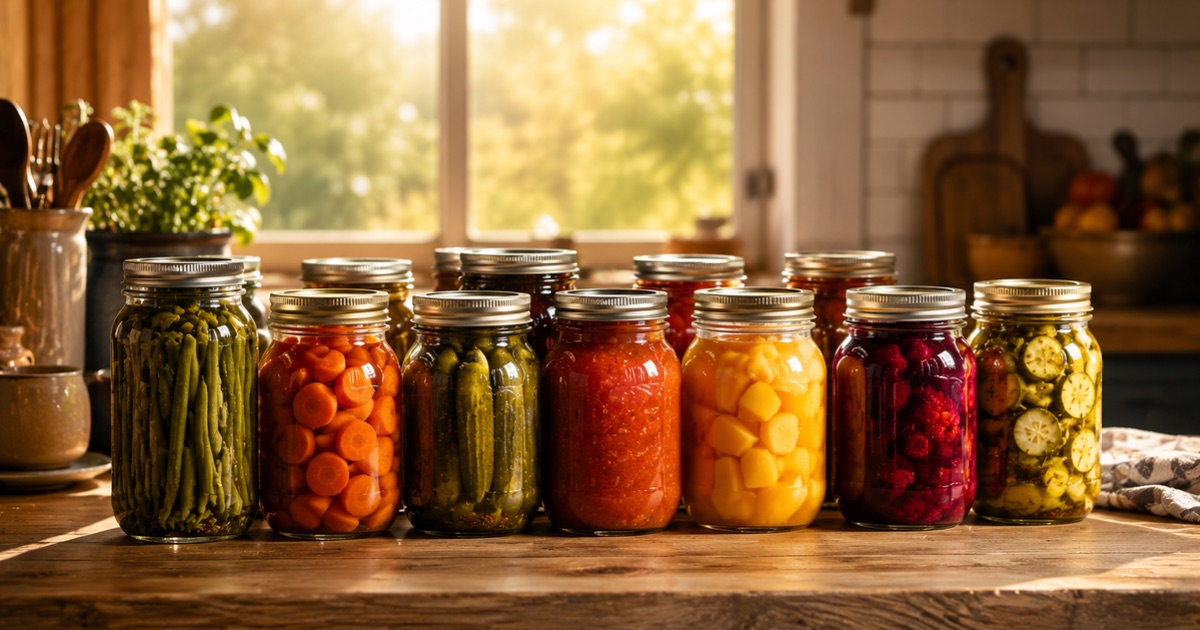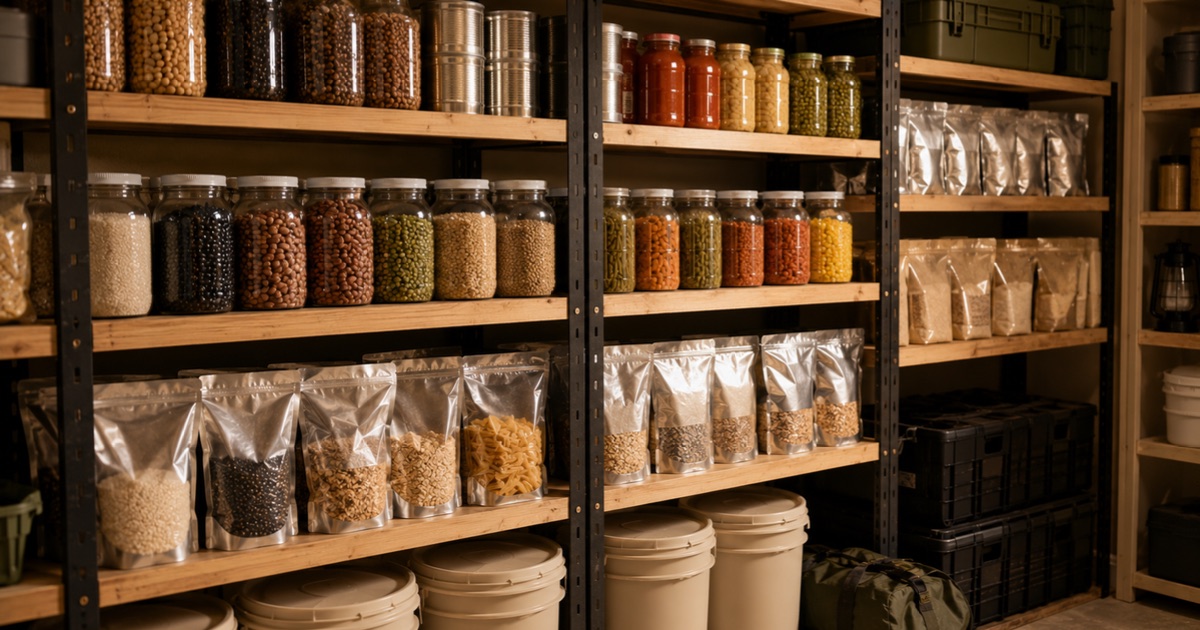
When El Niño storms knock out the power or make the roads to the store impassable, your pantry stops being a convenience and becomes your lifeline. The goal of an emergency food stockpile is simple but specific: two weeks of food that requires no electricity to store or prepare, built around things your family will actually eat. Get those two things right — no power needed, and foods you genuinely like — and you'll have a stockpile that carries you through any El Niño disruption without waste or misery. This is a core piece of how to prepare for El Niño 2026.
Start with no-cook foods
The most important category, because a power outage means no working stove or microwave. Stock plenty of foods you can eat straight from the package with no preparation at all: canned proteins like tuna, chicken, and beans; peanut butter and other nut butters; crackers; shelf-stable bread; dried fruit and nuts; granola and protein bars; and shelf-stable milk. Don't forget a manual can opener — a drawer full of canned food is useless if your only opener is electric.
Build around inexpensive staples
For calories and versatility, lean on the staples that have fed people through hard times for generations: white rice, pasta, dried beans and lentils, rolled oats, and canned vegetables and fruit. They're cheap, calorie-dense, store for a long time, and stretch into real meals. These form the backbone of your supply, with the no-cook items layered on top for outage days when you can't boil water.
Plan your calories
A useful target is about 2,000 calories per person per day. For a two-week supply, that's roughly 28,000 calories per person — which sounds like a lot until you realize a single pound of rice or pasta carries over 1,600 calories. Building to that number with a mix of staples and ready-to-eat items is very achievable on a normal budget when you spread the buying out.
Go long-term with proper storage
To create a deep reserve that lasts for years rather than months, store dry staples the right way. Grains, beans, rice, and similar foods sealed in mylar-bags with oxygen absorbers, then placed inside food-buckets for protection from rodents and moisture, can last 20 to 30 years. This is the foundation of serious long-term food security. For a fast shortcut, a pre-packed emergency food supply like the augason-bucket adds weeks of shelf-stable meals in a single purchase, with no packing required.
Don't forget comfort, morale, and special needs
A stressful storm stretch is exactly when familiar comforts matter most. Stock coffee, tea, favorite snacks, and a few treats — they keep morale up, especially for kids, in a way plain rice and beans can't. And account for your household's specifics: baby formula and food, pet food, and anything needed for dietary restrictions or medical conditions. A stockpile that ignores these gaps isn't really complete.
Track it and rotate it
The golden rule of food storage is "store what you eat, and eat what you store." Keep a written inventory, watch the expiration dates, and use your oldest stock first, replacing it as you go. This first-in, first-out rotation keeps everything fresh, prevents waste, and means your stockpile is always ready rather than slowly expiring in a forgotten corner. Set a seasonal reminder to review and restock.
A sample two-week food supply
To make this concrete, here's a simple framework for one person for two weeks — scale it up by the number of people in your household. For proteins: canned tuna, chicken, and beans, plus peanut butter and nuts. For staples and calories: rice, pasta, oats, and crackers. For fruits and vegetables: canned and dried varieties plus shelf-stable options. For breakfast and extras: shelf-stable milk, cereal or granola, and coffee or tea. Round it out with cooking oil, salt, basic seasonings, and a few comfort snacks for morale. Keep a manual can opener with it. Don't treat this as rigid — the best stockpile is built from foods your family genuinely eats — but use it as a starting template so a two-week supply feels achievable rather than abstract.
Frequently asked questions
How much food should I store per person?
Plan for about 2,000 calories per person per day. For a two-week supply, that works out to roughly 28,000 calories per person, built from a mix of calorie-dense staples and ready-to-eat items. Scale up for larger appetites, active household members, or longer time horizons.
What foods last the longest in storage?
White rice, dried beans, rolled oats, pasta, sugar, salt, and honey can last for decades when sealed in mylar bags with oxygen absorbers and kept cool and dark. Canned goods generally last several years. These long-life staples are the backbone of any deep food reserve.
Do I need special freeze-dried survival food?
No. A well-stocked pantry of ordinary groceries handles the vast majority of emergencies just fine. Freeze-dried buckets are convenient and store for a long time, making them a handy supplement, but they're an add-on rather than a requirement. Most of your supply can be regular food you already eat.
How do I store food if I don't have much space?
Use vertical space with shelving, store mylar-sealed staples in stackable buckets under beds or in closets, and rotate them into your normal pantry rather than treating them as separate. Even a modest apartment can hold two weeks of food with a little organization.
How often should I check my food stockpile?
Review it at least twice a year. Check expiration dates, rotate older items into your regular meals, replace what you use, and confirm your long-term sealed storage is intact and pest-free. Tying it to a recurring date — like the start of storm season — keeps it from slipping.
What's the easiest way to start a food stockpile on a budget?
Buy a few extra non-perishable items you already eat on each regular shopping trip. A couple of extra cans, an extra bag of rice or pasta — spread over a few weeks it builds a two-week supply with no large single expense and no special purchases. Buying staples in bulk when they're on sale stretches your budget further.
How do I keep pests out of stored food?
Store dry staples in sealed containers — mylar bags inside food-grade buckets, or airtight bins — rather than original paper or thin plastic packaging that rodents and insects chew through. Keep the storage area clean and cool, inspect periodically, and rotate stock so nothing sits long enough to attract pests.
What foods should I avoid stocking?
Skip anything that needs refrigeration, lengthy cooking, or lots of water to prepare, since those all fail you during an outage. Also go easy on very salty foods that increase thirst when water may be limited. Favor ready-to-eat, shelf-stable items and foods your family actually likes and will rotate through.