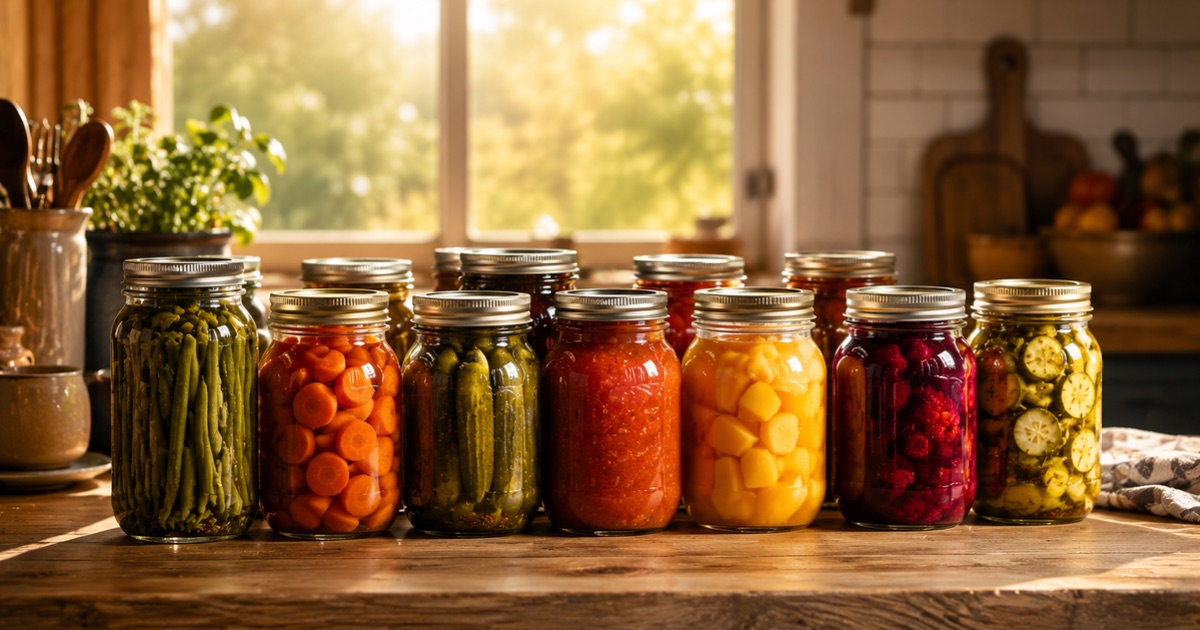
Long before refrigeration, root cellars kept families fed through the entire winter, and the principles behind them still work perfectly today. For El Niño season, combining a cool storage space for fresh produce with proper long-term storage of dry staples gives you weeks or even months of food that needs no power to keep — exactly what you want when storms and outages disrupt the normal supply. You don't need to dig a cellar in the backyard to benefit; you just need to understand the conditions and recreate them. This builds on your emergency food stockpile.
The conditions that make it work
A root cellar preserves food because it maintains three things: cool temperature (ideally around 40 to 55 degrees), darkness, and fairly high humidity. Together these keep produce dormant and slow the processes that cause spoilage. You can recreate these conditions in a basement corner, an unheated room or closet, an insulated garage, or even a buried container. The closer you get to cool, dark, and humid, the longer your stored produce will last.
Store the right produce
Not everything keeps in a root cellar, but the champions store for months: potatoes, onions, carrots, beets, turnips, winter squash, cabbage, and apples. The keys are to cure crops properly first where needed (squash and onions especially benefit from curing), and to store only unblemished, undamaged specimens — one bruised or nicked item spoils faster and takes its neighbors with it. Set aside anything damaged to eat first.
Keep certain foods apart
Storage chemistry matters. Onions and potatoes should never be stored together: onions give off moisture and gases that cause potatoes to sprout and rot faster. Likewise, apples and many other fruits release ethylene gas as they ripen, which prematurely ages nearby vegetables. Give onions, potatoes, and fruit their own separate areas with a little distance between them.
Use mylar and buckets for dry staples
Fresh produce is only half the strategy. For grains, beans, rice, flour, sugar, and similar dry staples, the gold standard is sealing them in mylar-bags with oxygen absorbers, then placing those bags inside food-grade food-buckets for protection from rodents, light, and moisture. Stored this way and kept cool, these staples can last 20 to 30 years, forming the deep backbone of your food security. Modular waterbrick containers also stack neatly and efficiently for organized long-term storage in tight spaces.
Maintain airflow and the right humidity
Good air circulation prevents the pockets of stagnant, damp air where mold and rot start. Store produce in slatted crates, baskets, or boxes that let air move around them rather than sealed plastic bins, and don't pack things too tightly. If your space is too dry, a pan of water or damp sand can raise humidity; if it's too damp, improve ventilation. Most root vegetables want it humid; onions and garlic prefer it drier.
Rotate and inspect regularly
Use a simple first-in, first-out system: date everything and eat your oldest stock first so nothing is wasted. And inspect your stored produce at least weekly, because one rotting potato or soft apple really will spoil its neighbors quickly. Remove anything soft, sprouting, moldy, or off-smelling the moment you spot it. A few minutes of inspection protects the whole stash.
Simple no-build root cellar options
You don't have to excavate anything to get root-cellar conditions. An unheated basement corner away from the furnace is the easiest option for most homes. A buried trash can or cooler, sunk into the ground with a lid at surface level, makes a surprisingly effective mini-cellar for root vegetables in colder regions. An insulated garage or unheated closet can work where winters are mild. Even a cool, dark interior closet will extend the life of onions, potatoes, and squash well beyond a warm kitchen. Match the option to your climate and space, and you can store hardy produce for months without building anything.
Frequently asked questions
Do I need to build an actual root cellar?
No. A cool, dark, well-ventilated basement corner, an unheated closet or pantry, or an insulated garage space can replicate root-cellar conditions well enough to store hardy produce for months. The goal is cool temperature, darkness, humidity, and airflow — not a specific structure.
Which vegetables store the longest?
Potatoes, onions, winter squash, carrots, beets, turnips, and cabbage are the long-storage champions, lasting months in cool, humid conditions. Apples store well too, but they release ethylene gas that ripens and ages nearby produce, so keep them separate from your vegetables.
How long do mylar-stored grains last?
Grains, beans, and white rice sealed in mylar bags with oxygen absorbers and kept cool and dark can last 20 to 30 years. This makes properly sealed dry staples the foundation of any serious long-term food reserve, complementing the shorter-term fresh produce in a root cellar.
Why can't I store onions and potatoes together?
Onions release moisture and gases that accelerate sprouting and rotting in potatoes, while potatoes give off moisture that softens onions. Stored together they spoil each other quickly. Keep them in separate areas, each in conditions suited to it — potatoes cool and humid, onions cool and dry.
How do I keep humidity right in my storage space?
Most root vegetables want fairly high humidity; if your space is too dry, set out a pan of water or store produce in damp sand or sawdust. If it's too damp and you see condensation or mold, improve ventilation. Onions, garlic, and winter squash are exceptions that prefer drier storage.