Most people picture flood deaths happening inside homes. The reality is the opposite: more than half of all flood fatalities happen in vehicles, when drivers misjudge water across a road and try to push through. With El Niño driving heavier rain across much of the country in 2026, this is the single most important flood-safety habit you can build — and it costs nothing. The rule is four words: turn around, don't drown. This guide is part of our flood preparedness checklist, and it may be the most important page on this site.
The numbers that should stop you cold
Water is far more powerful than it looks, and the figures are sobering:
- Six inches of moving water can knock a grown adult off their feet and is enough to stall many vehicles.
- Twelve inches of rushing water can float and carry away most cars.
- Eighteen to twenty-four inches will sweep away most trucks, SUVs, and vans.
That means the difference between "I can make it" and a vehicle floating downstream is just a foot or so of water you usually can't even measure from the driver's seat. The water on the road is almost always deeper and faster than it appears.
Never drive through a flooded road
If you cannot see the road surface beneath the water, do not drive into it. There is no reliable way to judge the depth, whether the pavement beneath has washed out entirely, or how fast a current is running. Cars stall when water reaches the exhaust or engine intake, and once a vehicle loses traction it becomes a boat with no steering. The safe choice is always to stop, turn around, and find another route.
Avoid the places water hides
Floodwater collects first and deepest in predictable spots: low-lying dips, highway underpasses, low-water crossings, and areas near creeks and drainage channels. These are exactly where vehicles get trapped. When rain is heavy, mentally flag these locations on your usual routes and avoid them, choosing higher ground even if the drive is longer. An underpass that's clear on your way out can be four feet deep on your way home.
Be especially careful at night
Darkness is a deadly multiplier. At night you can't see standing water, judge its depth, or spot a washed-out road until you're already in it. The majority of flood-vehicle deaths happen after dark. If you're driving at night during heavy rain, slow down dramatically, and if there's any doubt at all about whether a stretch of road is safe, do not risk it. Wait it out or find a confirmed-dry route.
Never drive around barricades
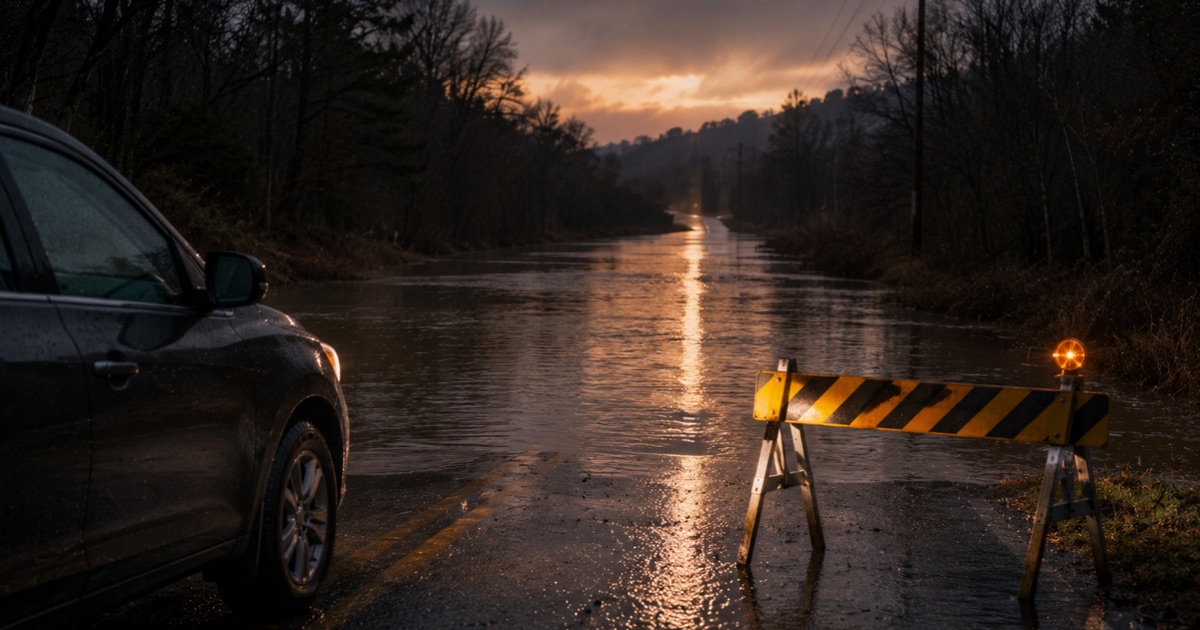
Barricades and road-closure signs are placed for a reason — the road ahead is unsafe, flooded, or washed out. Driving around them is both dangerous and, in many places, illegal, and it puts the rescuers who may have to come get you at risk too. Respect every barricade, no exceptions.
If your car is caught in rising water
If water is rising around your stopped vehicle and you can safely do so, get out immediately and move to higher ground — don't stay with the car waiting to see what happens. If the vehicle is being swept away or you can't safely exit at first, unbuckle, lower or break a window (doors may be impossible to open against the water pressure), and get out through the window. If you become trapped on top of a stranded vehicle, call 911, stay put, and wait for rescue rather than entering moving water. Keep a tactical-flashlight in the car to signal for help and a noaa-radio to monitor conditions, so you're never driving blind into a worsening situation.
Make sure every driver in your home knows this
A safety rule only works if everyone follows it, so this is a conversation to have with your whole household before the rains come — especially teen and new drivers, who are statistically more likely to attempt a flooded crossing. Walk through the depth numbers together, point out the low spots and underpasses on the routes they drive most, and make the turn-around rule absolute: no destination, no schedule, no "it doesn't look that deep" is worth driving into water over a road. Two minutes of conversation now can prevent the most common and most avoidable flood tragedy there is.
Frequently asked questions
Why is just six inches of water dangerous to a car?
Even shallow moving water exerts tremendous force and can lift the tires enough to break traction while flooding the exhaust or air intake stalls the engine. Once the car loses contact with the road, the current — not you — controls where it goes, and at twelve inches most cars float.
What should I do if water starts coming into my car?
Act immediately — don't wait. Unbuckle your seatbelt, open or break a window (doors often won't open against water pressure), and get out toward higher ground while you still can. Free children first if you can do so safely. The first seconds are the ones that matter most.
How can I avoid flooded roads during a storm?
Check local alerts and a weather radio before heading out, avoid known low spots, underpasses, and creek crossings, and never drive around barricades. If heavy rain is falling or forecast, the safest choice is often to delay the trip entirely until roads are confirmed clear.
Is it safe to walk through floodwater instead of driving?
No. Just six inches of moving water can knock an adult down, and floodwater hides dangers like open manholes, sharp debris, downed power lines, and contamination. Walking through floodwater is as dangerous as driving through it, sometimes more so.
What if I'm already on a road and water is rising around me?
If you can safely turn around or back out to higher ground, do it. If you're trapped, get out of the vehicle and to high ground while you can, or onto the roof if you can't escape the immediate area, and call 911. Never try to walk or swim through moving floodwater to escape.