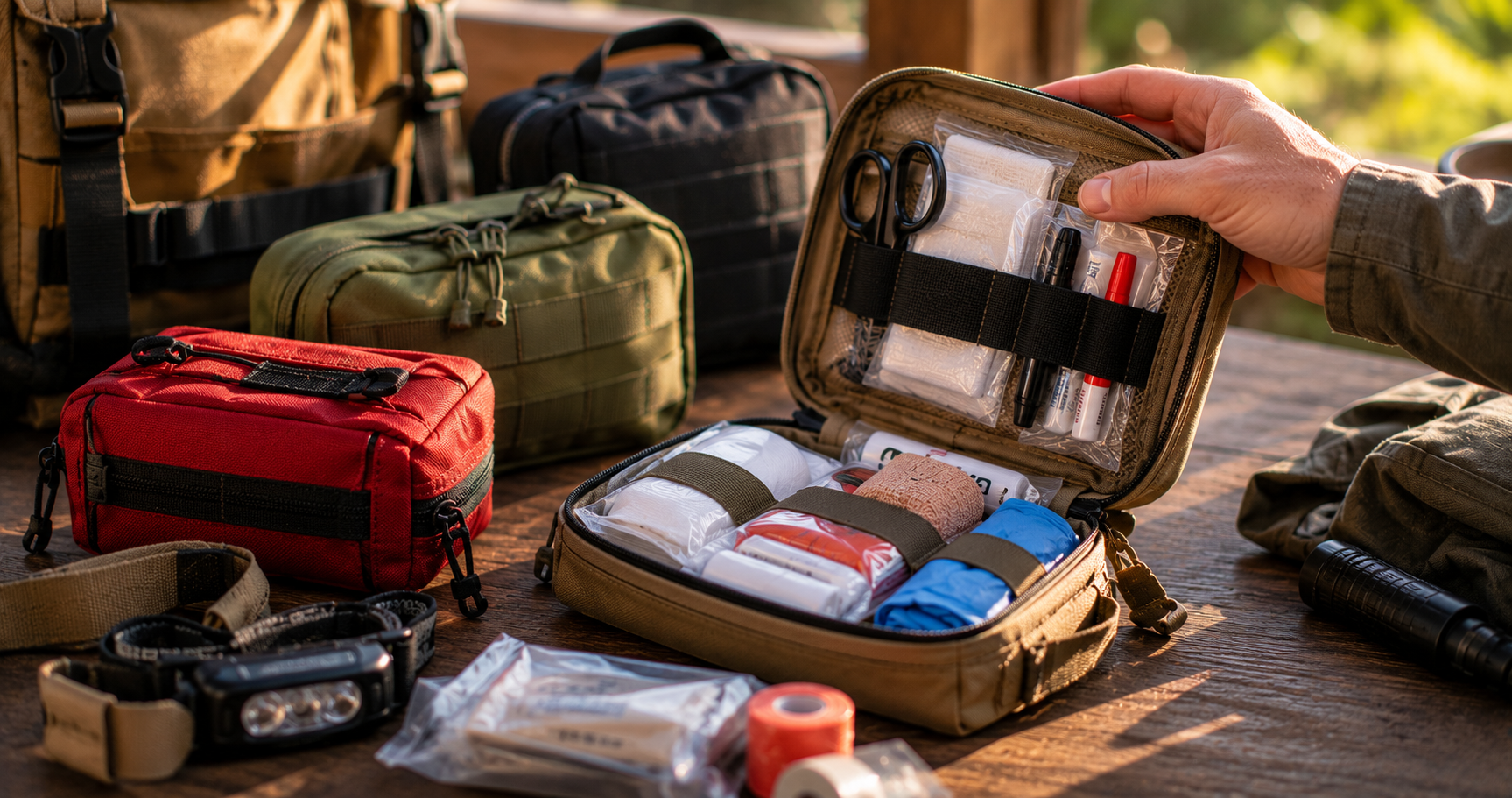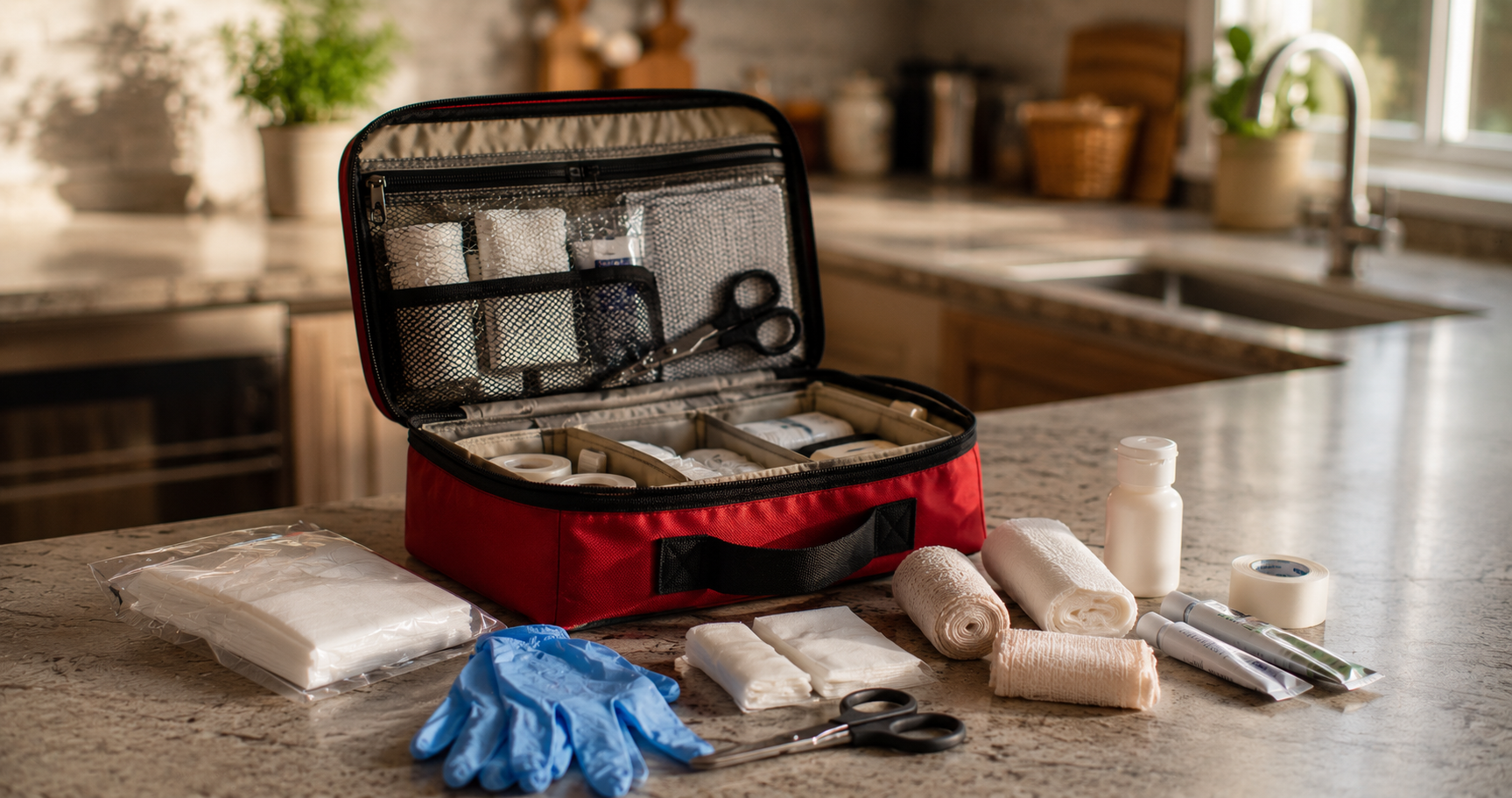
Most store-bought first aid kits are a box of bandages and not much else. They are fine for a paper cut and useless for anything serious. A real household kit covers the everyday stuff and the situations where help might be delayed — which is exactly when preparedness matters.
Here is what actually belongs in a household kit, the extras most kits skip, and how to keep it ready.
The basics every kit needs
- Adhesive bandages in assorted sizes
- Sterile gauze pads and a roll of gauze
- Medical tape
- Antiseptic wipes and antibiotic ointment
- Tweezers and small scissors
- Disposable gloves (more than one pair)
- A digital thermometer
- An instant cold pack
A solid pre-stocked kit like a comprehensive home first aid kit covers most of this in one purchase and saves you assembling it piece by piece.
The trauma items most kits skip
This is where ordinary kits fall short. If help could be delayed, you want the ability to manage serious bleeding:
- A tourniquet
- A pressure/trauma dressing
- Hemostatic (clotting) gauze
- A roll of self-adhesive wrap
A dedicated trauma kit bundles these and is worth adding to your home kit, your car, and your bug-out bag. Pair the gear with a basic first aid class so you know how to use it.
Medications to stock
- Pain and fever reducers (acetaminophen, ibuprofen)
- Antihistamine (for allergic reactions)
- Anti-diarrheal medication
- Antacids
- Any prescription medications your household relies on — keep a few days' buffer if possible
- Personal items: spare glasses, contact supplies, hearing-aid batteries
Don't forget these
- A printed list of emergency contacts and your family's medical info (allergies, conditions, medications).
- A basic first aid manual — knowledge fails first under stress.
- Copies of prescriptions.
- Supplies specific to your household: baby items, pet first aid, mobility or medical equipment.
Keep it ready
- Check the kit every six months and replace anything expired — medications and ointments have dates.
- Restock immediately after you use something.
- Keep one kit at home, one in each vehicle, and a compact version in your emergency bag.
Frequently asked questions
What is the difference between a first aid kit and a trauma kit?
A first aid kit handles common, minor injuries — cuts, scrapes, burns, headaches. A trauma kit is built for life-threatening situations like severe bleeding, with items like tourniquets and hemostatic gauze. A complete household setup includes both.
How often should I check my first aid kit?
Every six months. Replace expired medications and ointments, and restock anything you have used. A kit you never check may be missing the one thing you reach for.
Do I need training to use a first aid kit?
For basic items, no. For trauma items like tourniquets, a short first aid or "Stop the Bleed" class makes a real difference — the gear only helps if you know how to use it under pressure.