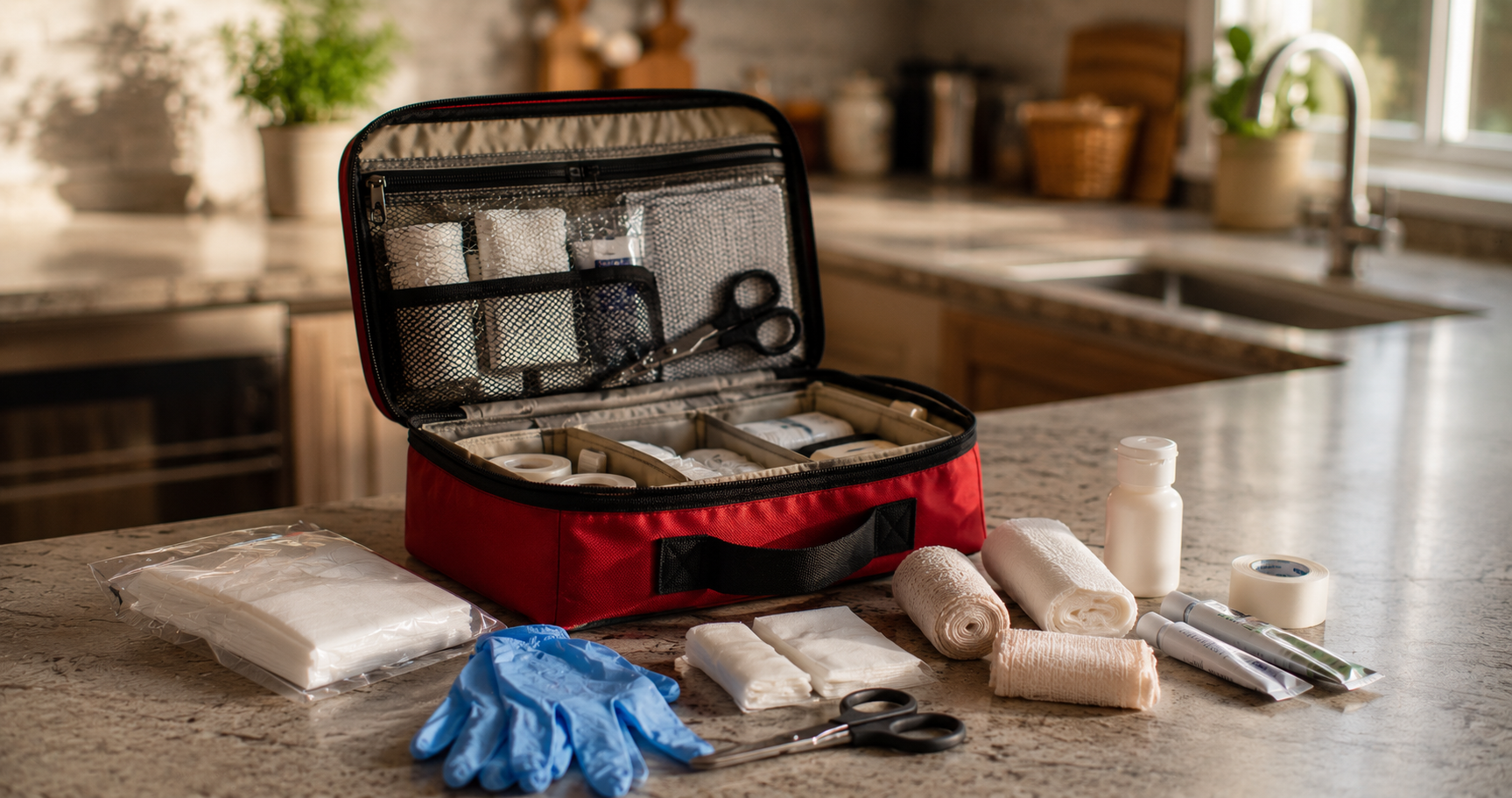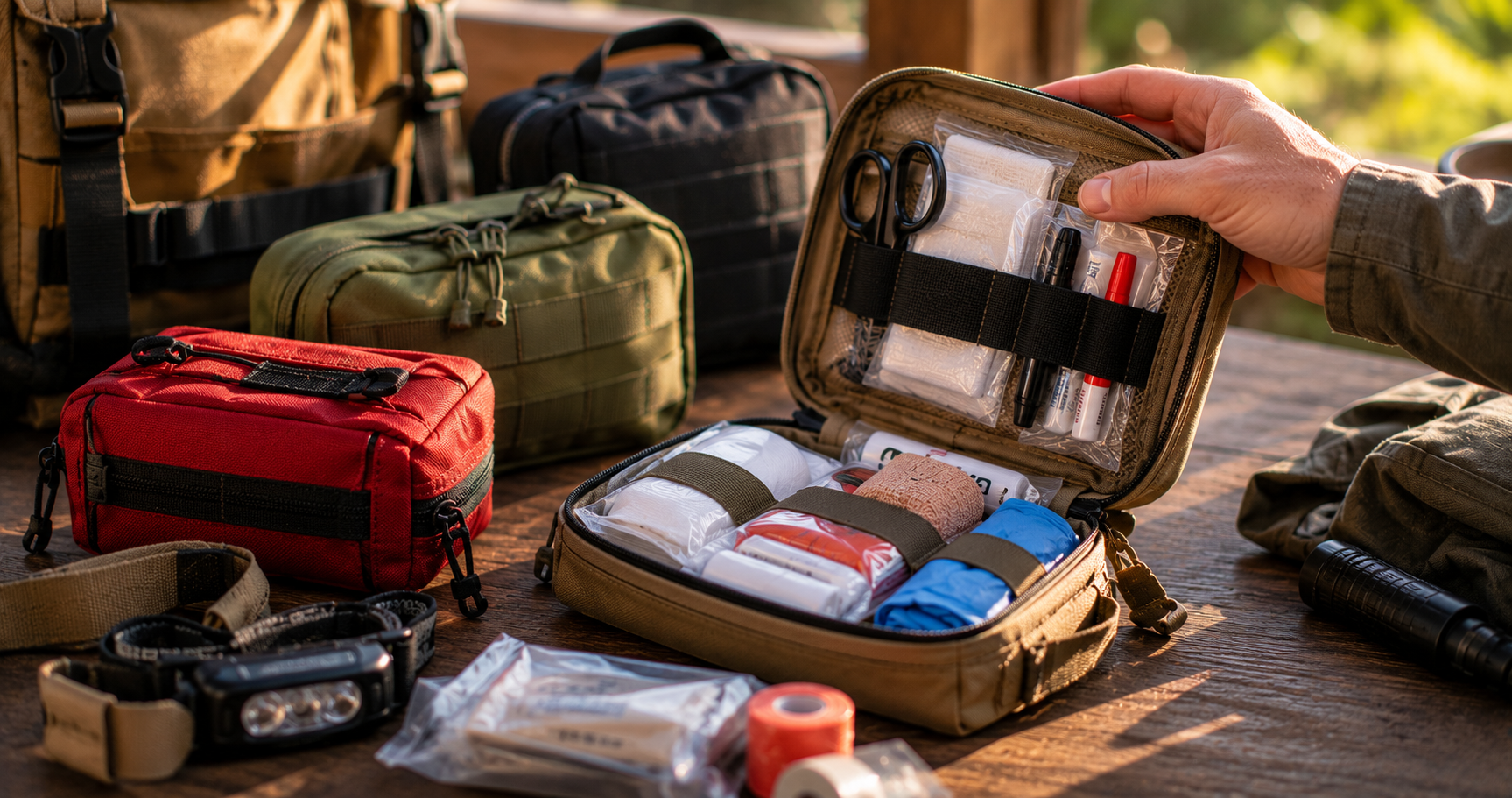
A first aid kit is one of those purchases that is easy to get wrong — most cheap kits are padded with bandages and skip the things that matter in a real emergency. We compared the leading options across everyday use, serious trauma, and portability, and ranked the ones genuinely worth owning.
What to look for
- Scope. Does it cover everyday injuries only, or also serious bleeding (tourniquet, trauma dressing, clotting gauze)?
- Quality over quantity. A "300-piece" kit that is mostly tiny bandages is worse than a smaller kit with real supplies.
- Organization. Labeled compartments matter when you are stressed and need something fast.
- Right kit, right place. Home, car, and bag each have different needs.
At a glance: our ranked picks
| Kit | Best for | Type | Standout |
|---|---|---|---|
| My Medic MyFAK | Best overall | First aid + trauma | Covers everyday and serious |
| First Aid Only 326-pc | Best budget home kit | Everyday | Affordable broad coverage |
| Rhino Rescue Trauma Kit | Best trauma add-on | Trauma | Bleeding control essentials |
| Adventure Medical Kits | Best for outdoors | First aid | Organized, activity-tuned |
| Surviveware Large | Best for families | First aid | Labeled, well-organized |
1. Best overall: My Medic MyFAK
The My Medic MyFAK is our top pick because it bridges the gap most kits ignore — it covers everyday injuries and includes serious trauma supplies in one organized, durable package. The compartments are labeled and logical, so under stress you can find what you need fast. It is the closest thing to a single "buy this and you're covered" household kit.
Best for: A primary home kit that handles both minor and serious situations.
Worth knowing: It costs more than a basic bandage box — but you are paying for genuinely useful contents, not filler.
See Details
2. Best budget home kit: First Aid Only 326-Piece
The First Aid Only 326-piece kit is the affordable way to cover everyday injuries for a household. It handles cuts, scrapes, burns, and minor wounds across a lot of small supplies. Think of it as your baseline — excellent value for common needs, which you then supplement with trauma items.
Best for: Budget buyers covering everyday injuries.
Worth knowing: Like most piece-count kits, it is light on serious trauma supplies — add a dedicated trauma kit alongside it.
See Details
3. Best trauma add-on: Rhino Rescue Trauma Kit
If your everyday kit lacks bleeding control, the Rhino Rescue trauma kit fills the gap affordably with the essentials: a tourniquet, trauma dressing, and clotting gauze. It is compact enough to add to your home kit, car, and bag, so you have bleeding control wherever you are.
Best for: Adding serious bleeding control to any existing kit.
Worth knowing: Trauma supplies require knowing how to use them — pair it with a basic bleeding-control class.
See Details
4. Best for outdoors: Adventure Medical Kits
For camping, hiking, and time away from quick help, Adventure Medical Kits are organized around real-world activities and injuries, with clear compartments and useful contents for the outdoors. They strike a good balance of weight and capability for active use.
Best for: Camping, hiking, and outdoor preparedness.
Worth knowing: Outdoor-tuned kits may be lighter on home-specific needs — fine as a complement to a full home kit.
See Details
5. Best for families: Surviveware Large
The Surviveware Large kit stands out for organization — clearly labeled, removable compartments make it easy to find supplies fast and to see what needs restocking. For a busy household, that organization is what keeps the kit actually usable over time.
Best for: Families who want a well-organized, easy-to-maintain kit.
Worth knowing: It is a first aid kit at heart; add trauma supplies separately for serious situations.
See Details
How to choose
- One do-it-all home kit? The My Medic MyFAK covers everyday and trauma together.
- On a budget? Pair a First Aid Only everyday kit with a Rhino Rescue trauma kit.
- Active outdoors? Add an Adventure Medical kit for trips.
- Busy family? The Surviveware Large keeps things organized and maintainable.
Whatever you choose, also stock your household's prescription medications and learn the basics of using what is in the kit.
Frequently asked questions
What should a good home first aid kit include?
Everyday supplies (bandages, gauze, antiseptic, gloves, basic medications) plus serious trauma items (tourniquet, trauma dressing, clotting gauze) for situations where help may be delayed. Many people combine an everyday kit with a dedicated trauma kit.
Are expensive first aid kits worth it?
Often, yes — but pay for contents, not piece count. A higher-quality kit with real trauma supplies and good organization is worth more than a cheap kit padded with hundreds of tiny bandages.
Where should I keep first aid kits?
Keep one at home, one in each vehicle, and a compact version in your emergency bag. The kit you have with you is the one that helps.