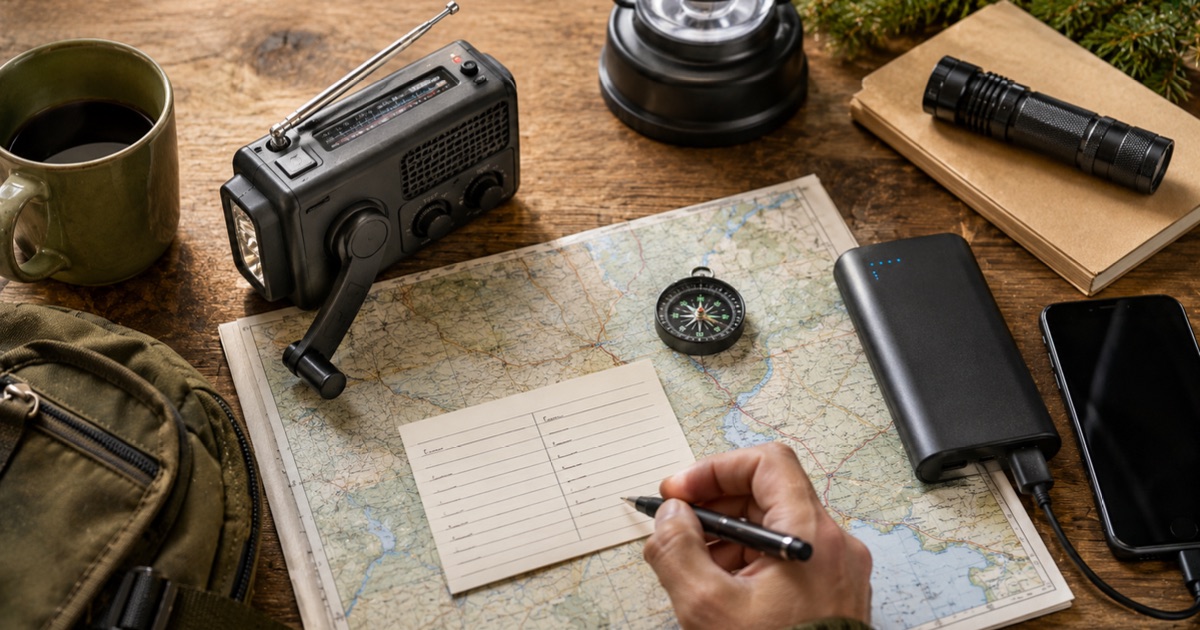
When a disaster knocks out cell towers and internet, most people realize too late how dependent they are on their phone. Off-grid communication is the backup — a way to receive information and stay in touch with family when the usual networks fail. It sounds technical, but the basics are approachable.
Here is a plain-English overview, from the simplest options to the more advanced.
First: receiving information
Before two-way communication, make sure you can receive emergency information. A NOAA emergency weather radio gives you continuous weather and emergency broadcasts using hand-crank or solar power, so it works when the grid is down. This is the single most important communication tool for most households — see our best emergency weather radios guide for picks. Start here.
Two-way options, from simple to advanced
FRS / GMRS two-way radios (easiest)
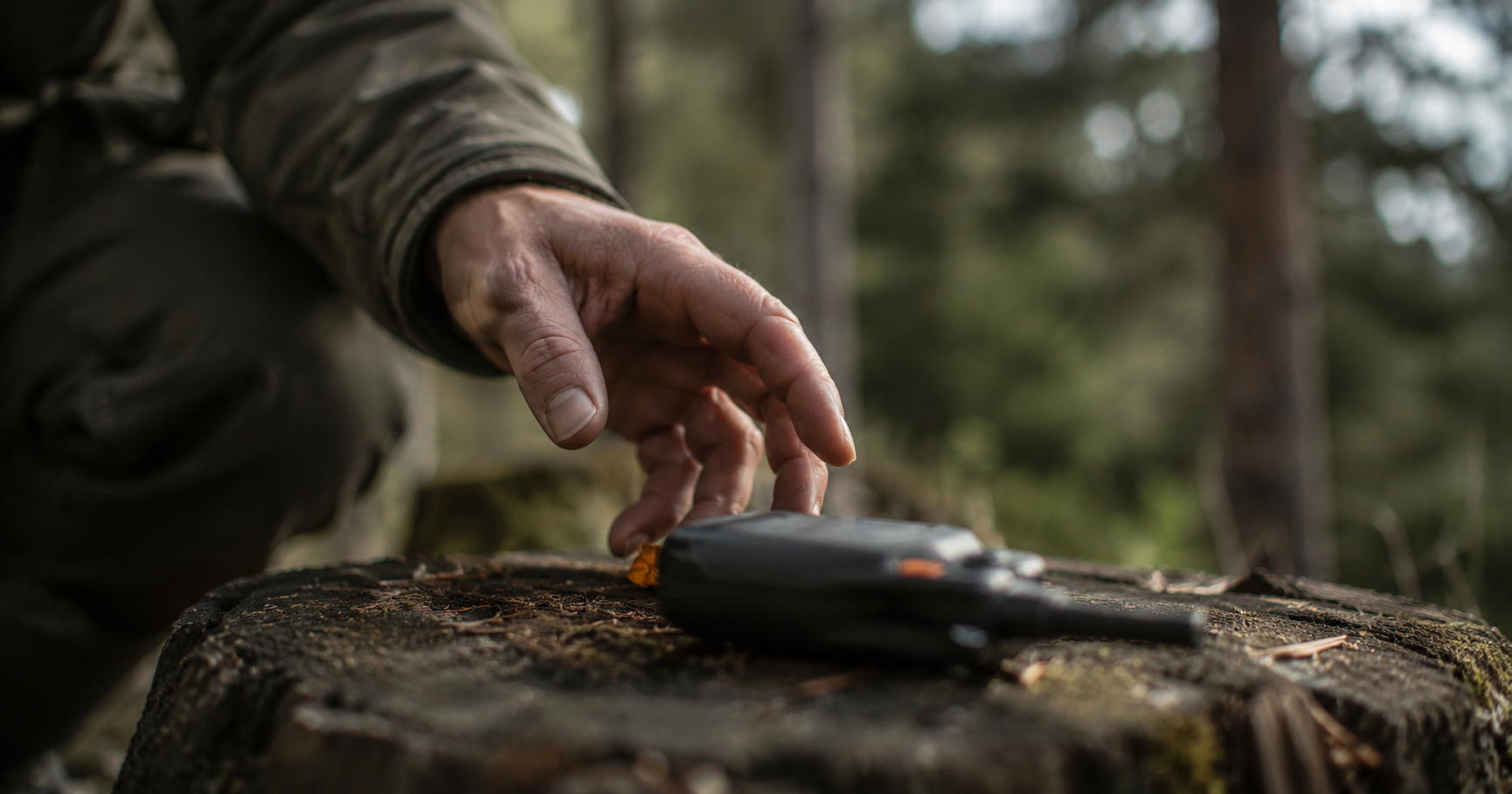
For staying in touch with family across a neighborhood or a few miles, GMRS two-way radios are the simplest answer. They are inexpensive, available anywhere, and work out of the box. FRS channels need no license at all; GMRS offers more range and power and requires only an inexpensive license with no test (covering your whole family). For coordinating a household during an emergency, this is the practical sweet spot.
- Buy a set so each family member or vehicle has one.
- Agree on a channel in advance.
- Keep them charged and store spare batteries.
Ham (amateur) radio (most capable)
For serious range and resilience, ham radio handhelds can reach much farther, especially through local repeaters, and connect you to an established emergency-communication community. The tradeoff is that transmitting legally requires passing a license exam (the entry-level Technician test is approachable). Many preppers get licensed because ham is the most capable and resilient option when infrastructure fails.
- Study for and pass the Technician license exam.
- Start with an affordable handheld to learn on.
- Locate your local repeaters and emergency nets.
A simple plan for most households
You do not need to do everything. A sensible baseline:
- Everyone: a NOAA weather radio to receive alerts.
- Families: a set of GMRS radios to stay coordinated locally.
- The committed: a ham license and handheld for maximum capability.
Don't forget the plan
Gear is only half of communication. Agree in advance on:
- An out-of-area contact everyone checks in with (often easier to reach than local lines).
- Meeting points if you are separated.
- A written list of phone numbers — your phone's contacts are useless if it is dead.
Frequently asked questions
How do you communicate when cell towers are down?
Through devices that do not rely on the cell network: a NOAA weather radio to receive alerts, FRS/GMRS two-way radios for local family communication, and ham radio for longer range. Pairing these with a written family contact plan covers most scenarios.
Do I need a license for emergency radios?
It depends. NOAA weather radios and FRS two-way radios need no license. GMRS requires an inexpensive license with no exam (covering your family). Ham radio requires passing a license test to transmit. Receiving broadcasts never requires a license.
What is the easiest off-grid communication for families?
GMRS two-way radios. They are affordable, work immediately, and let a household stay coordinated across a neighborhood or a few miles. Agree on a channel in advance and keep them charged.