When a major storm hits, cell networks get overloaded or knocked out entirely — and it always seems to happen at the exact moment you most need to reach your family. A simple communication plan, agreed on in advance, means everyone knows what to do even when phones don't work and the family is scattered across work, school, and home. It costs nothing to make and can prevent hours of dangerous uncertainty. Here's how to build one that actually holds up when the network doesn't. This is part of how to prepare for El Niño 2026.
Pick an out-of-area contact
This is the cornerstone of any family communication plan. Choose one relative or friend who lives outside your region to serve as the central point of contact. During a regional emergency, local phone lines are often jammed with traffic, but a long-distance call or text frequently still goes through. The plan is simple: if family members can't reach each other directly, everyone checks in with that one out-of-area person, who relays everyone's status. One reliable hub beats a tangle of failed local calls.
Write key numbers on paper
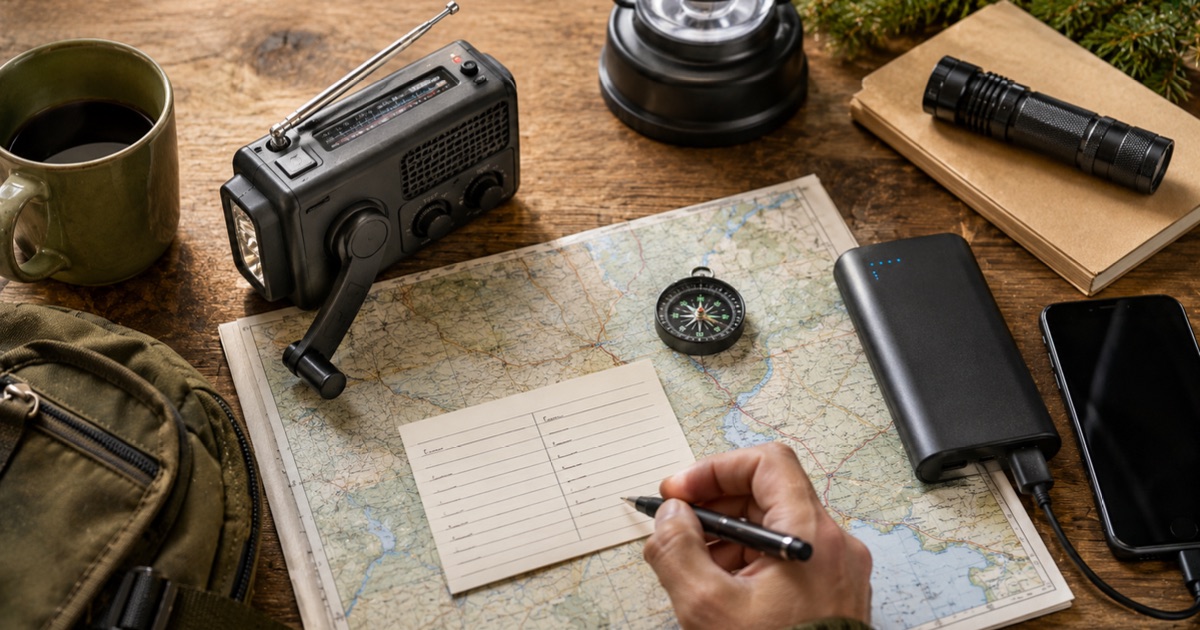
Your smartphone stores every number you need — right up until its battery dies or it's lost or damaged in the storm. Don't let your whole contact list depend on a charged phone. Write down the essential numbers — immediate family, your out-of-area contact, schools, workplaces, doctors, and local emergency services — on a physical card, and make a copy for each family member to keep in a wallet, backpack, or car. Low-tech, but it never runs out of battery.
Designate family meeting spots
Phones may fail entirely, so agree on physical places to regroup. Choose two meeting spots: one near home (like a specific neighbor's house or a landmark) for situations like a house fire, and one outside your neighborhood (a library, community center, or relative's home) in case you can't get back to the area at all. Make sure everyone, including children, knows both locations and how to get to them.
Keep a NOAA weather radio
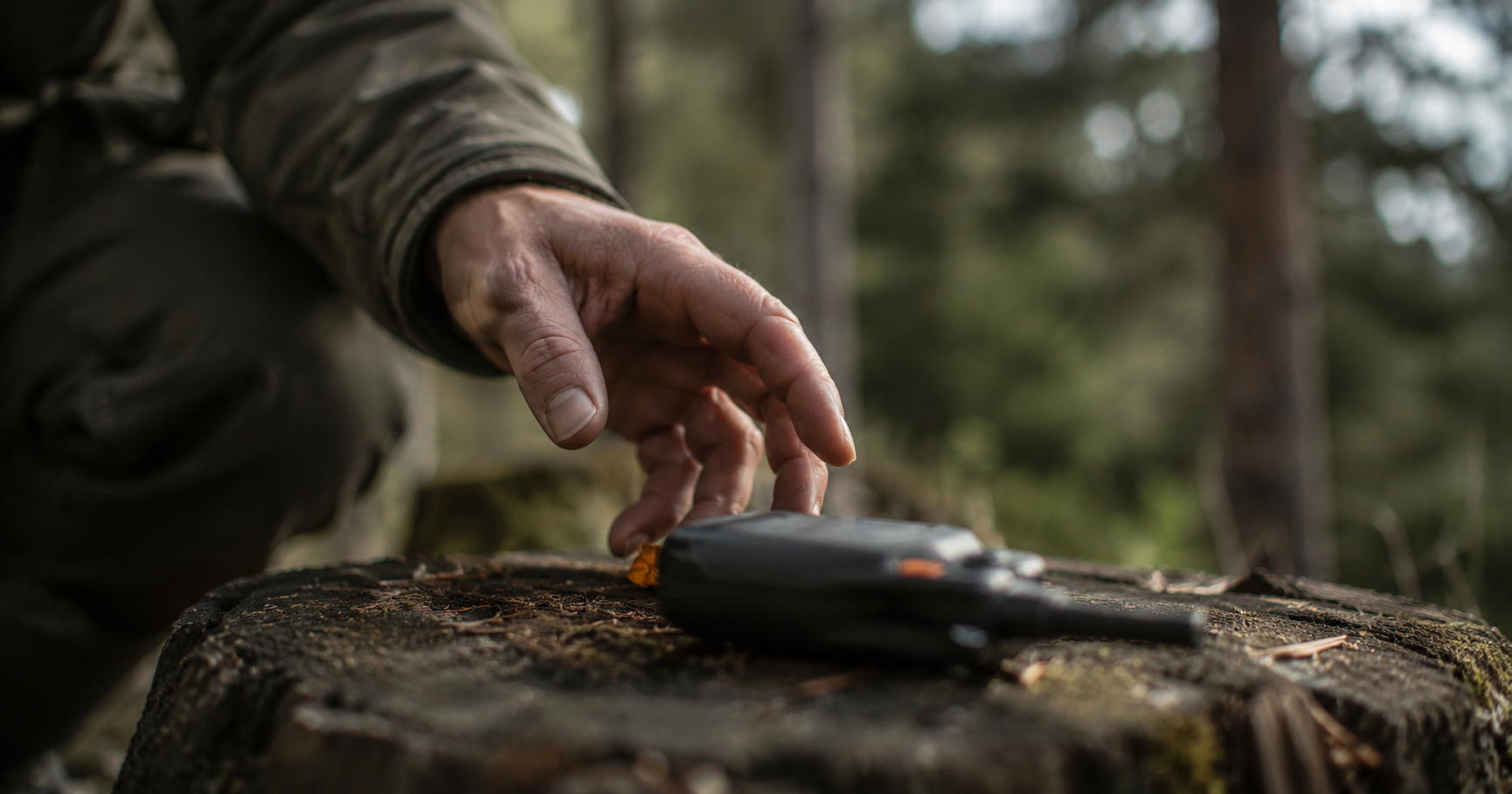
When cell service and internet go down, a battery or hand-crank noaa-radio becomes your most reliable source of weather alerts, warnings, and emergency information. A hand-crank emergency radio like the midland-er310 is especially valuable because it never needs batteries you might not have — and many models can also charge a phone. For households that want true two-way communication when networks fail, a ham-handheld radio extends your reach, though operating one to transmit requires a license worth getting in advance.
Charge a backup battery bank
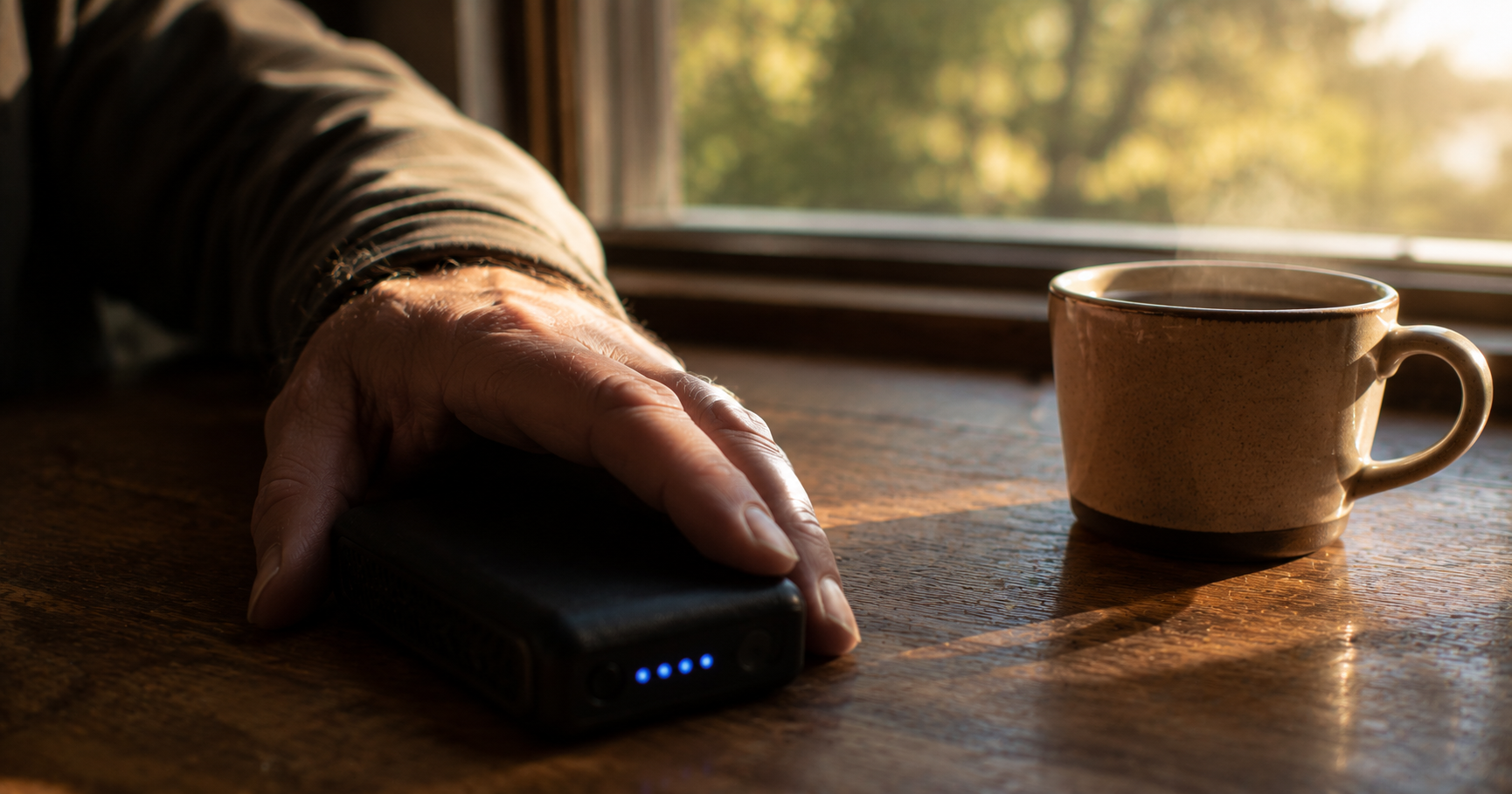
Keeping even one phone alive can be the link that holds your plan together, so a charged power-bank-large is essential. When a storm appears in the forecast, top off your power bank and all your devices. Conserve battery during the outage by lowering screen brightness, closing apps, and using text messages, which use less power and are more likely to get through a congested network than calls.
Teach kids how and when to call 911
Children are a critical part of the plan, not bystanders to it. Make sure every child knows how to dial 911, what genuinely counts as an emergency, your home address to give the dispatcher, and the phone number of your out-of-area contact. Practice it with them calmly a couple of times so the knowledge is automatic rather than something they have to figure out under stress.
Write it down and practice it
A plan that lives only in your head isn't a plan. Write the whole thing down — contacts, meeting spots, who checks in with whom — and give a copy to each family member. Then practice it: walk through the meeting spots, do a test check-in with your out-of-area contact, and review it at the start of each storm season. Practice turns a written plan into something everyone can actually execute when it counts.
Frequently asked questions
Why use an out-of-area contact instead of just calling each other?
During a regional emergency, local phone networks are often overwhelmed with traffic, so local calls fail while long-distance calls and texts may still connect. Routing everyone's check-in through one out-of-area person gives the family a single reliable hub when direct local contact isn't getting through.
What's the best radio for emergencies?
A NOAA weather radio — ideally hand-crank or battery-powered — is the baseline for receiving alerts and information when the grid and cell networks are down. For two-way communication, GMRS radios are simple and effective for short range, while ham radios offer the greatest reach but require a license to transmit.
How do I make a communication plan with young children?
Keep it simple and concrete: teach them your home address, how and when to call 911, the phone number of your out-of-area contact, and where the family meeting spots are. Write this on a card they carry, and practice it calmly a few times so it becomes second nature rather than something they must reason out in a crisis.
Why are text messages better than calls during a storm?
Texts use far less network bandwidth than voice calls and can often slip through a congested system that's blocking calls. They also keep trying to send in the background and use less battery. During an emergency with strained networks, texting is usually the most reliable way to reach someone.
How often should I review the plan?
At least once at the start of each storm season, and any time your contacts, schools, workplaces, or living situation change. A quick review and a practice check-in keep the plan current and keep everyone — especially kids — familiar with what to do.