Kids notice everything. They hear the weather alerts on your phone, they see you checking the forecast, and they feel it when the grown-ups get tense. With a stormy El Niño winter ahead for much of the country, there's a good chance your kids will hear more about storms, floods, and power outages than usual this year.
The goal isn't to hide the weather from them. It's to help them understand it in a way that makes them feel safe and capable instead of scared. Here's how.
Start With How You Feel
Children take their emotional cues from you. If you're calm, they're more likely to be calm. So before you talk to them, take a breath. You don't have to pretend you're not concerned, but you can model what a steady, prepared adult looks like.
A simple line works: "Storms can be loud, but our family has a plan, and we're going to be okay."
Match the Conversation to Their Age
Little Kids (Ages 3 to 6)
Keep it short, simple, and concrete.
- "Sometimes it rains really hard and the wind blows. That's called a storm."
- "If the lights go out, we have flashlights and we'll all stay together."
- "Thunder is just a big noise from the sky. It can't come inside."
Avoid scary details or news footage. Little kids can't tell the difference between a storm on TV and a storm in their town.
School-Age Kids (Ages 7 to 12)
They want to know how things work and what the plan is.
- Explain simply what El Niño is: warm ocean water far away that changes the weather here.
- Walk them through the family plan, step by step.
- Answer their questions honestly, but briefly. If you don't know, say, "Good question, let's find out together."
Teens
Teens can handle real information and real responsibility.
- Share the facts, including what could happen.
- Ask them to help make the plan.
- Give them a real job, like keeping the phone list updated or helping younger siblings.
Give Every Kid a Job
Nothing beats fear like having something to do. Giving kids a role in the plan helps them feel in control:
- Flashlight keeper: in charge of knowing where the flashlights are and checking the batteries.
- Pet helper: makes sure the pet's leash, food, and water bowl are ready.
- Snack packer: picks the snacks for the family's emergency kit.
- Comfort kit maker: packs a small bag with a favorite book, a stuffed animal, and a game.
Let kids pick their job. Their own light helps too. A kid-friendly headlamp, like an Energizer PRO-260 LED Headlamp, can turn a scary outage into an adventure.
Practice Before the Storm
Practicing when the weather is calm makes the real thing much less scary.
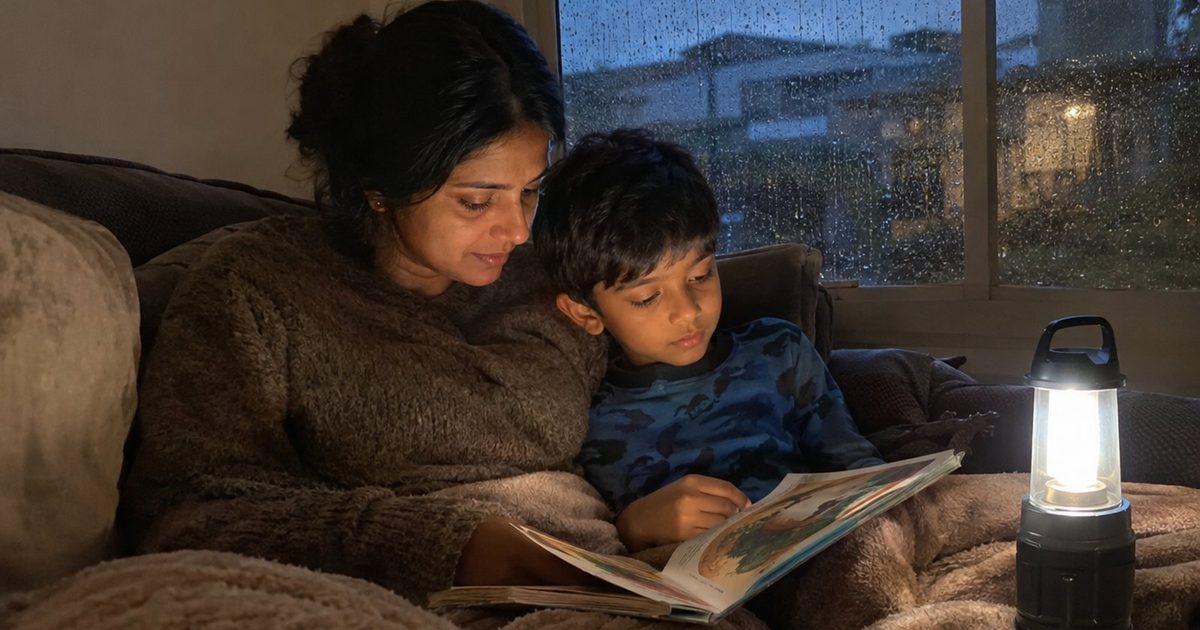
- Do a "lights out" night. Turn off the power for an hour, use lanterns like the Lichamp LED Camping Lanterns, 4 Pack, and play a board game. It shows kids an outage can be okay, even fun.
- Practice going to your safe spot, like an interior room or hallway, as a family.
- Teach them how to call 911, your address, and the name of your out-of-area contact.
- Show them your meeting spot if the family gets separated.
Our storm-season communication plan can help you set up meeting spots and contacts.
During the Storm
- Stay close. Togetherness is the most comforting thing you can offer.
- Limit the news. Constant storm coverage on TV raises anxiety for kids and adults alike.
- Keep routines as much as you can: meals, bedtime stories, and familiar games.
- Narrate what's happening calmly. "That's the wind. We're inside and we're safe."
- Use distractions: books, card games, drawing, or a movie on a charged tablet.
After the Storm
Kids may have questions or worries for days afterward. That's normal.
- Let them talk about what happened, and listen without rushing to fix it.
- Point out the helpers: utility crews fixing power lines, neighbors checking on each other, firefighters keeping people safe.
- Watch for signs of lingering worry, like trouble sleeping, clinginess, or new fears. Most kids bounce back with time and reassurance. If the worry doesn't fade, talk to your pediatrician.
Phrases That Help
- "We have a plan, and you're part of it."
- "It's okay to feel scared. I'm right here."
- "Storms don't last forever. This one will pass."
- "What would help you feel better right now?"
Phrases to Avoid
- "There's nothing to be scared of." (It dismisses their feelings.)
- "This could be really bad." (It adds fear without a plan.)
- Talking about worst-case scenarios where kids can overhear.
Frequently Asked Questions
How do I explain a storm to a young child?
Keep it short and concrete: "Sometimes it rains hard and the wind blows. We have a plan and we'll stay together." Avoid scary details or news footage.
How can I help my child who is afraid of thunderstorms?
Stay close and calm, explain what the sounds are, keep routines, and give them a job, like being in charge of the flashlights. Practicing on a calm night also helps.
Should kids watch storm coverage on the news?
It's best to limit it. Constant coverage can make kids, and adults, more anxious, and young children may think a storm on TV is happening in their own town.
When should I worry about my child's fear after a storm?
Some worry for a few days is normal. If trouble sleeping, clinginess, or new fears don't fade over a few weeks, talk to your pediatrician.