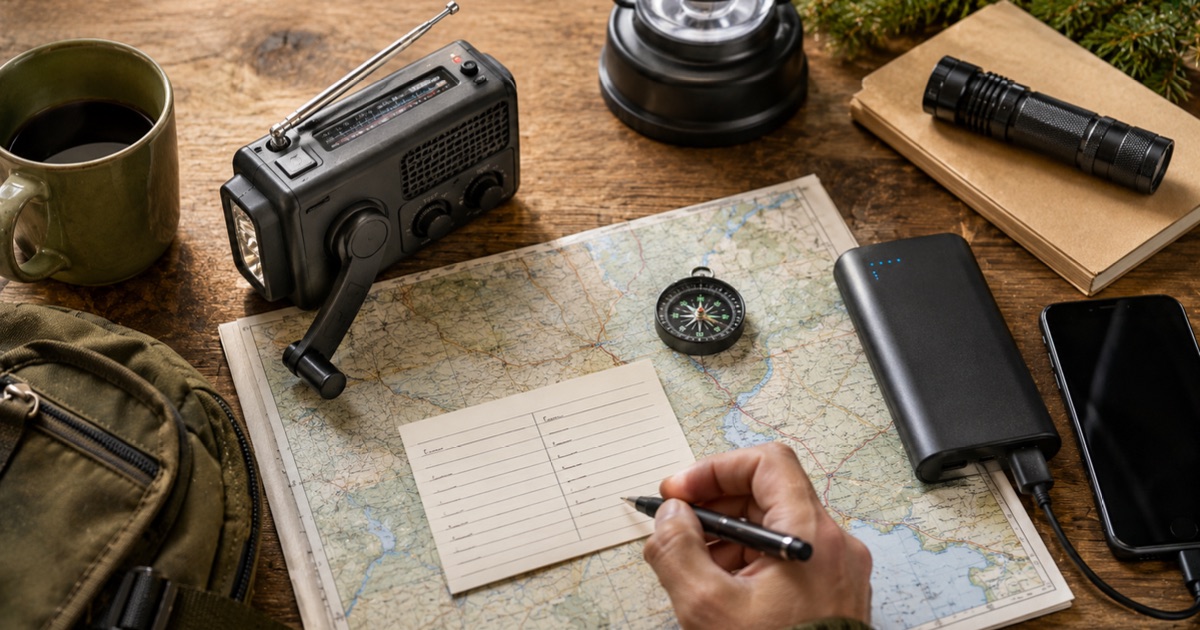
When the power is out and the cell network is down, an emergency weather radio is how you stay informed — receiving NOAA weather alerts and emergency broadcasts that tell you what is happening and what to do. The best ones also charge from multiple sources and can top up your phone, making them a small but genuinely important piece of any kit.
We compared the leading NOAA emergency radios and ranked them.
What to look for
- NOAA / weather band + alerts. The core function — receiving NOAA weather radio and emergency alert broadcasts.
- Multiple power sources. Hand-crank and solar mean it works when batteries die and the grid is down — the whole point of an emergency radio.
- Phone charging. A USB output that tops up a phone is a valuable bonus.
- Flashlight and extras. Most include a light; some add SOS signaling.
At a glance: our ranked picks
| Radio | Best for | Power | Standout |
|---|---|---|---|
| Midland ER310 | Best overall | Crank/solar/battery | Rugged, phone charging, light |
| RunningSnail | Best value | Crank/solar/battery | Great features for the price |
| Midland WR120 | Best home alert | AC/battery | Dedicated NOAA alert receiver |
| Eton FRX3+ | Best build quality | Crank/solar/battery | Durable, trusted brand |
| Raynic | Best feature set | Crank/solar/battery | Large battery, many modes |
1. Best overall: Midland ER310
The Midland ER310 is our top pick — a rugged multi-power emergency radio that receives NOAA weather alerts, runs on hand-crank, solar, or batteries, includes a bright flashlight, and can charge a phone via USB. It covers every base of an emergency radio in a durable package, which is exactly what you want from a device you may not touch until the day you need it.
Best for: Most people wanting one do-it-all emergency radio.
Worth knowing: Hand-crank charging of a phone is slow (true of all crank radios) — it is a backup, not a primary charger.
See Details
2. Best value: RunningSnail
The RunningSnail emergency radio delivers most of what the top picks offer — NOAA bands, hand-crank and solar charging, a flashlight, and phone charging — at a noticeably lower price. For households outfitting multiple kits (home, car, bag), its value makes it easy to have one everywhere.
Best for: Budget buyers and stocking multiple kits.
Worth knowing: Build quality is good for the price but not quite as rugged as the premium units.
See Details
3. Best home alert receiver: Midland WR120
If your priority is being warned at home, the Midland WR120 is a dedicated NOAA weather alert radio that sounds an alarm for warnings in your specific area, even overnight. It plugs in (with battery backup) and acts as an always-on early-warning system — a different job than the portable crank radios.
Best for: A home early-warning alert system.
Worth knowing: It is a home alert receiver, not a portable multi-power unit — pair it with a crank radio for go-bags.
See Details
4. Best build quality: Eton FRX3+
The Eton FRX3+ comes from a brand known for quality emergency radios. It offers the multi-power setup (crank, solar, battery), NOAA alerts, a flashlight, and phone charging in a well-built package for those who prioritize durability and a trusted name.
Best for: Buyers who prioritize build quality and brand reputation.
Worth knowing: It sits at a higher price than budget units with similar features.
See Details
5. Best feature set: Raynic
The Raynic emergency radio packs a larger internal battery and a wide range of modes and outputs, making it a strong choice if you want maximum capability and runtime in one unit. The bigger battery means more phone charging and longer flashlight use between recharges.
Best for: Those wanting the most features and battery capacity.
Worth knowing: More features and a bigger battery mean a larger, heavier unit.
See Details
How to choose
- One portable do-it-all radio? The Midland ER310.
- Outfitting several kits cheaply? The RunningSnail.
- Want to be warned at home, even asleep? Add a Midland WR120 alert receiver.
- Prioritize durability or max features? The Eton FRX3+ or the Raynic.
Many households pair a plug-in home alert radio (WR120) with a portable crank radio (ER310) for the go-bag — warning at home, information on the move. For the bigger picture of staying connected off-grid, see our guide to off-grid communication.
Frequently asked questions
What is a NOAA weather radio?
It is a radio that receives broadcasts from NOAA Weather Radio, a network that transmits continuous weather information and emergency alerts. An emergency weather radio tunes these channels so you get warnings even when other communication is down.
Why do I need a hand-crank or solar radio?
Because emergencies often knock out power and drain batteries. Hand-crank and solar charging mean the radio still works when the grid is down and you have no fresh batteries — which is exactly when you need the information most.
Can an emergency radio charge my phone?
Many can, via a USB output, using their internal battery, solar, or hand-crank. Crank charging is slow and best treated as a backup, but it can give your phone enough power for a critical call or text.