Bottled water is one of the easiest ways to build an emergency water supply. You grab a few cases, stack them in a closet, and you're set. But then you notice a date printed on the bottle and wonder: does water actually go bad?
Here's what that date means, how to store water so it stays fresh, and when it's time to rotate it.
Does Bottled Water Expire?
Water itself doesn't spoil the way milk or bread does. The U.S. Food and Drug Administration (FDA) regulates bottled water, and it doesn't require bottled water to carry an expiration date. The date you see is usually a "best by" date set by the company, mostly about quality: taste, smell, and the condition of the bottle over time.
So commercially bottled water that's still sealed and stored properly is generally safe to drink past that date. But it can start to taste stale or "plasticky," which is why most people rotate it.
Why Storage Matters More Than the Date
The way you store bottled water affects its quality far more than the date on the label.
- Keep it cool. Heat can affect the taste and the plastic. A hot garage, attic, or car trunk isn't ideal for long-term storage.
- Keep it dark. Sunlight can encourage algae growth in bottles that aren't fully sealed and can break down plastic over time.
- Keep it away from chemicals. Plastic bottles aren't completely airtight to strong odors. Don't store water near gasoline, paint, pesticides, cleaning products, or anything with fumes, which can change the taste.
- Keep it off concrete floors in damp areas, and store it on a shelf or pallet instead.
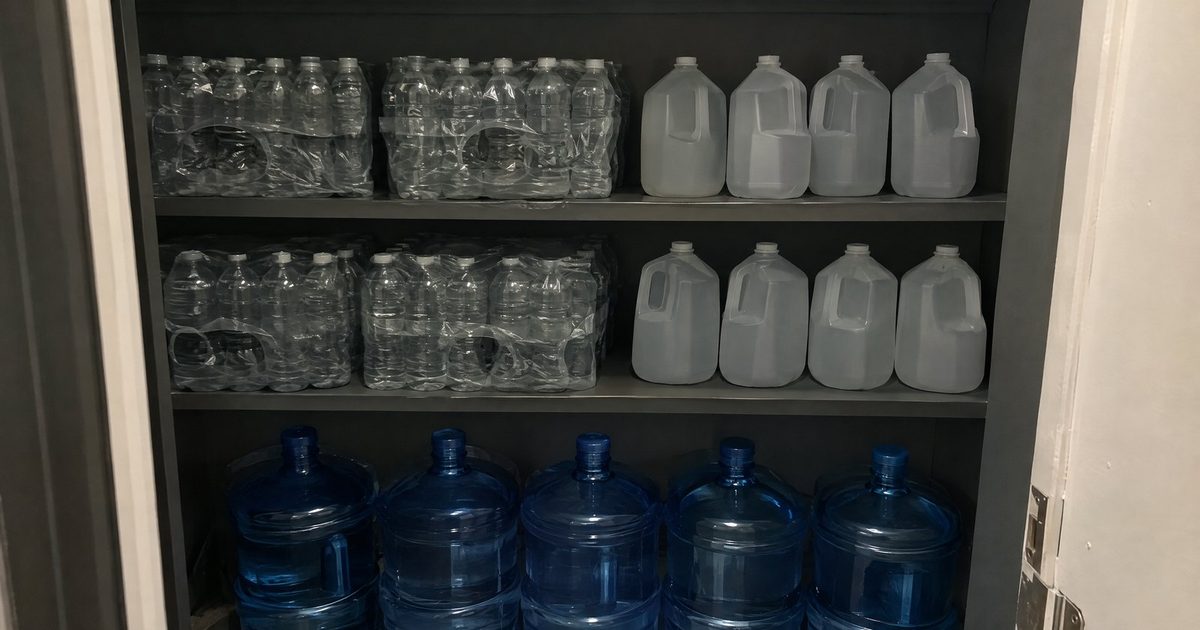
A cool, dark closet or pantry inside your home is the best spot.
How Long to Keep It
- Commercially bottled water, sealed: follow the best-by date as a guide for freshness, and rotate it into everyday use around that time.
- Water you store yourself in clean, food-grade containers: refresh it about every six months.
- Opened bottles: drink within a few days and keep them cold. Once opened, bacteria from your mouth and the air can get in.
Store-Bought Bottles vs. Bulk Containers
Both have a place in your plan.
Store-bought bottles:
- Convenient and sealed
- Easy to grab and carry in a go-bag
- Take up more space per gallon
Bulk containers like the Scepter 5-Gallon Water Storage Jug:
- Hold five gallons each and stack neatly
- Cost less per gallon over time, since you refill them from the tap
- Need to be refreshed about every six months
Many families use both: bulk containers for the main supply, and bottled water for go-bags and cars.
Don't Reuse Thin Single-Use Bottles for Storage
The thin plastic bottles that store-bought water comes in are designed for one use. Refilling them for long-term storage isn't ideal, because they're hard to clean thoroughly and they break down over time. Use sturdy, food-grade containers made for water storage instead.
How Much Water to Keep
The standard is one gallon per person per day, with a two-week supply as the goal for storm season. That's 14 gallons per person, or 56 gallons for a family of four. Don't forget pets. Our water storage guide has the full math.
Don't Forget Pets and Freezer Space
Pets need water too, roughly an ounce per pound of body weight each day for many dogs and cats, though needs vary, so ask your vet. Store extra for them. And if you have freezer space, freezing a few containers of water does double duty: frozen jugs help keep your freezer cold during an outage, and they become drinking water as they thaw. Leave room at the top of the container for the ice to expand.
A Simple Rotation System
- Write the date you bought or filled each container on it with a marker.
- Put new water in the back and move older water to the front.
- Use the oldest water for drinking, cooking, or watering plants, then replace it.
- Set a reminder twice a year, like when the clocks change, to check and rotate your supply.
When Stored Water Runs Out
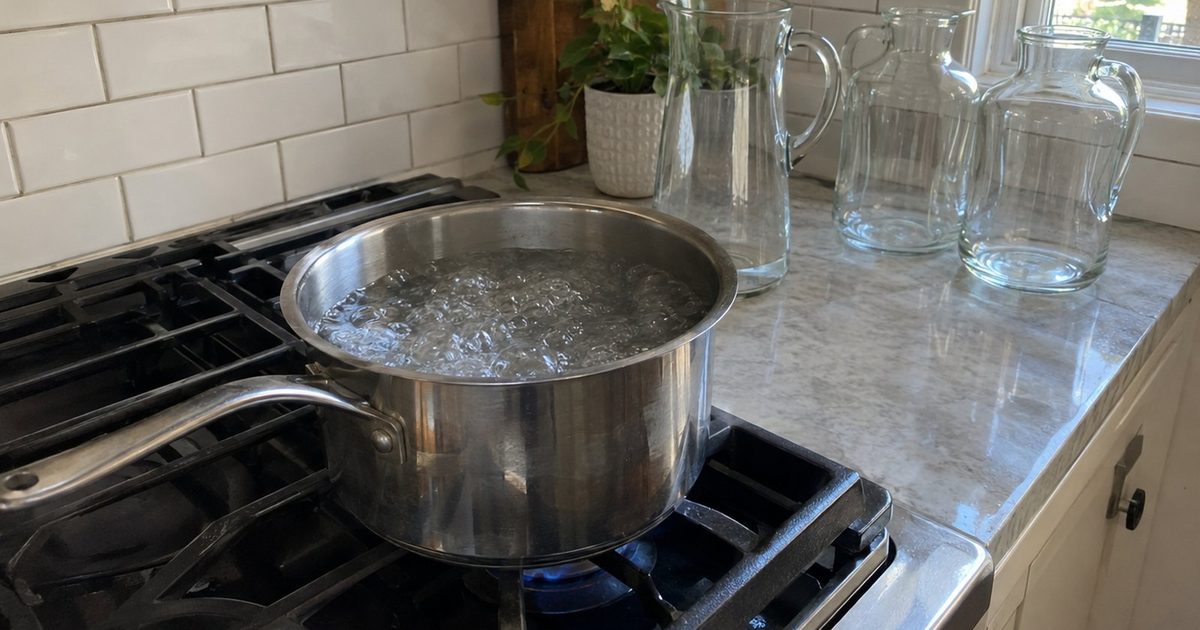
Stored water is your first line of defense, but a backup plan helps. A filter like the Sawyer Squeeze Water Filtration System (SP129) or purification tablets like Potable Aqua Water Purification Tablets let you make other water safer to drink. During a boil water notice, you can also boil tap water for 1 minute. Our guide to whether your tap water is safe after a flood explains when that's needed.
Signs Stored Water Should Be Replaced
- It smells or tastes off.
- The bottle or container is cracked, leaking, or bulging.
- You see anything floating in it or growing on it.
- The seal is broken.
When in doubt, use it for flushing or cleaning instead of drinking, and replace it.
Frequently Asked Questions
Does bottled water expire?
Water itself doesn't spoil, and the FDA doesn't require an expiration date. The date on the bottle is usually a best-by date about taste and quality.
Is it safe to drink bottled water past the date?
Sealed bottled water stored in a cool, dark place is generally safe, though it may taste stale. Most people rotate it around the best-by date.
Can I store bottled water in the garage?
It's not ideal. Heat and fumes from gasoline or chemicals can affect the taste and the plastic. A cool, dark closet inside the home is better.
How long does opened bottled water last?
Drink it within a few days and keep it cold. Once opened, bacteria can get in.