Water is the single most important thing to store, and the one most people get wrong — either storing far too little or keeping it in containers that fail. This guide covers the essentials: how much, in what, how to keep it safe, and how to rotate it so it is there when you need it.
How much water to store
The standard planning figure is one gallon per person per day — about half for drinking and half for cooking and hygiene. Do not forget pets.
- Minimum (72 hours): 3 gallons per person.
- Better (two weeks): 14 gallons per person.
- Add more for hot climates, medical needs, infants, and pets.
A family of four aiming for two weeks needs around 56 gallons. That sounds like a lot, but the right containers make it manageable.
The best containers
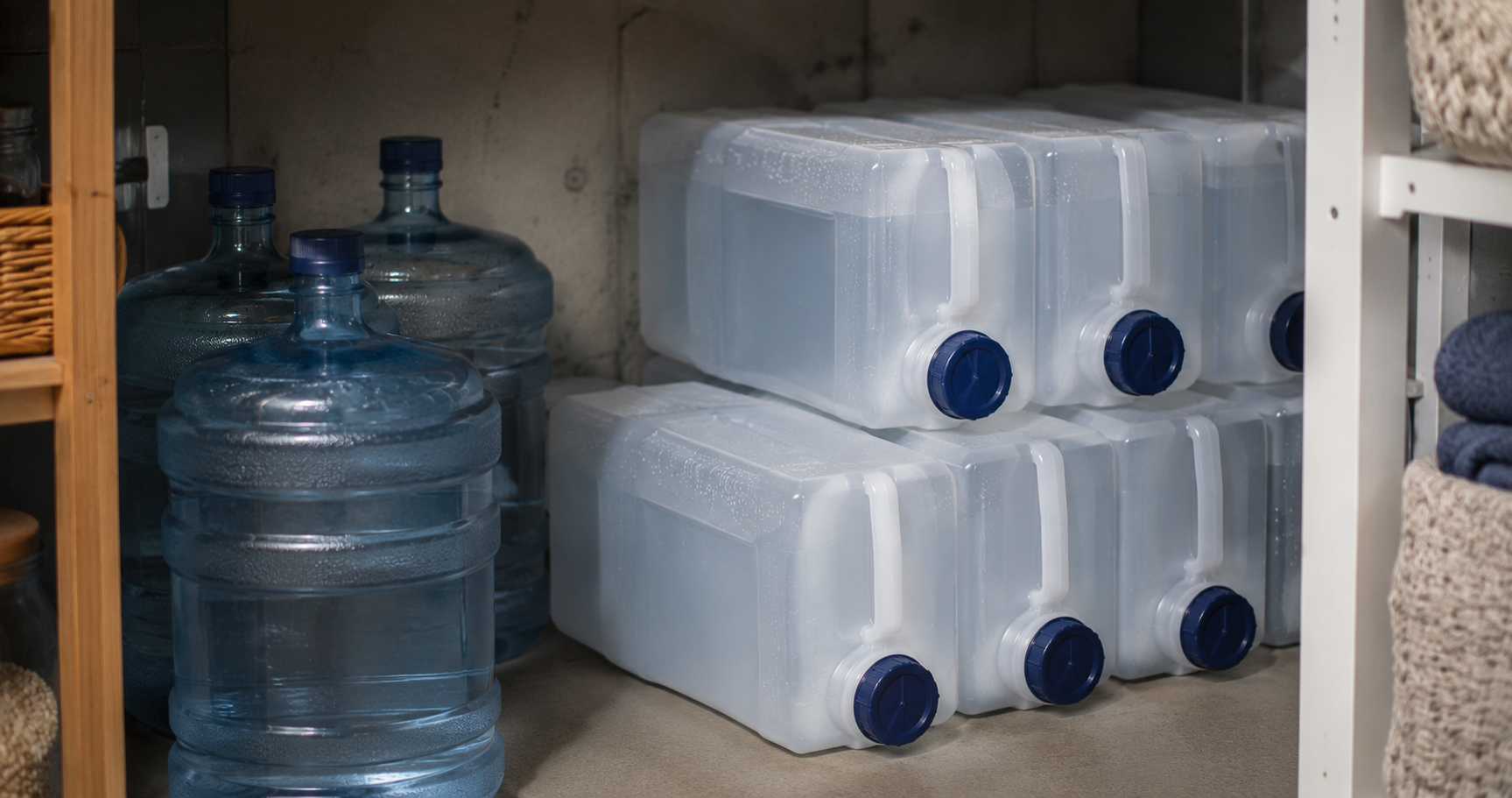
- Stackable water bricks like the WaterBrick system are excellent — they interlock, stack efficiently, and store in tight spaces like closets or under beds.
- 7-gallon jugs such as the Aqua-Tainer are an affordable, proven middle ground — portable enough to handle, large enough to hold a meaningful amount.
- Commercial bottled water is perfectly fine and the easiest starting point; just rotate it by its date.
Avoid reusing milk jugs — they are hard to fully clean, degrade quickly, and can leach. Use food-grade containers made for water.
How to keep stored water safe
If you store municipal tap water, it is already treated and generally safe to store as-is in clean, sealed, food-grade containers. For longer storage or non-municipal sources, treat it before storing.
- Start with clean, sanitized food-grade containers.
- For untreated water, add purification tablets like Aquatabs or a measured amount of unscented household bleach per label/official guidance.
- Seal tightly and label with the date.
Keep purification tablets on hand regardless — they let you treat new water if you ever run out of stored supply.
Where to store it
- Cool, dark, and dry. Heat and light degrade containers and encourage algae. A closet or basement beats a hot garage or direct sun.
- Off concrete if possible — set plastic containers on wood or cardboard, as some plastics can pick up odors from concrete over time.
- Spread it out. Keep some water in more than one location so a single problem (a leak, an inaccessible room) does not cost you all of it.
How to rotate it
- Store-bought bottled water: rotate by the printed date.
- Tap water in proper containers: refresh roughly every 6 to 12 months for best taste and safety.
- Label every container with the fill or purchase date and use the oldest first.
Frequently asked questions
How much water should I store per person?
One gallon per person per day is the standard, covering both drinking and basic hygiene. Aim for at least three days, and ideally two weeks. Increase the amount for hot climates, medical needs, infants, and pets.
How long can you store water?
Commercially bottled water should be used by its date. Tap water stored in clean, sealed, food-grade containers is best refreshed every 6 to 12 months. Stored water that looks or smells off should be filtered or treated before use.
Can I just rely on a filter instead of storing water?
A filter is essential, but it needs a water source. Stored water covers the times when no source is available or safe to reach. The strongest setup combines stored water for immediate needs with a filter to extend your supply.