When the power goes out, your phone instantly becomes the most important thing you own. It's your flashlight, your weather alerts, your outage map, and your line to family. And it starts dying the moment the lights go off.
Here are seven ways to keep it charged without a wall outlet, ranked from most to least reliable, plus the battery-saving tricks that can stretch one charge for days.
1. A Power Bank
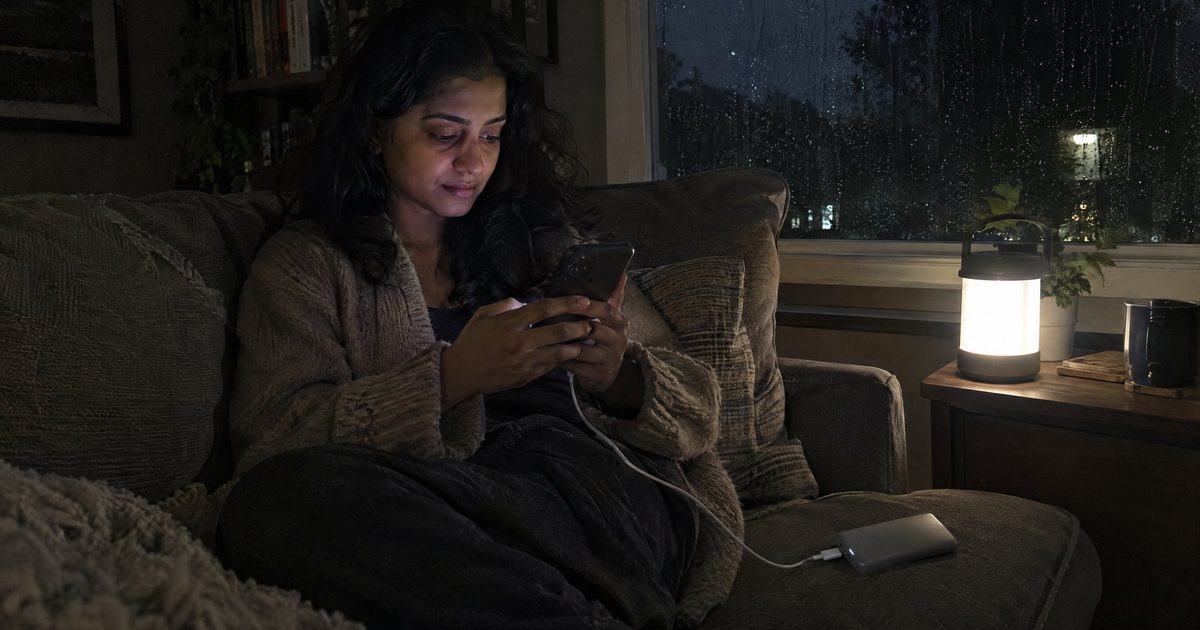
This is the easiest, cheapest, most reliable option, and every household should own at least one. A 20,000mAh unit like the Anker 20,000mAh Power Bank can charge most phones several times. It fits in a pocket and works the instant you need it.
The catch: it only helps if it's charged. Top it off once a month, and again whenever a storm shows up in the forecast.
2. A Portable Power Station
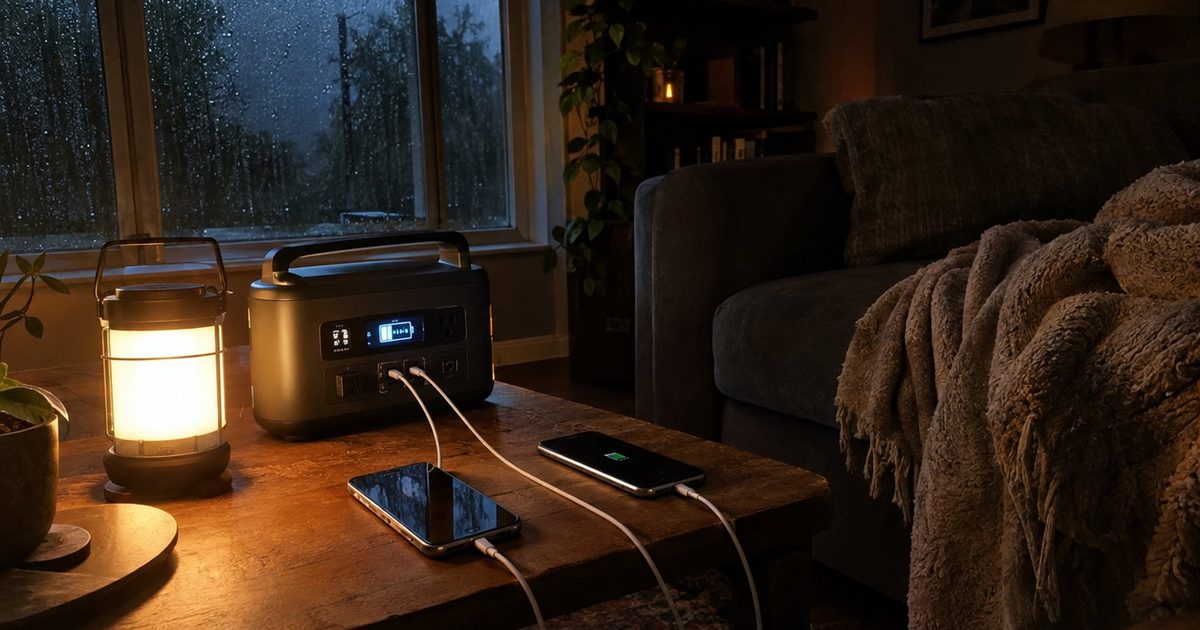
A power station is a much bigger rechargeable battery with outlets and USB ports. A unit like the Jackery Explorer 1000 v2 Power Station can charge every phone in the house dozens of times, and it can run your Wi-Fi router, lights, and small medical devices too. It's safe indoors, which a gas generator is not.
If you're comparing models, our Power Outage Essentials for El Niño Storm Season explains how to pick the right size.
3. A Solar Panel
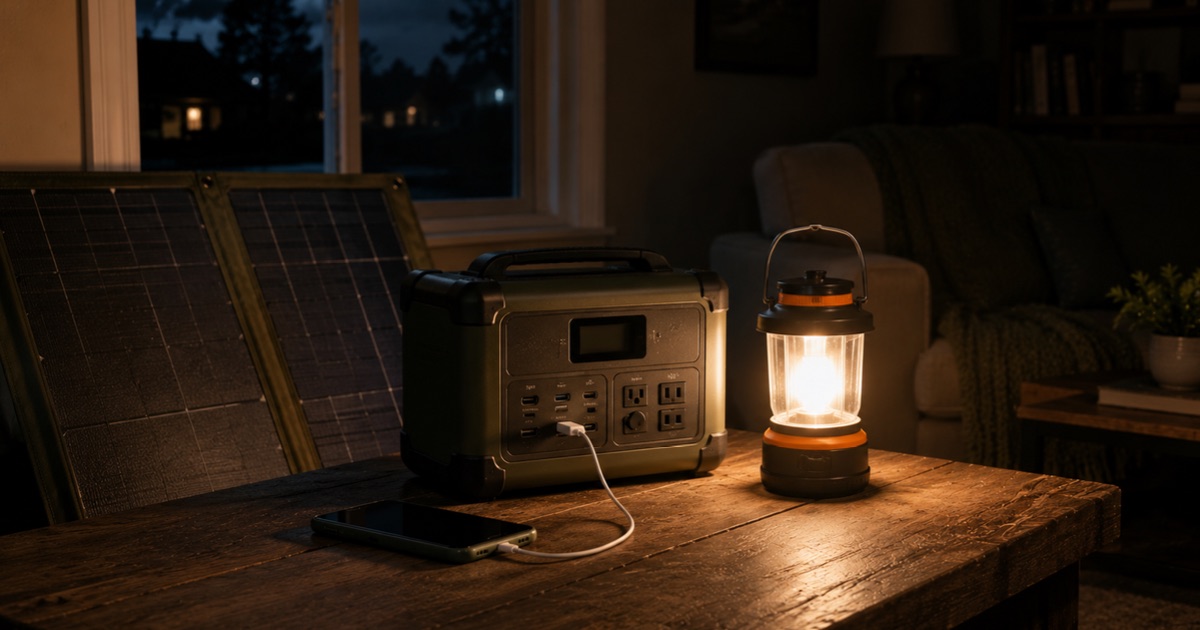
Solar turns a short-term fix into a long-term one. A folding panel like the Renogy 100W Folding Solar Panel can recharge a power station during the day, which then charges your phones at night. Even on cloudy days, it still produces some power, just more slowly. For multi-day outages, solar is what keeps you going after your batteries run down.
4. Your Car
Your car is a big battery on wheels. With a car charger, you can charge a phone while the engine runs.
Do this safely:
- Only run the car outdoors, never in a garage, even with the garage door open. Car exhaust contains carbon monoxide, which can build up to deadly levels.
- Run the engine while charging rather than draining the battery with the engine off, or you might not be able to start the car later.
- Watch your gas. During a widespread outage, gas stations may not be able to pump fuel.
5. A Hand-Crank or Solar Radio
Many emergency radios include a USB port that can give your phone a small boost. A model like the FosPower Solar Hand-Crank NOAA Radio charges from its built-in solar panel, a hand crank, or batteries. Cranking is slow work. Expect a small emergency charge, enough for a call or a few texts, not a full battery. But it works when nothing else does.
6. A Laptop or Tablet
A charged laptop is a decent power bank in disguise. Plug your phone into the laptop's USB port with the laptop lid open and awake, and it'll charge. Just know you're draining the laptop to do it.
7. A Charging Station in Your Community
During big outages, many towns open warming centers, libraries, or fire stations where people can charge devices. Your county's emergency management office or a local radio station will announce them. It's not ideal, but it's a solid backup.
Make Your Battery Last Longer
Charging is only half the plan. Using less battery buys you hours, sometimes days.
- Turn on Low Power Mode (iPhone) or Battery Saver (Android) the moment the power goes out.
- Turn the screen brightness down as low as you can comfortably read.
- Close apps you don't need, especially video, games, and maps running in the background.
- Text instead of calling. Texts use less battery, and they're more likely to get through when networks are overloaded.
- Use a real flashlight or headlamp, not your phone's flashlight.
- Turn on Airplane Mode when you don't need a signal, like overnight. If you're in an area with weak service, your phone burns battery searching for a signal.
- Keep it warm. Cold drains batteries faster, so keep your phone in an inside pocket during winter outages.
Get Ready Before the Storm
The best time to solve this problem is before the power goes out:
- Charge every phone, power bank, and power station when a storm is forecast.
- Keep a car charger in every car.
- Write important phone numbers on paper in case your phone dies anyway.
- Keep a spare charging cable that fits each phone in your emergency kit. A power bank with no cable is useless, and cables are the first thing that goes missing.
- If someone in your home has a different phone, check that your chargers fit it, too. Old cables and new phones don't always match.
Our storm-season communication plan covers what else your family needs to stay in touch. All of our power picks are saved in our Power Outage Essentials list on Amazon.
Frequently Asked Questions
What's the best way to charge a phone without electricity?
A charged power bank. It's cheap, portable, and works instantly. For longer outages, a portable power station with a solar panel is the most dependable setup.
Is it safe to charge my phone in my car during an outage?
Yes, if the car is outside. Never run a car in a garage, even with the door open, because carbon monoxide can build up quickly.
Can a hand-crank radio charge a phone?
Many can, but slowly. Expect enough for a call or a few texts, not a full charge.
How can I make my phone battery last during a power outage?
Turn on Low Power Mode, lower the screen brightness, close apps, text instead of calling, and use Airplane Mode when you don't need service.