When a storm knocks out power for days, a camp stove is the difference between eating cold food out of cans and making real meals: hot coffee, scrambled eggs, soup, and boiled water for instant meals and safe drinking water. It's one of the most useful pieces of gear you can own for a long outage.
The catch: most camp stoves burn fuel and produce carbon monoxide, so they're for outdoor use. Here's how to choose the right one, and our picks for different households.
What to Look For
- Number of burners. Two burners let you cook a main dish and boil water at the same time. A single burner is smaller and lighter.
- Fuel type. Most stoves run on propane, butane, or isobutane canisters. Propane is the easiest to find in hardware and big-box stores.
- Wind protection. Built-in windscreens help keep the flame steady outdoors, which matters in stormy weather.
- Simmer control. Being able to turn the flame low means you can actually cook, not just boil.
- Ignition. Push-button ignition is convenient, but keep a lighter or matches as backup.
Our Picks
Best Overall for Families: Coleman Classic Two-Burner Propane Stove
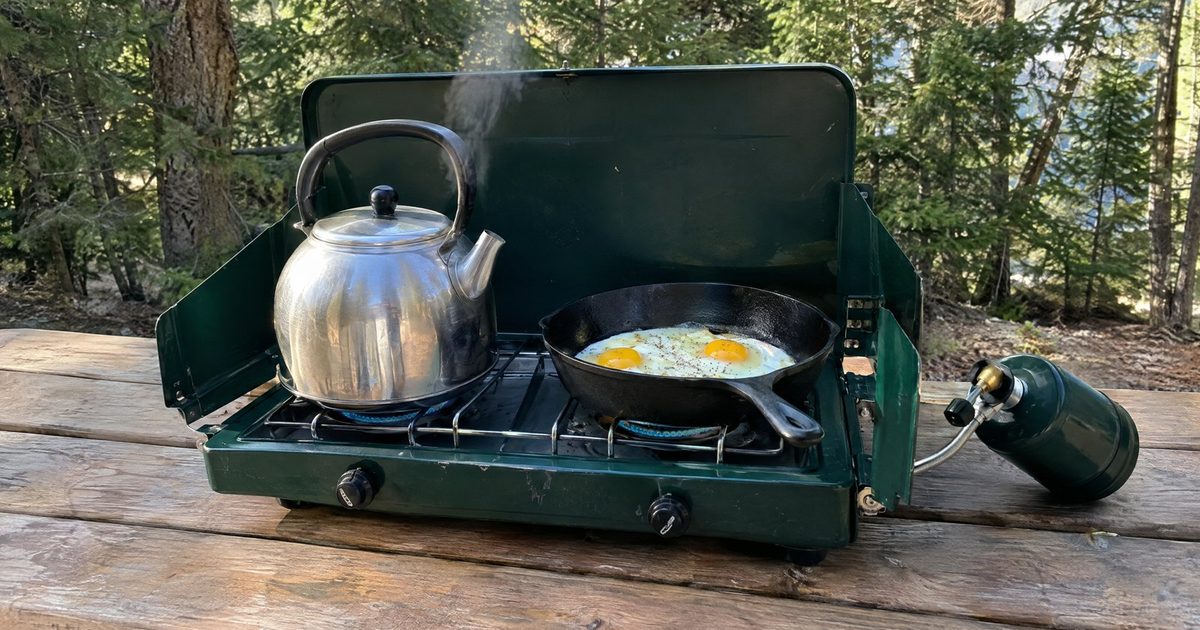
The Coleman Classic Propane Camp Stove is the classic family camp stove for a reason. It's simple, reliable, runs on widely available 1-pound propane cylinders, and two burners can handle a real meal. It folds up like a small suitcase for storage.
Best for: most households that want one dependable outage stove.
Best for Serious Outdoor Cooking: Camp Chef Two-Burner Stove
If you want more cooking power and more control, a higher-output stove like the Camp Chef Two-Burner Camp Stove options boils water fast and simmers well, which helps when you're cooking for a crowd.
Best for: larger families and people who cook a lot outdoors.
Best Compact Option: Jetboil
A Jetboil Flash Cooking System system is built to boil water very fast in a small, all-in-one package. It's ideal for coffee, instant meals, freeze-dried food, and go-bags, though it's not meant for frying or simmering.
Best for: go-bags, small households, and anyone with an emergency food bucket that needs boiling water.
Best Butane Option: Iwatani Portable Butane Stove
Single-burner butane stoves like the Iwatani Portable Butane Stove are slim, easy to store, and good for simmering. Some butane stoves are marketed for indoor use with ventilation, but every flame produces carbon monoxide, so outdoors remains the safest place to use any fuel-burning stove. Follow the manufacturer's directions exactly.
Best for: precise single-pot cooking.
Fuel: How Much to Keep
Your stove is only as useful as your fuel supply.
- Know your stove's burn time per canister from the manufacturer, and plan for a few days of cooking.
- Store fuel outdoors or in a detached shed, away from heat, sunlight, and anything that sparks. Don't store extra fuel canisters in your house.
- Buy fuel before storm season, when shelves are full.
- Check canisters for damage or rust before use.
Safety Rules
- Use fuel-burning stoves outdoors, never in a house, garage, carport, or enclosed porch.
- Set up on a stable, flat surface away from anything flammable.
- Never leave a lit stove unattended.
- Let it cool fully before packing it away.
- Keep a battery CO alarm like the Kidde Battery-Powered CO Detector in your home, especially during outages, when people take more risks.
Our guide to how to cook without power covers no-cook meals and other safe options, and carbon monoxide safety during power outages explains why outdoor-only matters.
Use Your Stove to Make Water Safe
A camp stove isn't just for meals. If your area is under a boil water notice, you can make tap water safe by bringing it to a full, rolling boil for 1 minute (3 minutes above 6,500 feet), then letting it cool. That makes your stove part of your water plan too.
Accessories Worth Adding
- A long-reach lighter or waterproof matches, in case the push-button ignition fails.
- A kettle or pot with a lid, which boils water faster and saves fuel.
- A cast-iron skillet, which holds heat well on a camp stove.
- A sturdy folding table, so the stove sits on a stable, flat surface.
- A fuel adapter hose, if you want to run a two-burner stove from a larger refillable propane tank. Follow the manufacturer's guidance.
Practice Before You Need It
Cook one meal on your stove before storm season. Make sure you know how to connect the fuel, light it, and adjust the flame. A backyard pancake breakfast is a fun way to test your gear, and it means you won't be learning by flashlight during an outage.
Which Should You Buy?
- One stove for the whole family: a two-burner propane stove like the Coleman.
- Mostly boiling water for coffee and instant meals: a compact Jetboil.
- Big family or lots of outdoor cooking: a higher-output two-burner stove.
- Precise single-pot cooking: a slim butane burner, used outdoors.
Find more of our picks in our Doomsday Center Amazon storefront.
Frequently Asked Questions
What's the best camp stove for power outages?
For most families, a two-burner propane stove. It's simple, reliable, and runs on fuel that's easy to find.
Can I use a camp stove indoors?
Most camp stoves are designed for outdoor use and produce carbon monoxide. Use them outdoors, away from doors, windows, and vents.
How much fuel should I store for a camp stove?
Enough for several days of cooking, based on your stove's burn time per canister. Store it outdoors, away from heat and sunlight.
Propane or butane: which is better for emergencies?
Propane is easier to find and works better in cold weather. Butane stoves are compact and simmer well but can struggle in the cold.