Emergency food buckets are one of the fastest ways to add weeks of food to your pantry. You buy one sealed bucket, stash it in a closet, and forget about it for years. But the labels can be misleading, and not every bucket is a good deal.
Here's how to compare them, what to watch out for, and our ranking of the best ways to stock up, including the do-it-yourself option that often beats them all on price.
What's Actually in a Food Bucket?
Most ready-made buckets hold individual pouches of freeze-dried or dehydrated meals, like pasta dishes, soups, rice dishes, and oatmeal. You add hot water, wait, and eat. They're sealed against air and moisture, which is why many brands claim a shelf life of up to 25 years.
How to Compare Buckets (Read This Before You Buy)
The biggest trick in this category is the word "servings." Brands count servings differently, and a "serving" can be surprisingly small. To compare fairly:
- Look at total calories, not servings. An adult needs roughly 2,000 calories a day. Divide the bucket's total calories by 2,000 to see how many real days of food it holds for one person.
- Check the protein. Many buckets are heavy on carbs. You'll want to add proteins like canned tuna, chicken, or peanut butter.
- Check the sodium. Some meals are high in salt, which matters if anyone in your family watches sodium.
- Check how much water it needs. Most meals need boiling water, which means you need both stored water and a way to heat it during an outage.
- Try it first. Buy one small bucket or a few pouches and eat them before buying in bulk. If your family won't eat it, it's not food security.
Our Ranking
1. Best Overall Ready-Made Bucket: ReadyWise
The ReadyWise 120-Serving Emergency Food Bucket is one of the most widely available emergency food buckets. Pouches are portioned, stackable, and easy to grab, and the brand advertises a long shelf life. It's a solid, simple way to add a block of meals to your supply in one purchase.
Best for: people who want a fast, set-it-and-forget-it food reserve.
2. Best Value for Staples: Bulk Food Storage
Brands like Augason Farms sell large containers of staples, such as rice, oats, beans, and powdered milk, along with some meal buckets. Search options are in our ReadyWise 120-Serving Emergency Food Supply link. Staples usually cost less per calorie than ready-made meals, but you'll need to cook them, which takes more water and fuel.
Best for: families who cook and want the most calories for the money.
3. Best Budget and Most Flexible: DIY Mylar Buckets
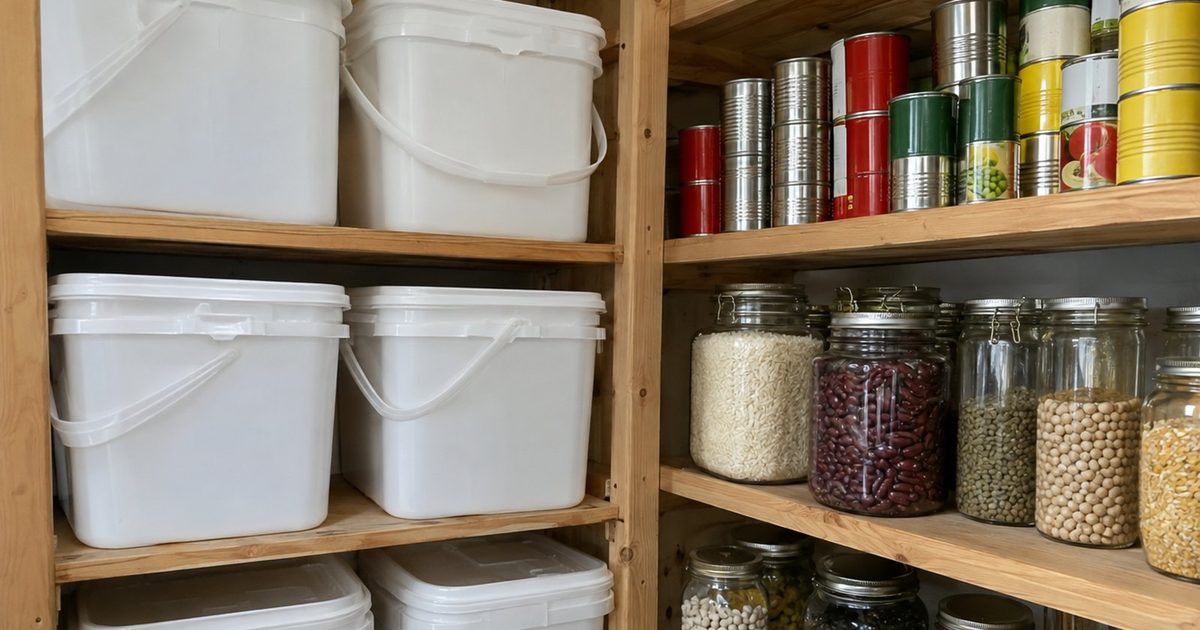
This is the option experienced preppers love. You buy rice, beans, oats, pasta, sugar, and salt at the grocery store, seal them in 1 Gallon Mylar Bags with Oxygen Absorbers (50 Pack) with oxygen absorbers, and store the bags inside food-grade 5 Gallon Food Grade Bucket with Airtight Lid (Pack of 3) with tight lids. Stored this way and kept cool and dark, staples like white rice and dried beans can last for decades.
Best for: anyone on a budget, or anyone who wants to choose exactly what their family eats.
4. Don't Forget: The Regular Pantry
The most underrated emergency food is the food you already buy. Canned proteins, canned vegetables, peanut butter, crackers, and shelf-stable milk need no special packaging, and many need no cooking. Buy a few extras on every grocery trip and rotate them. Our emergency food stockpile guide shows how to build two weeks this way.
Which Option Is Right for You?
- Want it done fast? Start with a ready-made bucket.
- Want the most food for your money? Go DIY with mylar and buckets.
- Want the easiest outage meals? Lean on no-cook pantry foods.
- Want the best of everything? Combine all three: a bucket for long-term backup, DIY staples for bulk calories, and pantry food for everyday rotation.
Storage Tips
- Keep buckets cool, dry, and dark. Heat is the enemy of shelf life. A closet beats a hot garage or attic.
- Store them off the floor if you're in a flood-prone area.
- Label everything with the date.
- Keep a manual can opener and a way to heat water, like a camp stove you'll use outdoors only.
- Store water too. Many bucket meals need water to prepare. See how much water to store for El Niño.
A Simple Starter Plan
If you're starting from zero, here's an easy path. Month one, buy one ready-made bucket so you have a backup in place. Month two, pick up a bag of rice and a bag of beans and seal them in mylar. Month three, add a few cases of canned proteins and vegetables to your pantry. In three months, you'll have a layered supply that covers short outages and long ones.
What We'd Avoid
Skip buckets that hide calories behind big "serving" counts, buckets with mostly drink mixes and sides instead of meals, and anything your family has never tasted. A cheap bucket nobody will eat is money wasted.
All of our food storage picks are saved in our Emergency Supplies Essentials list.
Frequently Asked Questions
Are emergency food buckets worth it?
They're worth it as a fast, long-lasting backup. For the best value, many families combine a ready-made bucket with DIY staples and regular pantry food.
How long do emergency food buckets last?
Many brands advertise a shelf life of up to 25 years when stored cool and dry. Actual shelf life depends on storage conditions.
How many calories should an emergency food supply have?
Plan for about 2,000 calories per adult per day. Compare buckets by total calories to see how many real days of food they provide.
Is it cheaper to make my own emergency food buckets?
Usually, yes. Sealing grocery staples like rice and beans in mylar bags inside food-grade buckets typically costs less per calorie than ready-made meal buckets.