When the power goes out, the first thing everyone reaches for is light. And every storm season, some of those reaches end badly. Candles are one of the most common causes of house fires during outages, especially when they're left burning near curtains, or with kids and pets around.
Battery LED lights are safer, brighter, and last far longer. Here's how to build a lighting setup for your home, and our picks for each job. All of them are saved in our Power Outage Essentials list.
Three Kinds of Light, Three Jobs
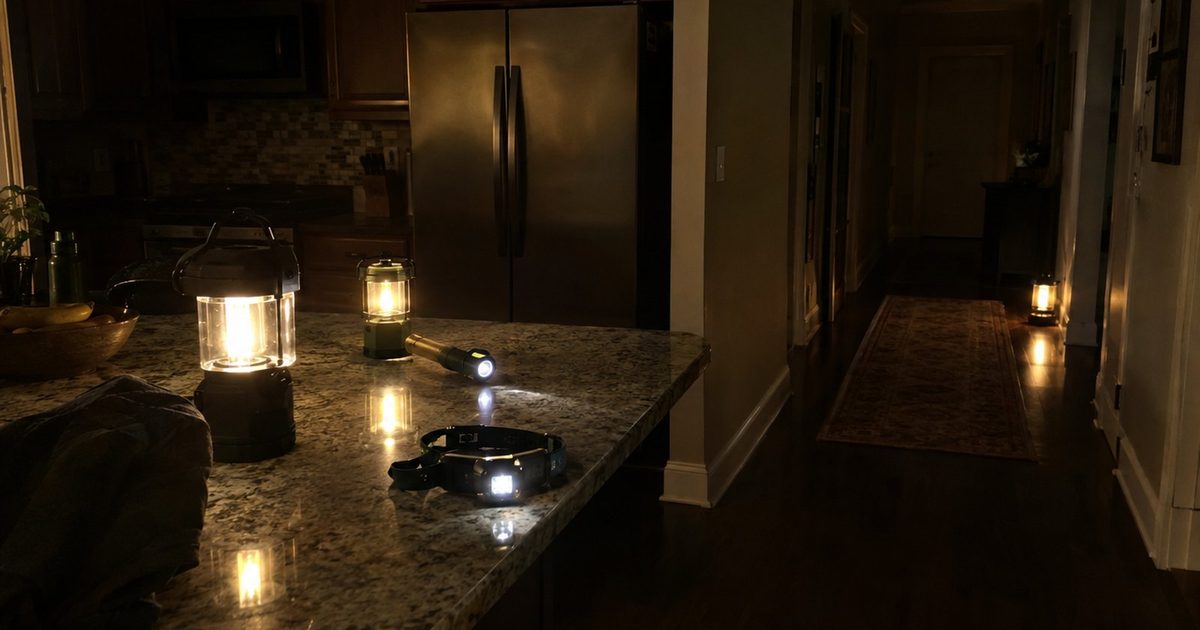
The best outage setup uses all three:
- Lanterns light up a whole room, so everyone can see.
- Flashlights throw a strong beam for checking the yard, the breaker box, or a dark hallway.
- Headlamps keep your hands free for cooking, carrying kids, or fixing things.
Best Lanterns: Light Up the Room
LED lanterns spread light in every direction, which is exactly what you want in a living room, kitchen, or bathroom.
- Lichamp LED Camping Lanterns, 4 Pack: a multi-pack, so you can put one in every main room.
- Etekcity LED Camping Lanterns, 4 Pack: another popular multi-pack that collapses flat to store easily.
Tip: put one lantern in the bathroom and one in the kitchen. Those are the rooms where people get hurt fumbling around in the dark.
Best Flashlight: Bright and Tough
For checking outside, looking for a downed line from a safe distance, or finding something in the garage, you want a bright, durable flashlight. The Streamlight ProTac Tactical Flashlight is a sturdy tactical-style light that's bright enough for real work and holds up to drops. Give every adult in the house their own flashlight so nobody has to share.
Best Headlamp: Hands-Free
Headlamps are the most underrated outage tool. Cooking, changing a diaper, flipping a breaker, or carrying a sleepy toddler down the stairs is a lot easier with both hands free. An Energizer PRO-260 LED Headlamp is a reliable, affordable pick. Get one per adult.
How Much Light Do You Need?
Light output is measured in lumens. A rough guide:
- Around 100 lumens: enough to read or move around a small room.
- 200 to 500 lumens: good for lighting a whole room or working on a task.
- 500+ lumens: great for a flashlight beam outdoors.
More lumens isn't always better. Brighter means the batteries drain faster. Look for lights with a low setting so you can stretch battery life through a long outage.
Batteries: Plan for a Long Outage
Your lights are only as good as your batteries.
- Check what each light uses (AA, AAA, or built-in rechargeable) and stock spares to match.
- Use rechargeable batteries like the Energizer Rechargeable AA Batteries, 16 Pack, which can be topped off from a power station or solar panel during long outages. Our Power Outage Essentials for El Niño Storm Season covers backup power.
- Store batteries in a cool, dry spot, and check the dates once a year.
- Take batteries out of lights you'll store for months, since old batteries can leak and ruin the light.
How Many Lights Does a Home Need?
A simple rule:
- One lantern for each main room you'll use during an outage, plus the bathroom.
- One flashlight per adult.
- One headlamp per adult.
- One small light for each child, so they feel safe at night.
Lights for Kids and Older Adults
Darkness is scary for kids and dangerous for older adults, who are more likely to fall.
- Give each child their own small flashlight or lantern they can turn on themselves. Having their own light helps them feel in control.
- Light the path to the bathroom at night with a lantern or battery motion lights, like Tuffenough Solar Motion-Sensor Security Lights 3-Head 2500LM (2-Pack), along hallways and stairs.
- Keep a light within arm's reach of every bed, especially for anyone who gets up at night.
- Turn lights to a low setting overnight to save batteries while still lighting the way.
Hand-Crank and Solar Lights
Some lights never need batteries at all. Hand-crank and solar lanterns can be recharged by turning a handle or setting them in the sun. They're dimmer and less convenient than battery lights, but they make a great backup for very long outages, or for anyone who forgets to restock batteries.
Where to Keep Them
Lights don't help if you can't find them in the dark. Keep a flashlight in each bedroom nightstand, a lantern in the kitchen, and your spares and batteries together with your emergency supplies. Tell everyone where they are.
Why Not Candles?
Candles seem cozy, but they're a real fire risk, especially when you're tired, distracted, or dealing with kids and pets. If you absolutely must use one, never leave it unattended, keep it far from anything that can burn, and put it in a sturdy holder. Better yet, skip them entirely.
Our Picks at a Glance
- Best room lantern: Lichamp LED Camping Lanterns, 4 Pack
- Best collapsible lantern: Etekcity LED Camping Lanterns, 4 Pack
- Best flashlight: Streamlight ProTac Tactical Flashlight
- Best headlamp: Energizer PRO-260 LED Headlamp
- Best batteries: Energizer Rechargeable AA Batteries, 16 Pack
For the rest of your outage plan, see power outage prep for storm season and our guide to charging your phone without power.
Frequently Asked Questions
What's the best light to have during a power outage?
A mix: LED lanterns to light rooms, flashlights for checking outside, and headlamps for hands-free tasks.
Are candles safe during a power outage?
They're a common cause of house fires during outages. Battery LED lanterns are much safer and brighter.
How many lumens do I need for a power outage?
Around 100 lumens is enough to move around a room, and 200 to 500 lumens lights a room well. Use lower settings to make batteries last longer.
Should I use rechargeable batteries for emergencies?
Yes, if you have a way to recharge them, like a power station or solar panel. Keep some regular batteries too, as a backup.