When people talk about what they lost in a flood or fire, the stories are rarely about TVs or couches. They're about birth certificates, insurance policies, property deeds, and family photos, the papers that take months to replace and the memories that can't be replaced at all.
The fix is simple and cheap: keep your most important documents together, protected from water and fire, in something you can grab in seconds. Here's how to choose the right storage, and exactly what to put in it.
Three Ways to Protect Documents
The best setup uses more than one layer:
- A fire- and water-resistant pouch for everyday storage near your exit.
- A fully waterproof dry bag for evacuations, when you might have to wade through water or get soaked in rain.
- A digital backup in secure cloud storage, so even if the paper is lost, you still have copies.
Fire- and Water-Resistant Document Pouches
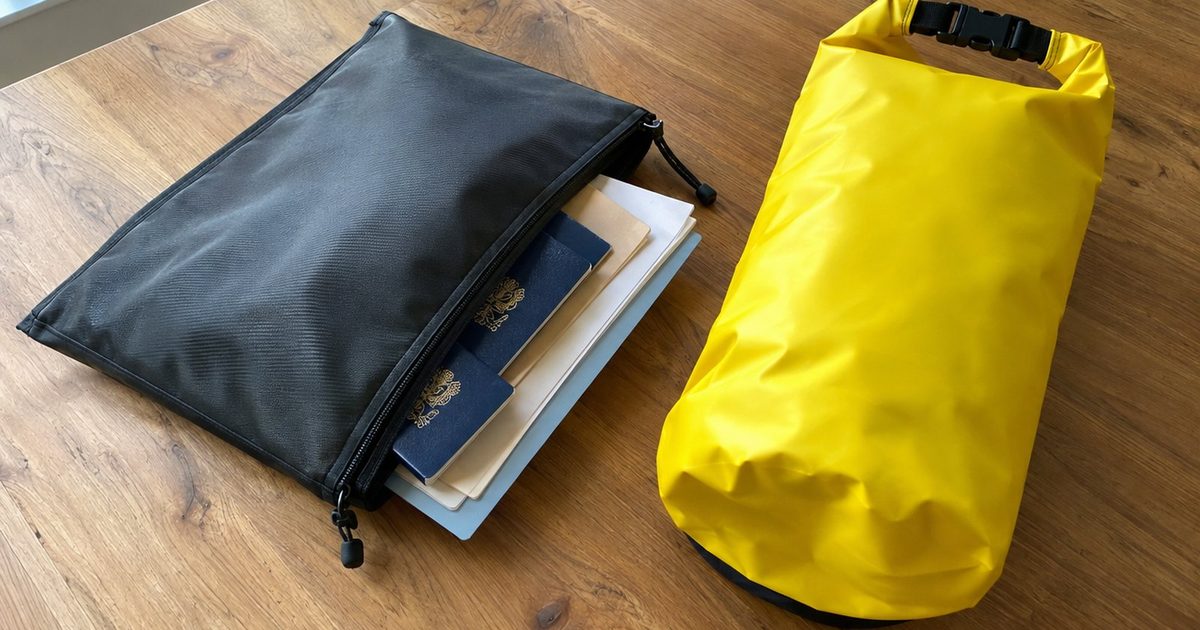
These are zippered pouches made from fire-resistant materials, sized for folders and passports. A pouch like the Andyer Fireproof & Water-Resistant Document Bag is a great everyday option. It holds letter-size papers flat, has room for passports and cash, and is easy to grab.
What to know: "Fire-resistant" and "water-resistant" don't mean fireproof or waterproof. These pouches can slow damage from heat, splashes, and rain, but they aren't built to sit underwater. That's why we pair one with a dry bag.
Best for: daily storage in a closet near your door.
Roll-Top Waterproof Dry Bags
Dry bags close by rolling the top down several times and clipping it shut, which creates a seal that keeps water out even if the bag gets dunked. A bag like the Earth Pak Waterproof Dry Bag keeps papers, phones, and medications dry during an evacuation, a boat ride, or a walk through a flooded street.
Tip: put your document pouch inside the dry bag when you evacuate. You get water protection and fire resistance in one grab.
Best for: evacuations and your flood emergency kit.
Zip-Top Bags: The Budget Option
On a tight budget? Heavy-duty gallon freezer bags are better than nothing. Double-bag your papers, squeeze out the air, and seal them. They won't protect against fire, but they'll keep papers dry in a pinch.
Home Safes
A fire-resistant home safe protects documents while you're home, but it's heavy and you can't grab it on the way out the door. If you use a safe, keep copies of your most important papers in a grab-and-go pouch too. And check the safe's rating: some protect against fire but not floodwater.
What Documents to Keep Together
Keep originals or copies of these in your pouch:
Identity
- Driver's licenses or state IDs (copies)
- Passports
- Birth certificates and Social Security cards
- Marriage, divorce, or adoption papers
Home and money 5. Homeowners, renters, and flood insurance policies 6. Your deed or lease 7. Car titles and registration 8. Recent bank statements and account numbers 9. A list of important passwords, stored securely
Health 10. Insurance cards (copies) 11. A list of medications, doses, and allergies 12. Doctors' names and phone numbers 13. Vaccination records, including for pets
Contacts and cash 14. A printed list of phone numbers for family, your out-of-area contact, and your insurance agent 15. Some cash in small bills
Make a Digital Backup
Scan or photograph every document and store the files in secure, encrypted cloud storage or on an encrypted USB drive. If your paper copies are ever lost, a digital copy makes replacing them much faster. Update it once a year.
Where to Keep It
- Near your exit, in a closet or on a shelf by the door, not buried in a back room.
- Up high, if you're in a flood-prone area.
- Somewhere everyone in the house knows about, so anyone can grab it.
Our evacuation checklist puts documents in the first few minutes of any evacuation for a reason.
Keep It Up to Date
Set a reminder to check your pouch once a year, at the start of storm season. Replace expired IDs and insurance cards, update your medication list, refresh your phone numbers, and swap in new account statements. A document pouch full of outdated papers can slow you down just when you need things to move fast.
Our Picks at a Glance
- Best everyday document pouch: Andyer Fireproof & Water-Resistant Document Bag
- Best for evacuations and floods: Earth Pak Waterproof Dry Bag
- Best budget option: heavy-duty freezer bags, double-bagged
You'll find these, along with the rest of our go-bag picks, in our Emergency Supplies Essentials list.
A 20-Minute Weekend Project
You can set this up in one sitting:
- Gather the documents on the list above.
- Make copies of anything you don't want to keep in the pouch as an original.
- Scan or photograph everything and upload it to secure storage.
- Put the papers in the pouch, and put the pouch near your door.
- Tell your family where it is.
The Storm-Ready Survival Bundle includes a printable family emergency binder that keeps all of this organized in one place.
Frequently Asked Questions
What's the best way to protect documents from a flood?
Use a roll-top waterproof dry bag for floods and evacuations, and keep a digital backup in secure cloud storage. Fire-resistant pouches help with splashes and rain but aren't designed to stay underwater.
Are fire-resistant document bags waterproof?
Usually not fully. Most are water-resistant, which protects against splashes and rain. For real waterproofing, put the pouch inside a dry bag.
What documents should I keep in an emergency kit?
IDs, passports, birth certificates, insurance policies, your deed or lease, medical information, a list of phone numbers, and some cash.
Should I keep original documents or copies?
Keep copies in your go-bag for most items. Store originals you'd need to prove identity, like passports and birth certificates, in a protected pouch you can grab quickly.