Evacuation orders don't always come with much warning. A flash flood, a levee concern, or a fast-moving storm can give you minutes, not hours. The families who leave calmly are the ones who decided what to grab long before they had to.
Here's a 10-minute evacuation checklist, in priority order, plus how to set things up so leaving is fast and calm.
The 5 P's: Your Top Priority
Emergency managers often teach the "5 P's." If you only remember one thing, remember these:
- People (and pets)
- Prescriptions (and other medications, glasses, and medical devices)
- Papers (IDs, insurance, important documents)
- Personal needs (clothes, water, food, phone and charger)
- Priceless items (photos and keepsakes you can't replace)
Everything else can be replaced. These can't, or they're hard to replace fast.
Minutes 1–2: People and Pets
- Get everyone together and tell them the plan.
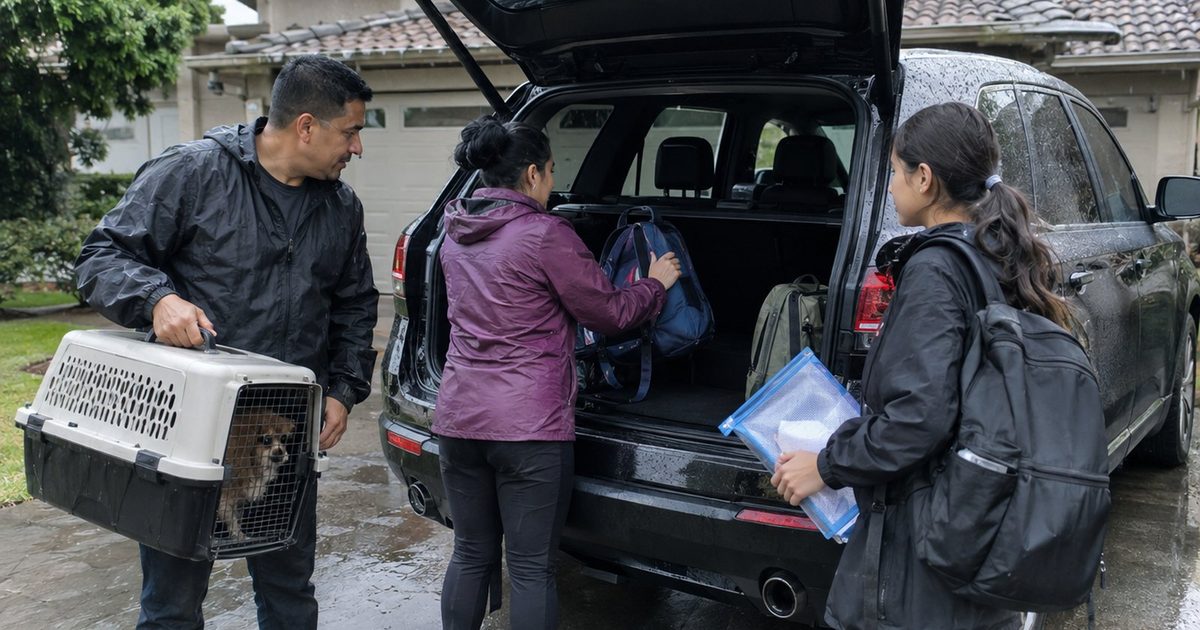
- Get pets into carriers or on leashes. Animals hide when they sense stress, so do this first.
- Put on sturdy shoes and weather-appropriate clothes.
Minutes 2–4: Grab the Go-Bag
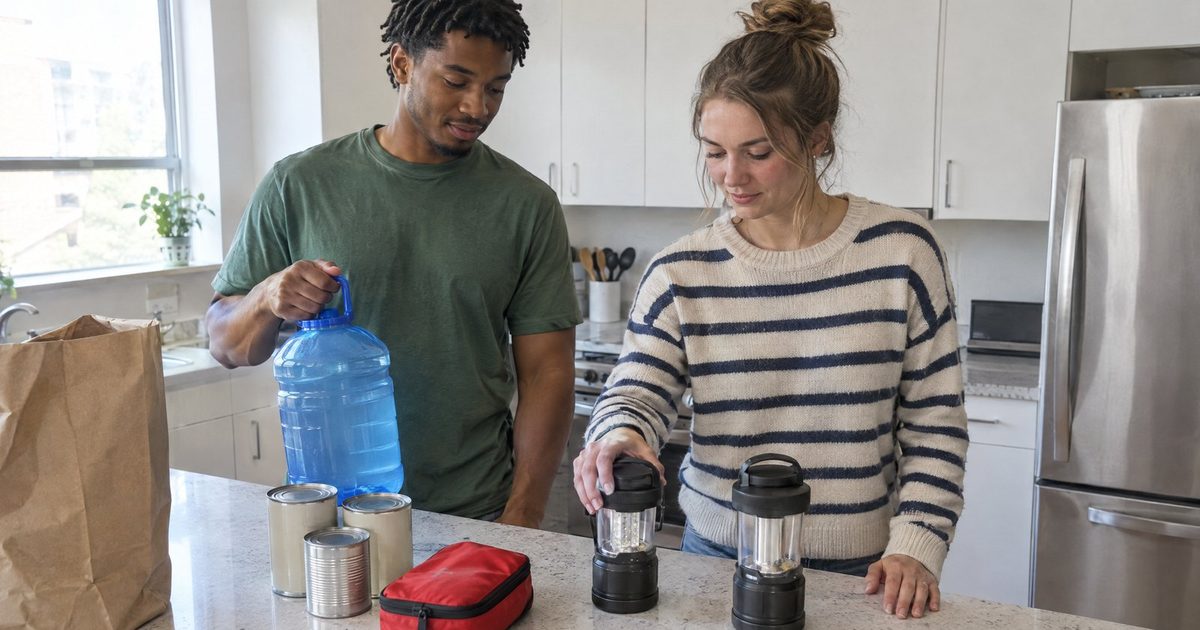
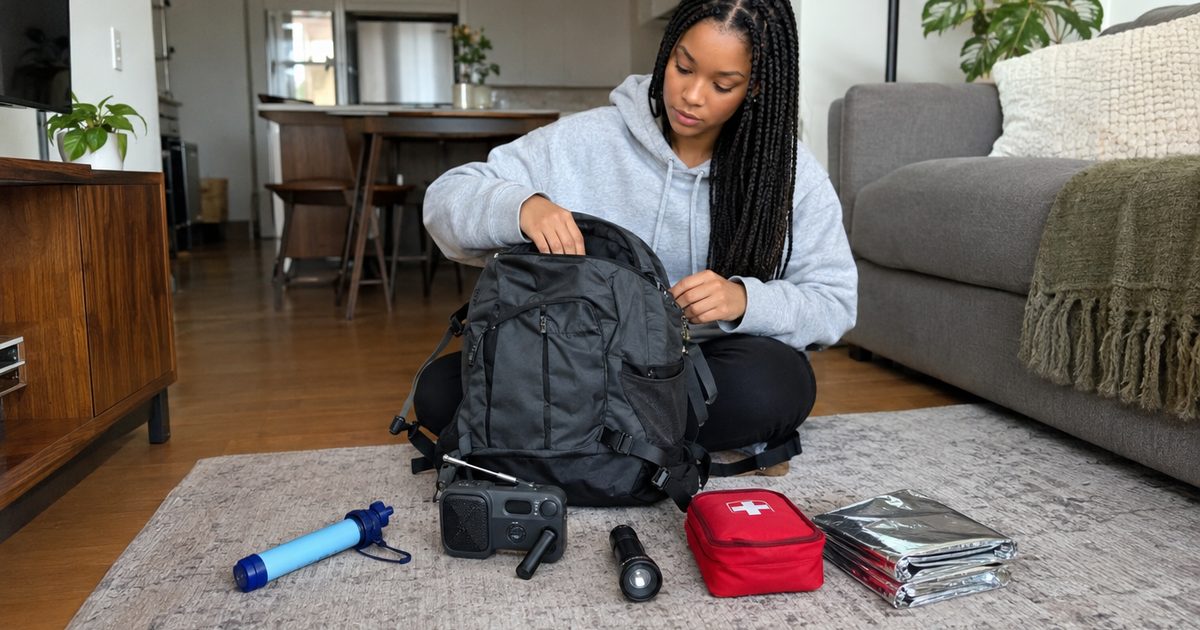
If you've packed a go-bag ahead of time, this step takes ten seconds. A pre-made kit like the Ready America 72 Hour Emergency Kit (2 Person) 72-hour backpack covers water, food bars, light, first aid, and blankets. If you don't have one, our best emergency supplies to buy before El Niño hits shows what to build.
Minutes 4–6: Medications and Papers
- All prescription medications, plus a list of doses, and a basic first aid kit like the Be Smart Get Prepared 110-Piece First Aid Kit if it isn't already in your go-bag.
- Glasses, hearing aids, and any medical devices and chargers.
- Your document pouch with copies of IDs, insurance policies, deeds or lease, medical records, and a list of important phone numbers. A fire- and water-resistant Andyer Fireproof & Water-Resistant Document Bag kept by the door makes this instant.
Minutes 6–8: Phones, Power, and Cash
- Phones and chargers.
- A charged power bank, like the Anker 20,000mAh Power Bank.
- Cash in small bills. Card readers and ATMs go down with the power.
- Car keys and house keys.
Minutes 8–10: Personal Needs and Priceless Items
- A change of clothes for each person.
- Baby supplies, if needed: formula, diapers, wipes.
- Pet food, a leash, and vaccination records.
- Photos or keepsakes, if you can grab them quickly. Don't go room to room searching.
Before You Walk Out the Door
If you have time, and only if officials say it's safe:
- Turn off the main power at the breaker if water may enter the house. Never touch electrical equipment if you're standing in water.
- Lock the doors.
- Text your out-of-area contact to say you're leaving and where you're going.
Then go. Follow the evacuation routes officials give you, and never drive through flooded roads. Our flood driving safety guide explains why.
If Someone Needs Extra Help
Plan ahead if anyone in your home uses a wheelchair, oxygen, a CPAP, dialysis, or other medical equipment, or has trouble moving quickly.
- Leave early. Don't wait for a mandatory order if moving takes extra time.
- Register with your local special needs registry, if your county has one, so responders know to check on you.
- Pack backup power and spare supplies for medical devices, plus written instructions for how to use them.
- Line up a ride ahead of time if you don't drive.
If You Can't Get Out
Sometimes leaving isn't safe, especially if roads are already flooded. If you're trapped by rising water, move to the highest level of your home. Don't climb into a closed attic, where you could get trapped by water with no way out. Go to the roof only if necessary, and call 911 to tell them where you are. Signal with a flashlight or something bright.
How to Make Evacuating Fast
The real secret to a 10-minute evacuation is doing most of the work ahead of time.
- Pack a go-bag for each person and keep them in one spot near the door.
- Keep your documents in one pouch, already packed.
- Make a medication list and tape it inside a kitchen cabinet so you can grab it.
- Keep your gas tank at least half full during storm season.
- Know two ways out of your neighborhood, in case one is flooded.
- Pick where you'll go: a friend or family member's home outside the danger area, a hotel, or a shelter. If you have pets, find out ahead of time which shelters accept them.
- Practice once. Set a timer and see how long it takes your family to get out the door.
Our storm-season communication plan helps you set up meeting spots and an out-of-area contact.
Print This Checklist
Tape a copy of this list inside a closet door near your exit. When you're stressed, you won't remember everything, but you'll be able to read a list. The Storm-Ready Survival Bundle includes a printable evacuation checklist and family emergency binder for exactly this reason.
Frequently Asked Questions
What should I grab first in an evacuation?
People and pets first, then prescriptions, then important papers. Those are the hardest things to replace quickly.
What are the 5 P's of evacuation?
People, prescriptions, papers, personal needs, and priceless items.
What important documents should I take when evacuating?
Copies of IDs, insurance policies, your deed or lease, medical records, and a list of important phone numbers. Keep them together in a waterproof pouch near your exit.
How can I evacuate faster?
Pack go-bags ahead of time, keep documents in one pouch, keep your gas tank at least half full, and practice once as a family.