Here's the problem with heating during a winter power outage: most space heaters plug into the wall, so they're useless when the power's out. And many heaters that run on fuel are made for outdoor use only. Using the wrong one indoors can fill your home with carbon monoxide.
This guide covers which heaters are actually designed for indoor use, the safety features that matter, and how to stay warm whether or not you have one. Everything is in our Winter Storm Kit list.
First, What Not to Use
Every winter, people are hurt or killed by heating with things never meant for it. Never use these indoors:
- Charcoal or gas grills
- Camp stoves
- Gas ovens or stovetops for heat
- Generators, even in a garage with the door open
- Outdoor propane patio heaters
- Any heater not clearly labeled for indoor use
Our guide to carbon monoxide safety during power outages explains why these are so dangerous.
Why Electric Space Heaters Don't Help in an Outage
A typical electric space heater draws around 1,500 watts. Even a large portable power station would only run one for a short time before the battery's empty. Power stations are great for phones, lights, a Wi-Fi router, or a CPAP, but they're not a practical heat source. Save your stored power for those.
Indoor-Rated Propane Heaters
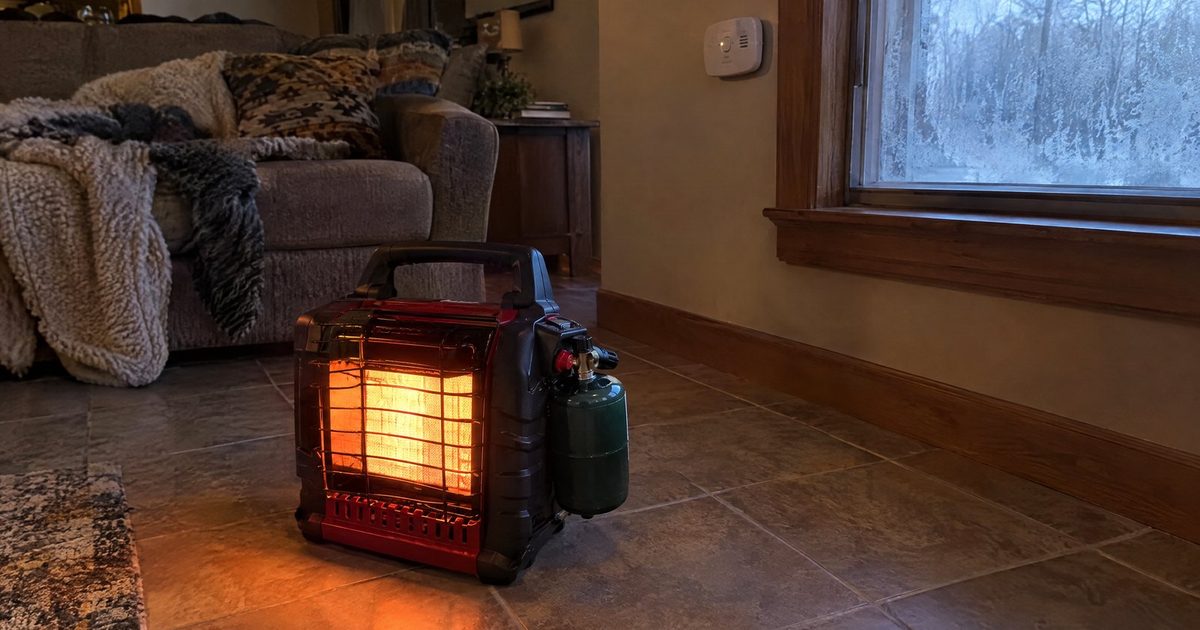
Portable propane heaters that are specifically designed and labeled for indoor use are the most practical outage heat source for many households. Look for these safety features:
- An oxygen depletion sensor (ODS) that shuts the heater off if oxygen levels in the room drop.
- A tip-over switch that shuts it off if it's knocked over.
- Clear manufacturer instructions for indoor use, including how much ventilation it needs.
Our picks:
- Mr. Heater Portable Buddy Indoor-Safe Propane Heater: a popular portable heater rated for indoor use, sized for a single room.
- Mr. Heater Big Buddy Indoor-Safe Propane Heater: a larger model for bigger spaces.
How to use one safely:
- Follow the manufacturer's instructions exactly, including the ventilation requirements.
- Keep it at least 3 feet from anything that can burn: furniture, curtains, bedding, and clothes.
- Set it on a flat, hard surface.
- Never leave it running while you sleep or when you leave the room.
- Keep kids and pets away from it.
- Store and connect propane cylinders according to the manufacturer's directions. Storing extra propane cylinders indoors is not recommended.
Picking the Right Size
Heater output is measured in BTUs. A small heater suits one small room, while larger models can heat a bigger space. Bigger isn't always better: during an outage, you're trying to keep one closed-off room comfortable, not the whole house, and a smaller heater uses less fuel. Check the manufacturer's runtime per propane cylinder too, so you know how many cylinders you'd need for a multi-day outage, and store them safely outside your living space.
The Must-Have Partner: A CO Alarm
If you burn any fuel indoors, run a battery-powered carbon monoxide alarm in the same room. A Kidde Battery-Powered CO Detector or First Alert Battery CO Alarm keeps working when the power's out. CO is invisible and odorless, and the alarm is your only warning. If it goes off, get everyone outside and call 911.
Fireplaces and Wood Stoves
A professionally installed and inspected fireplace or wood stove can be a good outage heat source. Make sure the chimney has been cleaned and inspected, the damper is open, and you have a working CO alarm and smoke alarm. Never burn trash, cardboard, or treated wood.
Staying Warm Without Any Heater
Honestly, the safest heat is the kind that doesn't burn anything. Your body produces a lot of heat, and good gear traps it:
- Pick one small room to keep warm, and close the doors to the rest of the house.
- Cover windows with blankets and block drafts under doors.
- Layer clothing: thermal base layers, fleece, hats, and wool socks.
- Use cold-rated sleeping bags, like the TETON Sports Celsius XXL Cold-Weather Sleeping Bag, for every person.
- Huddle together, including pets.
Our guide to staying warm in a winter outage walks through it step by step.
What About Power Stations for Electric Heated Blankets?
Here's a smarter use of stored power: a low-watt electric blanket or heated mattress pad uses far less energy than a space heater. A power station like the Jackery Explorer 1000 v2 Power Station can run one for hours, which can make a cold night much more comfortable. Check the blanket's wattage and your station's capacity first.
Frequently Asked Questions
What kind of heater is safe to use indoors without power?
Only heaters specifically designed and labeled for indoor use, such as certain portable propane heaters with an oxygen depletion sensor and tip-over shutoff. Always follow the manufacturer's ventilation instructions and run a battery CO alarm.
Can I use a power station to run a space heater?
Not for long. Space heaters draw around 1,500 watts, which drains a power station quickly. A low-watt electric blanket is a much better use of stored power.
Is it safe to sleep with a propane heater on?
No. Turn fuel-burning heaters off before you sleep. Use sleeping bags and blankets to stay warm overnight.
Can I use a kerosene heater indoors?
Some kerosene heaters are designed for indoor use with ventilation, but they carry real fire and carbon monoxide risks, and some cities restrict them. If you use one, follow the manufacturer's instructions and local rules exactly, and always run a battery CO alarm.
Do I need a carbon monoxide alarm if my heater has an oxygen sensor?
Yes. An oxygen depletion sensor isn't a substitute for a CO alarm. Run a battery-powered CO alarm any time you burn fuel indoors.