A lot of storm emergencies don't happen at home. They happen on the road: stuck in traffic during an evacuation, stranded on a flooded road, or broken down on a dark highway in freezing rain. Your car is often where you'll be when the weather turns, so it deserves its own emergency kit.
Here's what to keep in your car this storm season, organized by what each item does, plus what to do if you ever get stranded.
Start With a Ready-Made Kit
The fastest way to cover the basics is a pre-packed roadside kit. A kit like the Everlit Survival Car Emergency Kit includes jumper cables, a tow strap, a flashlight, basic tools, and first aid supplies in one bag. Then you add the personal items below.
Safety and Breakdown Gear
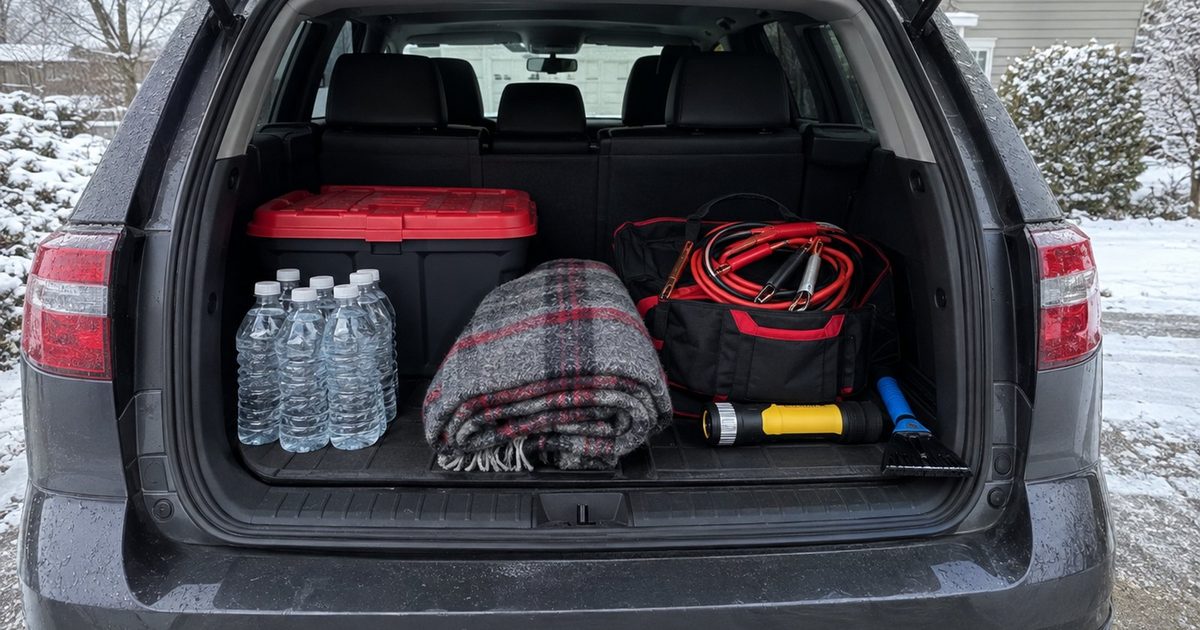
- Jumper cables or a portable jump starter. Cold weather and storms are hard on batteries.
- Reflective warning triangles or flares so other drivers can see you.
- A tire inflator and tire gauge, plus knowing where your spare and jack are.
- A tow strap.
- A reflective vest, if you ever need to get out on a busy road.
Water and Food
- Water: at least a few bottles per person. Rotate them every few months, since heat breaks down plastic bottles over time.
- Snacks that won't spoil: granola bars, nuts, crackers, and dried fruit.
Warmth
Even in the South, winter storms and ice can strand drivers in freezing temperatures.
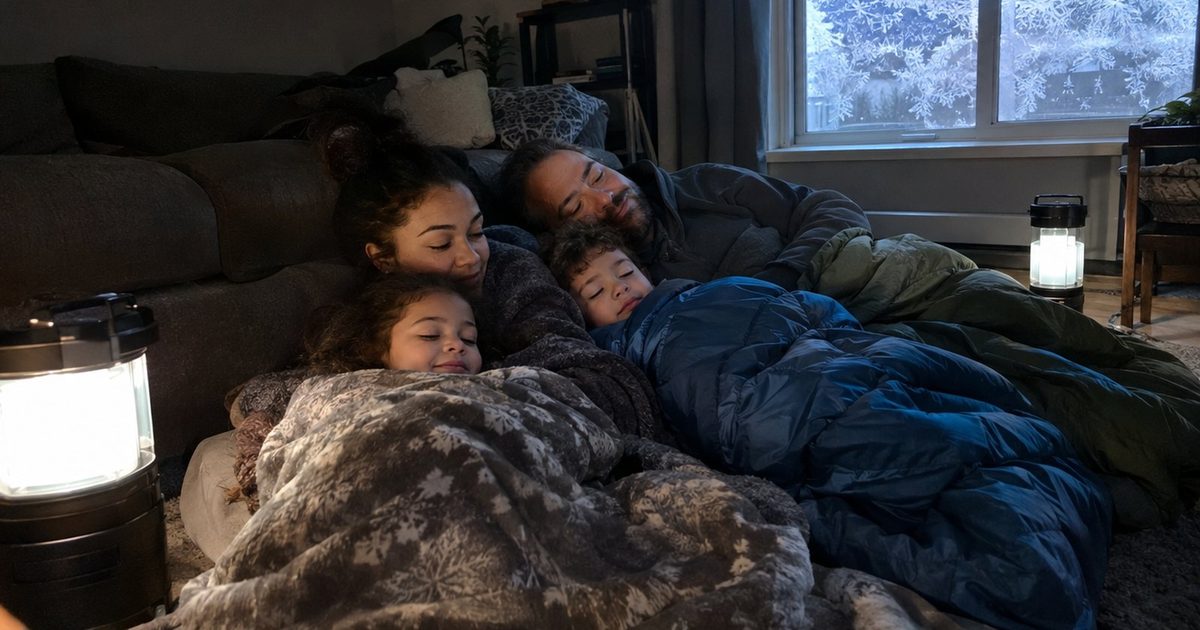
- A real blanket or sleeping bag.
- Emergency blankets, like the SOL Heat-Reflective Emergency Blanket, which reflect body heat back to you.
- Hand warmers, like HotHands Hand Warmers, 40 Pairs, for hours of heat with no power and no fumes.
- Extra layers: a hat, gloves, warm socks, and a spare jacket.
Light
A bright, sturdy flashlight like the Streamlight ProTac Tactical Flashlight is far better than your phone's flashlight, and it saves your phone battery. Keep extra batteries with it. A headlamp is great too, so you have both hands free to change a tire.
Phone Power
- A car charger for each person's phone.
- A charged power bank, like the Anker 20,000mAh Power Bank, in case the car battery is dead.
- A printed list of phone numbers, in case your phone dies anyway.
First Aid and Personal Items
- A first aid kit, like the Be Smart Get Prepared 110-Piece First Aid Kit.
- A few days of any important medications.
- Baby supplies, if you have young children: diapers, wipes, and formula.
- Pet supplies, if your pets ride with you.
Winter and Storm Extras
- An ice scraper and snow brush.
- A small folding shovel.
- Sand or cat litter for traction if you're stuck on ice.
- A rain poncho and an umbrella.
- Paper maps of your area, in case your phone has no signal.
If You Get Stranded
Knowing what to do matters as much as what you carry.
- Stay with your car, unless help is visible and very close. A car is easier for rescuers to find and gives you shelter.
- Call for help and tell them exactly where you are.
- Make yourself visible. Turn on hazard lights, tie something bright to the antenna, and set out reflective triangles if it's safe.
- Run the engine only about 10 minutes an hour for heat, and keep the exhaust pipe clear of snow, ice, or mud. A blocked tailpipe can fill the car with carbon monoxide. Crack a window slightly while the engine runs.
- Stay warm: layer up, use blankets and hand warmers, and huddle together.
- Move around a bit to keep blood flowing, but don't exhaust yourself.
Never drive into flooded roads. Just six inches of moving water can stall many cars, and a foot of water can float most vehicles. Our flood driving safety guide explains why turning around is always the right call.
How to Pack It
A pile of loose gear rolling around the trunk is hard to use and can become dangerous in a sudden stop.
- Use one sturdy bin or duffel bag so everything stays together.
- Strap it down or wedge it in so it can't slide or fly forward in a crash.
- Put the things you'll need first on top: the flashlight, the blanket, and the first aid kit.
- Keep a small bag in the cabin, within reach of the driver, with a phone charger, a flashlight, and a snack, in case you can't get to the trunk.
Add Extras Before an Evacuation
If you're leaving because of an evacuation order, top up the car kit before you go: extra water for everyone in the car, a few days of medications, phone chargers for every phone, your document pouch, pet food and leashes, and cash. Our evacuation checklist walks through it.
Keep Your Car Storm-Ready
- Keep your gas tank at least half full during storm season. Gas stations can lose power during big outages.
- Check your tires, wipers, and battery before winter.
- Check your kit twice a year, swapping out water, snacks, and batteries.
Frequently Asked Questions
What should be in a car emergency kit?
Jumper cables, a flashlight, a first aid kit, water, snacks, blankets, hand warmers, a phone charger and power bank, reflective triangles, and an ice scraper and small shovel in winter.
What should I do if I'm stranded in my car in a storm?
Stay with the car, call for help, make yourself visible, and stay warm. Run the engine only about 10 minutes an hour for heat, and keep the exhaust pipe clear of snow to prevent carbon monoxide buildup.
How often should I check my car emergency kit?
Twice a year. Replace water, snacks, and batteries, and make sure everything still works.
Should I keep water in my car?
Yes, but rotate it every few months, since heat breaks down plastic bottles over time.