A strong El Niño usually means a milder winter up North and a wetter one down South. But here's the catch for the southern states: when a burst of cold air pushes south and runs into all that moisture, you can get ice storms. Ice brings down trees and power lines, and an outage in freezing weather is one of the most dangerous situations a household can face.
This is the cold-weather gear worth having before the first freeze. Everything is saved in our Winter Storm Kit list on Amazon.
The Big Risk: Cold Plus No Power
Most winter storm deaths aren't from the cold alone. They come from the combination of cold and no power, and from unsafe attempts to stay warm. So this kit focuses on two things: staying warm safely, and protecting your home.
1. A Safe Indoor Heater
If the power goes out in freezing weather, you need a backup heat source that's built for indoor use. The Mr. Heater Portable Buddy Indoor-Safe Propane Heater is a portable propane heater rated for indoor use, with built-in safety shutoffs. Follow the manufacturer's ventilation instructions exactly, keep it away from anything that can burn, and never leave it running while you sleep.
Non-negotiable: run a battery-powered carbon monoxide alarm, like the First Alert Battery CO Alarm, any time you use a fuel-burning heater. Never heat your home with a gas oven, a grill, or a camp stove. Our guide to carbon monoxide safety during power outages explains why.
2. Sleeping Bags Rated for Real Cold
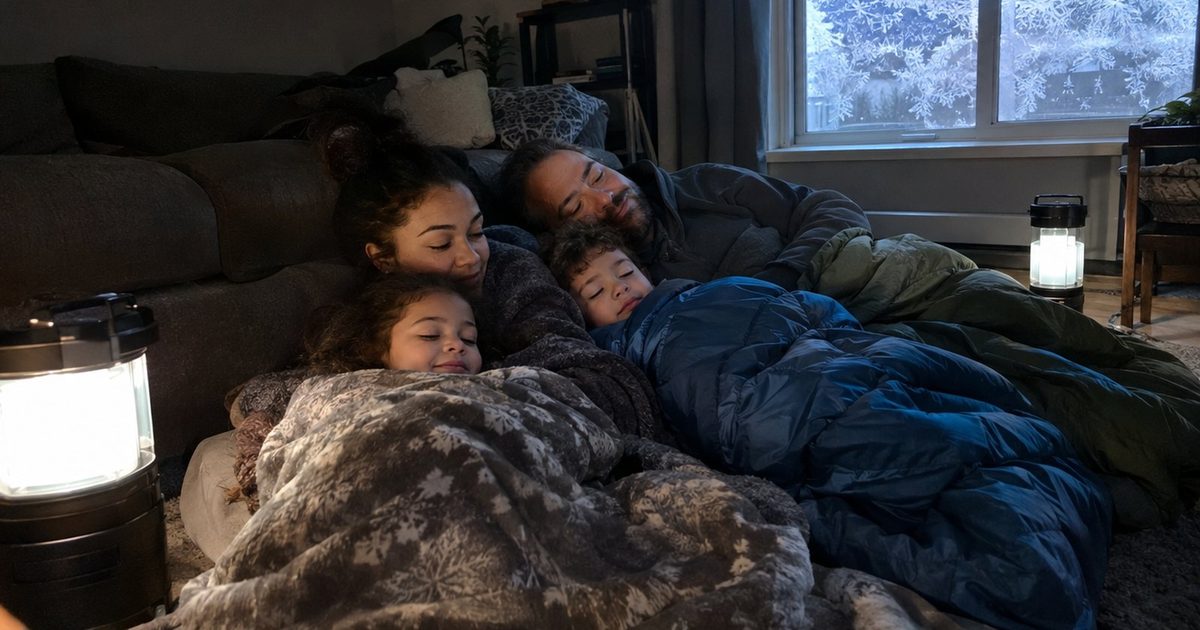
Your body is a heat source. A good sleeping bag traps that heat, even in a freezing house. A cold-rated bag like the TETON Sports Celsius XXL Cold-Weather Sleeping Bag keeps you warm on the coldest nights without any power at all. One per person is the goal.
3. Emergency Blankets
Heat-reflective blankets, like the SOL Heat-Reflective Emergency Blanket, bounce body heat back toward you. Layer one under a regular blanket for extra warmth, keep a few in the car, and put one in every go-bag.
4. Thermal Base Layers
Layers beat one heavy coat. A thermal base layer like the Thermajohn Thermal Base Layer Set set traps warm air close to your skin. Add a fleece or sweater, then a jacket, and finish with a hat and wool socks. You lose a lot of heat through your head and feet.
5. Hand and Foot Warmers
Air-activated warmers like HotHands Hand Warmers, 40 Pairs give hours of heat with no power and no fumes. Tuck them into gloves, pockets, and boots, or into a sleeping bag before bed. They're also great in the car.
6. Pipe Insulation
Frozen pipes can burst and flood your home, often right after the outage ends and things thaw. Foam pipe covers like the Duck Foam Pipe Covers, 6 Pack slip over exposed pipes in garages, crawlspaces, and under sinks on outside walls. They're cheap and take minutes to install. Know where your main water shutoff is, too, in case a pipe does burst.
7. A Car Winter Kit
Winter storms catch people on the road. A ready-made kit like the Everlit Survival Car Emergency Kit covers jumper cables, a flashlight, first aid, and basic tools. Add a blanket, water, snacks, a phone charger, an ice scraper, a small shovel, and hand warmers, and keep it in the trunk all season. If you get stranded, stay with the car, run the engine only about 10 minutes an hour for heat, and keep the exhaust pipe clear of snow.
How to Use This Gear During an Outage
- Pick one room to keep warm, ideally a small interior room with few windows.
- Close doors to the rest of the house and block drafts under the door with a rolled towel.
- Cover windows with blankets or plastic sheeting.
- Bring everyone together in that room, including pets.
- Layer up, and use sleeping bags and blankets to trap body heat.
- Use your indoor-rated heater only with a CO alarm running and the ventilation the manufacturer requires.
- Drip your faucets slightly to help keep pipes from freezing.
Our full guide to staying warm in a winter outage walks through this step by step, and El Niño winter storm prep covers what to do before the storm.
Know the Signs of Hypothermia
Watch everyone, especially older adults, babies, and anyone with health conditions. Warning signs include shivering, slurred speech, confusion, drowsiness, and clumsiness. If you see them, get the person warm and dry, wrap them in blankets, and call for medical help if symptoms are more than mild.
What to Buy First
- A sleeping bag or warm bedding for each person
- Emergency blankets and hand warmers
- Pipe covers
- A battery CO alarm
- An indoor-rated heater, if you're in an area prone to long winter outages
- A car winter kit
Frequently Asked Questions
What should be in a winter storm kit?
Warm bedding or sleeping bags, emergency blankets, thermal layers, hand warmers, flashlights, a battery CO alarm, food and water, and a car kit. Add an indoor-rated heater if long outages are likely.
Is it safe to use a propane heater indoors?
Only if the heater is specifically rated for indoor use, and only if you follow the manufacturer's ventilation instructions and run a battery carbon monoxide alarm. Never use outdoor heaters, grills, or camp stoves inside.
How do I keep pipes from freezing during a power outage?
Insulate exposed pipes ahead of time, let faucets drip slightly, and open cabinet doors under sinks so warmer air can reach the pipes.
Does El Niño cause ice storms?
It can. El Niño brings extra moisture to the southern U.S., and when cold air pushes south, that moisture can fall as freezing rain and ice.
Shop the full list on our Amazon storefront