Most storm prep advice is written for homeowners with a garage, a yard, and the freedom to drill into walls. If you rent an apartment, you probably have none of that, plus a lease that frowns on holes in the walls and a building where gas generators aren't an option.
The good news: renters can get just as ready, and a lot of the best prep fits in a closet. Here's a complete, no-drill storm plan for apartment living.
Know What's Yours and What's Your Landlord's
Start by understanding who handles what.
Usually your landlord's job:
- The building itself, the roof, windows, and storm shutters
- Drainage, gutters, and sump pumps
- Repairs after storm damage to the structure
Usually your job:
- Your belongings, and insuring them
- Your emergency supplies
- Your family's plan
Before storm season, ask your landlord or property manager a few questions: Is there an emergency plan for the building? Who do you call after hours? Where's the water shutoff? Are there storm shutters, and who puts them up?
Get Renters Insurance, and Ask About Flood
Your landlord's insurance covers the building, not your stuff. Renters insurance covers your belongings from things like fire and theft, but it usually doesn't cover flooding. If you're in a flood-prone area, look into contents-only flood coverage. Our guide to flood insurance before El Niño explains how it works for renters.
Small-Space Supplies
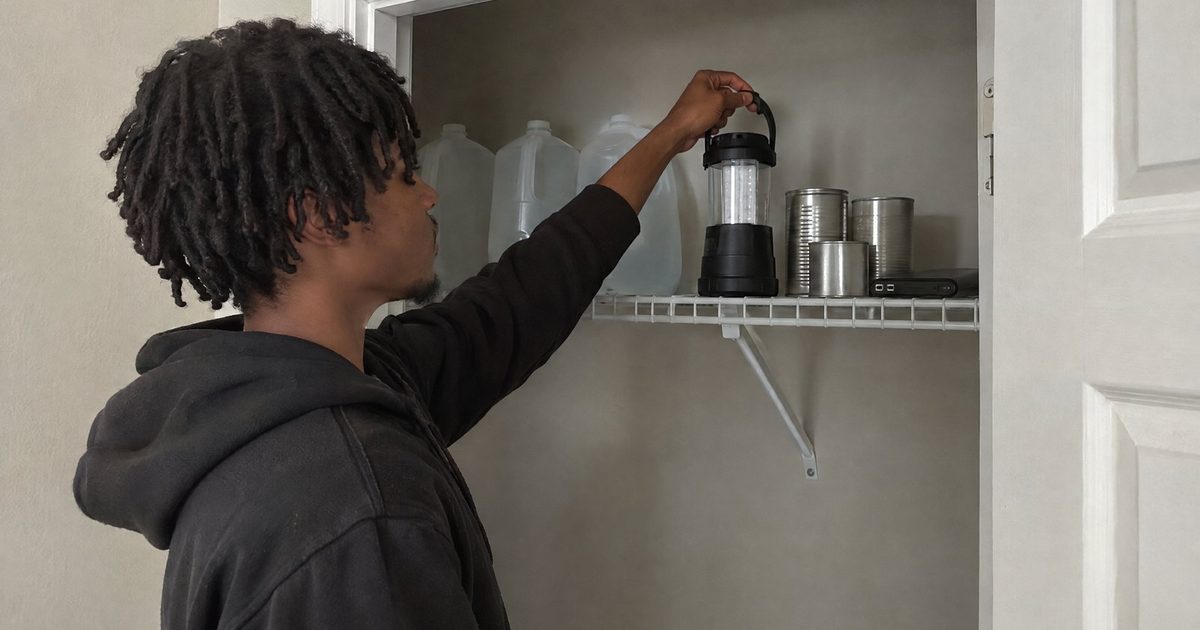
You don't need a garage full of gear. Here's what fits in a closet:
- Water: a two-week supply is the goal. A few stackable Scepter 5-Gallon Water Storage Jug containers fit in a closet corner or under a bed.
- Food: two weeks of no-cook food, like canned proteins, peanut butter, crackers, and shelf-stable milk.
- Light: battery LED lanterns, like the Lichamp LED Camping Lanterns, 4 Pack. Never candles in an apartment.
- Phone power: a charged power bank, like the Anker 20,000mAh Power Bank.
- A radio: a hand-crank or battery weather radio.
- First aid: a basic kit and your medications.
- Documents: copies of your IDs, lease, and insurance in a fire- and water-resistant pouch, like the Andyer Fireproof & Water-Resistant Document Bag.
Use under-bed storage boxes, the top shelf of a closet, or a bench with storage inside to keep it all together.
No-Drill Ways to Protect Your Space
- Water alarms: battery leak sensors, like the Zircon Leak Alert Water Detector, 3 Pack, sit on the floor under sinks and near the water heater. No installation needed.
- Draft stoppers: rolled towels or fabric draft stoppers under doors help keep heat in during a winter outage.
- Window film or blankets: removable insulating film or heavy blankets over windows help hold heat. Use tension rods, not nails.
- Command hooks: hang flashlights or a headlamp by the door with damage-free hooks.
- Furniture risers: if your unit is on the ground floor and has flooded before, risers lift furniture off the floor without any drilling.
Power Outages in an Apartment
- No gas generators. They're unsafe indoors and usually banned in apartments. A battery power station is the safe alternative if you need more than a power bank.
- Charge everything when a storm is forecast.
- Know your building's elevator plan. Elevators stop in an outage. If you live on a high floor or have trouble with stairs, plan ahead.
- Keep the fridge closed. A full freezer holds food for about 48 hours if you leave it shut. Our guide to keeping food cold when the power goes out has the details.
Flooding in an Apartment
- Ground-floor and basement units face the highest flood risk. Keep valuables and electronics off the floor and on high shelves.
- Know your exits, including a second way out if the hallway or stairwell floods.
- Never use elevators during a flood or fire.
- Report leaks right away in writing, so there's a record.
If You Live on an Upper Floor
High floors are safe from floodwater, but they come with their own challenges. Elevators stop in an outage, and water pressure on upper floors can drop when the building's pumps lose power. That makes stored water even more important. Keep a gallon or two of extra water for flushing the toilet, and plan how you'd get heavy supplies, a pet, or a family member with limited mobility down the stairs if you had to leave.
Get to Know Your Neighbors
In an apartment, your neighbors are your best resource. Swap phone numbers with a few of them, check on older or disabled neighbors during storms, and agree to text each other updates. A building where people look out for each other is safer for everyone.
Make a Simple Plan
- Pick an out-of-area contact everyone can text.
- Choose a meeting spot outside the building.
- Decide where you'll go if you need to evacuate: a friend's place, a family member's home, or a hotel.
- Pack a go-bag. Our evacuation checklist shows what to grab in 10 minutes.
All of our small-space picks are in our Emergency Supplies Essentials list.
Frequently Asked Questions
Does renters insurance cover flood damage?
Usually not. Renters insurance typically excludes flooding. You can buy separate contents-only flood insurance to protect your belongings.
Can I use a generator in my apartment?
No. Gas generators produce deadly carbon monoxide and must run outdoors. A battery power station is the safe option for apartments.
What should renters have in an emergency kit?
Two weeks of water and no-cook food, LED lanterns, a power bank, a radio, first aid supplies, medications, and copies of important documents.
Who is responsible for storm damage in a rental?
Generally, the landlord handles damage to the building, while renters are responsible for their own belongings. Check your lease and talk to your landlord.