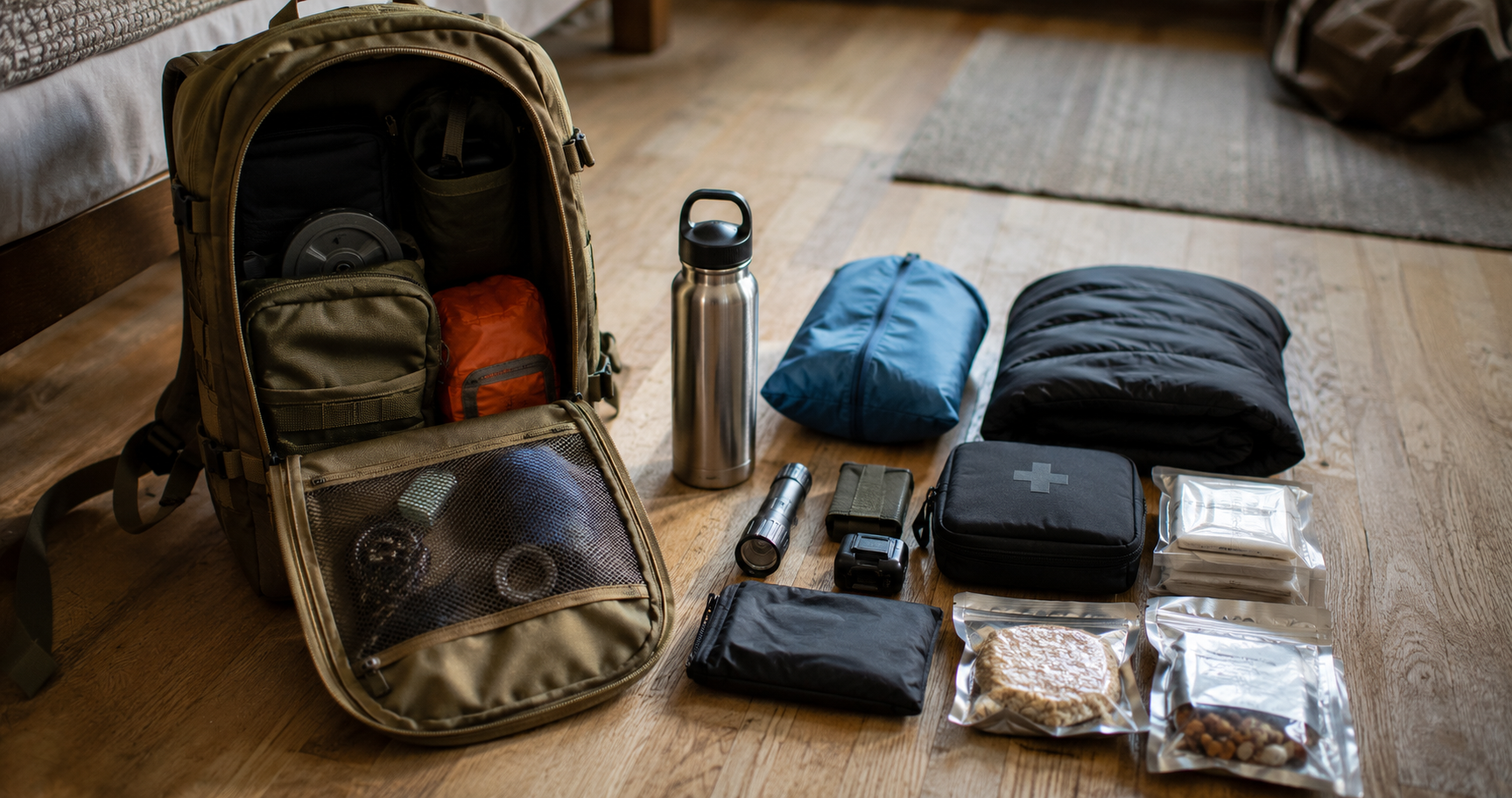
A bug-out bag is the pack you grab when you have to leave fast — a wildfire, a flood, an evacuation order. The bag matters, but what is in it and whether it is ready to go matters more. We cover both: the best packs for the job, and exactly what to put in one for the first 72 hours.
What to look for in a bug-out bag
- Capacity. Around 30–50 liters is the sweet spot for a 72-hour bag — enough to carry essentials, not so big you overpack and can't move.
- Comfort. You may carry it for hours or miles. A real hip belt and padded straps matter more than tactical looks.
- Durability. Quality zippers, stitching, and water-resistant fabric. This bag has to perform on its worst day.
- Organization. Compartments and MOLLE webbing help you find things fast under stress.
At a glance: our ranked picks
| Pack | Best for | Capacity | Standout |
|---|---|---|---|
| 5.11 RUSH72 | Best overall | ~55L | Durable, organized, proven |
| Condor 3-Day Assault | Best value | ~50L | Solid build, low price |
| Maxpedition | Best built | varies | Premium durability |
| REI-style daypack | Best comfort/low-profile | ~30-40L | Comfortable, discreet |
| MOLLE tactical pack | Best modular | varies | Fully customizable |
1. Best overall: 5.11 RUSH72
The 5.11 RUSH72 is the go-to bug-out bag for good reason: it is durable, thoughtfully organized, comfortable enough to carry loaded, and sized right for 72 hours of gear. It is proven across years of real use, which is exactly what you want in a bag your safety might depend on.
Best for: Most people wanting one reliable, organized bug-out bag.
Worth knowing: Its tactical appearance is more conspicuous than a plain pack — a consideration if you prefer to blend in.
See Details
2. Best value: Condor 3-Day Assault Pack
The Condor 3-Day Assault Pack delivers a well-built, well-organized bug-out bag at a noticeably lower price. For outfitting a bag for each family member without a big spend, it is the value pick that does not feel cheap.
Best for: Budget-conscious buyers and outfitting multiple bags.
Worth knowing: Not quite as refined as premium packs, but genuinely capable for the price.
See Details
3. Best built: Maxpedition
Maxpedition packs are built to a premium standard — heavy-duty materials, excellent stitching, and a near-bombproof feel. If you want a bag you will likely never wear out, this is the durability pick.
Best for: Those who prioritize maximum durability and build quality.
Worth knowing: Premium build comes at a premium price.
See Details
4. Best comfort and low-profile: Civilian daypack
A quality hiking-style daypack is comfortable, well-ventilated, and — importantly — does not look tactical, so it blends in during an evacuation. For many people, comfort and a low profile matter more than military styling.
Best for: Comfort and blending in.
Worth knowing: May have less MOLLE/organization than tactical packs — fine for most, less so if you want heavy modularity.
See Details
5. Best modular: MOLLE tactical pack
A modular MOLLE pack lets you attach and rearrange pouches to build exactly the configuration you want, and adapt it over time. If you like to customize and tune your setup, the modularity is the draw.
Best for: Tinkerers who want a fully customizable system.
Worth knowing: Building it out with pouches adds to the total cost.
See Details
What to pack: the 72-hour list
The bag is only as good as its contents. Pack for three days and keep it ready to grab:
- Water: a bottle or two plus a packable filter.
- Food: 3 days of no-cook, calorie-dense food (bars, pouches).
- First aid: a compact kit plus any medications (see first aid kits).
- Warmth/shelter: emergency blanket, poncho, change of clothes, hat.
- Light/power: headlamp, spare batteries, a charged power bank.
- Communication: a small weather radio, whistle, paper map, contact list.
- Tools: multi-tool, lighter/matches, duct tape, cordage.
- Documents/cash: copies of IDs and cash in a waterproof bag.
- Personal: hygiene items, glasses/contacts, items for kids or pets.
Keep it ready
- Pack it now, not when disaster strikes.
- Check it every six months — rotate water, food, medications, and batteries.
- Keep it somewhere you can grab in seconds on the way out.
Frequently asked questions
How big should a bug-out bag be?
For a 72-hour bag, roughly 30–50 liters is ideal — enough for three days of essentials without being so large you overpack and can't move quickly. Comfort when loaded matters more than maximum size.
What is the difference between a bug-out bag and a get-home bag?
A bug-out bag is for evacuating from home for about 72 hours. A get-home bag is a smaller kit kept in your car or office to help you get home if you are away when something happens. Many people keep both.
How often should I update my bug-out bag?
Every six months. Rotate water, food, and medications before they expire, swap seasonal clothing, test batteries, and adjust contents as your household's needs change.