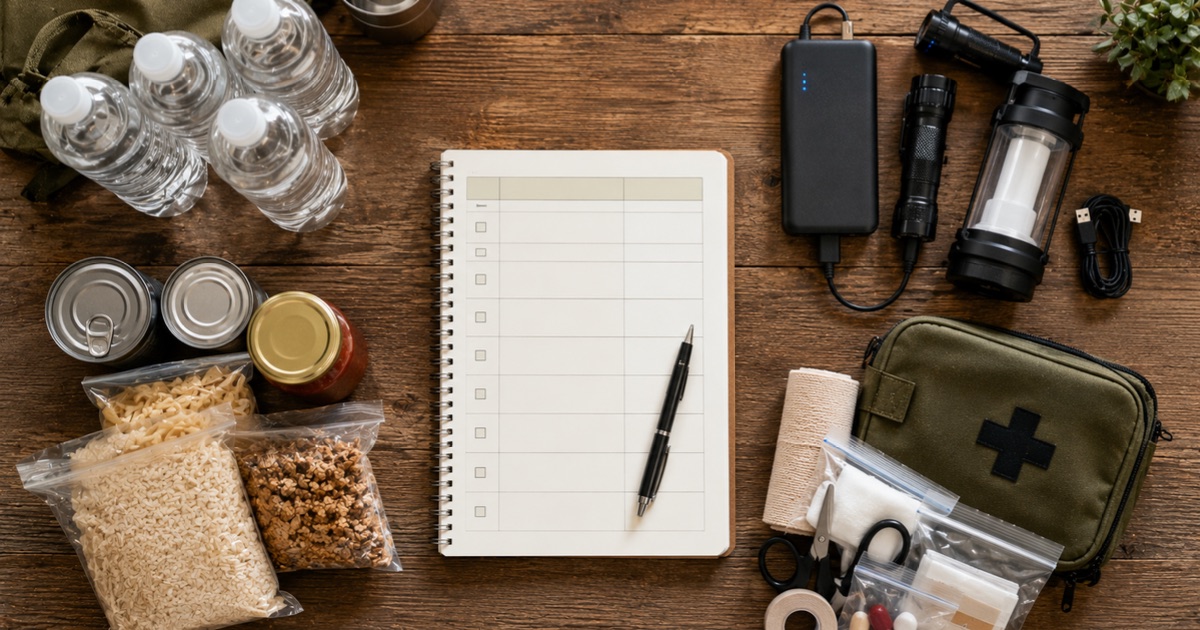
Preparing for El Niño can feel overwhelming when you look at the whole list at once — water, food, power, home repairs, communication, pets. So don't look at it all at once. Break it into four weeks, do a manageable amount each week, and you'll be fully storm-ready in a month without the stress, the expense, or the burnout of trying to do everything in one frantic weekend. This week-by-week plan turns the entire how to prepare for El Niño 2026 checklist into a simple, paced schedule anyone can follow.
Week 1 — Water, food, and documents
Start with the essentials that cover the largest share of emergencies for the least money. Store water in food-grade containers like the aqua-tainer, working toward a two-week supply of one gallon per person per day. Build a two-week food supply from shelf-stable groceries you already eat, and add long-term staples sealed in mylar-bags for deep reserves. Finally, gather your important documents — ID, insurance policies, medical records, account information — and copy them into a waterproof bag or digital backup. These first steps alone put you ahead of most households. See how much water to store and the emergency food stockpile guide for the details.
Week 2 — Home and yard storm-proofing
With your supplies started, turn to protecting the house itself. Clean the gutters and downspouts, inspect and repair the roof, trim weak and overhanging tree limbs, clear your drains, and secure or plan to store outdoor furniture and loose items. If you're in a flood-prone area, get sandbags now before they sell out and flood-proof your low entry points. Most of this is a single weekend of work that prevents thousands in potential damage. Work through the full home maintenance checklist and, if flooding is a risk, how to flood-proof your home.
Week 3 — Power, heat, and your emergency kit
Now prepare for the outages El Niño storms bring. Get a portable power station like the jackery-1000 and keep it charged, stock flashlights and a battery or hand-crank noaa-radio, and arrange a safe backup heat source paired with a working co-detector for winter outages. Build or refresh your first aid supplies with a stocked first-aid-only-326 kit, and assemble a grab-and-go 72-hour bag. With this week done, you can keep the essentials running and your family warm and informed when the grid fails. See power outage prep for the full approach.
Week 4 — Family plan, communication, and final checks
Finish with the people and the loose ends. Make your family communication plan: choose an out-of-area contact, write key numbers on paper, and agree on meeting spots. Prepare your pets and livestock with their own food, water, carriers, and records. Then do a final walk-through of everything: supplies stocked and rotated, home secured, kit complete and accessible, documents protected, and the whole plan reviewed and shared with everyone in the household. By the end of this week, you're genuinely ready.
How to use this plan
Print it out and tackle one week at a time, checking off items as you go — the visible progress keeps you motivated and keeps the task from feeling endless. If your budget is tight, spread the bigger purchases (the power station, a heater) across the weeks or beyond; the water and pantry steps cost little and matter most. And if a storm is already in the forecast and you don't have four weeks, do Week 1 first no matter what, because water, food, and documents cover the most ground fastest.
Turn it into a printable checklist
The easiest way to actually finish this plan is to make it visible. Write or print the four weeks as a checklist and post it somewhere you'll see it daily — the fridge, a closet door, a bulletin board. Break each week into a few specific, checkable tasks rather than vague goals: "buy 14 gallons of water," "clean gutters," "charge power station," "write contact cards." Checking off concrete items creates momentum and makes the progress feel real, which is exactly what keeps a month-long project from stalling out. Get the whole household involved by assigning tasks, and the work goes faster while everyone learns the plan. A visible, checkable list is the difference between intending to prepare and actually being ready when the season arrives.
Frequently asked questions
Can I really get fully prepared in 30 days?
Yes. Spreading preparation across four focused weeks — water and food, then home, then power and kit, then family plan — makes it both manageable and affordable while still covering every major area before the season peaks. Breaking it into weekly chunks is exactly what makes a big task achievable.
What if I have less than 30 days before a storm?
Do Week 1 first, no matter what — water, food, and documents cover the most ground for the least effort and money. Then compress the remaining weeks as time allows, prioritizing power and heat next. Even partial preparation is dramatically better than none, so start with the essentials and build from there.
How much does it cost to follow this plan?
It varies, but spreading purchases over four weeks keeps it affordable. Water storage and a pantry built from normal groceries cost very little, while the bigger items — a power station and a safe heater — can be added gradually or stretched beyond the month if needed. The highest-impact early steps are also the cheapest.
Do I have to follow the weeks in order?
The order is designed to front-load the highest-impact, lowest-cost steps, so following it as written is ideal. But the plan is flexible — if a roof repair or a sale on supplies makes sense to tackle out of order, do it. The important thing is steady, consistent progress rather than perfect sequencing.
What should I do after I finish the 30 days?
Maintain it. Rotate your water and food so nothing expires, keep batteries and power stations charged, review your family plan at the start of each storm season, and restock anything you use. Preparation isn't a one-time event; a quick seasonal review keeps you ready year after year.
What if I can only do a little each week?
That's exactly how this plan is meant to work — small, steady steps beat one overwhelming push. Even one or two tasks a week adds up to real readiness over the month. If you fall behind, just keep going; partial preparation is far better than none, and the plan is forgiving of your pace.
Should the whole family help with the plan?
Yes. Dividing tasks gets the work done faster and, just as importantly, teaches everyone the plan so they know what to do in an emergency. Kids can help pack kits, write contact cards, and learn the meeting spots. A household that prepared together responds together.