
Short answer: probably, but not the same way everywhere. El Niño pushes winter weather in different directions depending on where you live. Some places tend to get wetter. Others tend to stay milder and drier. A few barely notice.
This guide shows you the usual pattern for your region and the handful of steps worth doing now. No scare tactics. Just the odds, and what to do with them.
Where Things Stand Right Now
NOAA's Climate Prediction Center put out its latest El Niño update on October 8, 2026. It says El Niño is still strengthening, with "a strong-to-very strong El Niño likely through January-March 2027." Forecasters also give good odds that this could be one of the strongest events since record-keeping for these began in 1950.
In California, Governor Newsom proclaimed a statewide state of emergency on September 21, 2026, to get ready early. That proclamation is about preparation: staging flood-fighting supplies, getting roads and infrastructure ready, and lining up help ahead of time. It doesn't mean a disaster has already happened.
One thing NOAA says every time is worth repeating. A stronger El Niño makes the usual effects more likely, "though not guaranteed." Think of it like a weighted coin, not a sure thing.
How to Read This Guide
NOAA's climate.gov team explains that El Niño effects show up mostly in the cold half of the year, October through March. Every region below gets two things:
- The usual tendency. What El Niño winters tend to look like there.
- Your prep focus. The one or two things that matter most for that pattern.
Want the full state-by-state rundown? See El Niño 2026 State by State: Who Gets Hit Hardest.
California
The usual tendency: NOAA notes that California's result "depends significantly on the strength of the El Niño." Weak and moderate events have been a mixed bag. Strong events have more often brought a wet winter. NOAA's September seasonal outlook leaned wetter than normal for California this winter, especially near the coast.
Your prep focus: Water where you don't want it. That means street flooding, mudslides near hillsides and recent burn scars, and power outages during big storms.
- Sign up for local alerts. The state points people to Listos California and CalAlerts.
- Find out whether your home or work sits in a flood-prone area or below a recent wildfire burn area. The governor's office called this out directly.
- Clear gutters and drains before the first big storm.
- Read El Niño Flood Prep Checklist: 12 Steps for 2026.
The Desert Southwest (Arizona, New Mexico)
The usual tendency: Like California, the Southwest has historically trended wetter in strong El Niño winters, but the signal is less reliable in weaker years.
Your prep focus: Flash floods. Dry ground and steep washes can turn a normal rain into fast-moving water in minutes.
- Know which low spots and washes near you flood.
- Never drive into water over the road. The National Weather Service says "it takes just 12 inches of rushing water to carry away most cars." Our Turn Around, Don't Drown guide covers this.
Texas and the Gulf Coast
The usual tendency: This is El Niño's most dependable signal in the US. NOAA calls wetter-than-normal winters from Texas to Florida "the most reliable of these signals," and says it has shown up in more than 80% of El Niño events over the past 100 years.
Your prep focus: Heavy rain, flooding and stormy spells.
- Check your flood insurance situation now. Most flood policies take 30 days to start, so waiting until a storm is in the forecast is too late.
- Keep a few days of water and food at home. Ready.gov suggests one gallon of water per person per day for several days. Our water math guide breaks down the numbers.
Florida and the Southeast (Georgia, the Carolinas)
The usual tendency: Wetter than normal, and often stormier. NOAA's September outlook showed the strongest wet odds in the country over southern Georgia and northern Florida.
Your prep focus: Flooding, severe storms and outages.
- Know your evacuation route and where you'd go.
- Have a plan for keeping phones charged and food safe during an outage. Start with Power Outage Prep: Storm-Season Survival in 8 Steps.
- Make a simple family plan. Our Storm-Season Family Communication Plan takes about an hour.
The Ohio Valley
The usual tendency: NOAA links El Niño winters with drier conditions here.
Your prep focus: Don't skip winter prep just because the odds lean dry. A drier season can still bring a single nasty ice or snow event.
- Keep a basic winter kit at home and in the car. See El Niño Winter Storm Prep: 10 Essentials.
The Pacific Northwest and Northern Rockies
The usual tendency: Often milder and drier. NOAA calls the dry signal here "less reliable" than the wet signal down south. NOAA's September outlook gave the interior Northwest the best odds in the country for a warmer-than-normal winter.
Your prep focus: Water supply and next year's fire season. A low-snow winter can mean less water later.
- Our El Niño 2026 Drought Prep guide covers saving water and planning ahead.
- Still keep outage basics on hand. Wind storms don't check the forecast.
The Northern Plains, Midwest and Great Lakes
The usual tendency: El Niño winters often run milder across the northern tier. NOAA's outlook leaned slightly drier for the Great Lakes, but only slightly.
Your prep focus: Milder on average still means real winter. Cold snaps and storms happen in El Niño years too.
- Keep your heat backup plan simple and safe. The National Weather Service is clear: "Never run a generator in an enclosed space." Read Stay Warm in a Winter Outage.
The Northeast and Mid-Atlantic
The usual tendency: This is the hardest region to call. A climate.gov author has written that the link between El Niño and weather here "is not very strong," though past El Niño winters show some tendency toward more snow.
Your prep focus: Plan for a normal winter. Blizzard basics, a stocked pantry and outage gear will cover most of what comes.
- See Emergency Food Stockpile for El Niño: 30-Day Plan if you want to build up slowly.
Alaska and Hawaii
Alaska: No clear rain or snow signal, according to a climate.gov author, but El Niño winters typically run warmer than average across large parts of the state.
Hawaii: NOAA says Hawaii often gets less rain than usual from late fall through early spring during El Niño. Water saving and drought awareness matter more than flood prep for most islands this season.
What Every Region Should Do This Month
No matter where you live, these five steps cover the most ground:
- Sign up for local emergency alerts. County alert systems and a NOAA Weather Radio are the fastest ways to hear about a warning.
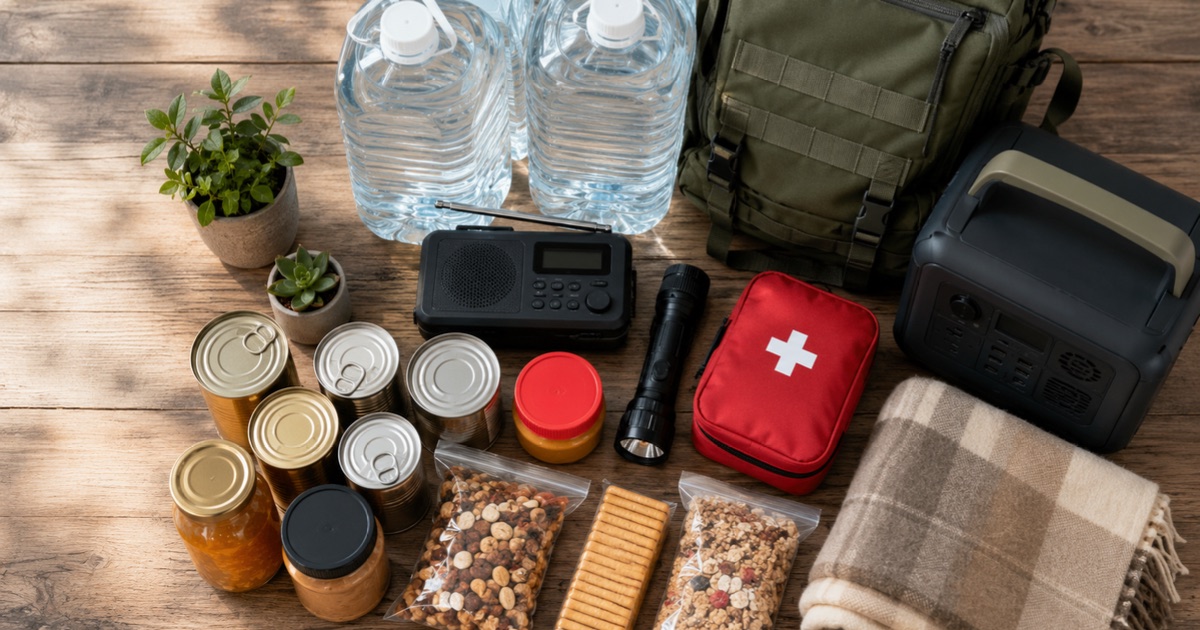
- Store a few days of water and food. Ready.gov's baseline is one gallon of water per person per day for several days, plus food that doesn't need cooking.
- Check your insurance before you need it. Standard homeowners and renters policies typically don't cover flood, and most flood policies take 30 days to start.
- Plan for a power outage. Flashlights, extra batteries, a charged backup battery for phones, and a safe heat plan.
- Make a simple family plan. Who calls whom, where you meet, and what you grab if you have to leave.
If you rent, some of this looks a little different. We wrote a separate guide just for you: El Niño Prep for Renters.
The Bottom Line
El Niño shifts the odds, and this year it's shifting them harder than usual. The south is more likely to see a wet, stormy winter. The north is more likely to see a milder one. Neither is a promise.
The good news is that the prep is mostly the same everywhere, and most of it is cheap. Pick one item from your region's list this week and check it off.
Want a head start? Grab our free printable checklists, including the 72-Hour Emergency Kit and 2-Week Home Prep lists. If you want everything in one place, the Storm-Ready Survival Bundle walks you through it step by step.
Sources
- NOAA Climate Prediction Center, ENSO Diagnostic Discussion (Oct 8, 2026): https://www.cpc.ncep.noaa.gov/products/analysis_monitoring/enso_advisory/ensodisc.shtml
- NOAA Climate Prediction Center, 90-Day Outlook Discussion (Sep 17, 2026): https://www.cpc.ncep.noaa.gov/products/predictions/90day/fxus05.html
- NOAA Climate.gov, "United States El Niño Impacts": https://www.climate.gov/news-features/blogs/enso/united-states-el-ni%C3%B1o-impacts-0
- Office of Governor Gavin Newsom, state of emergency proclamation (Sep 21, 2026): https://www.gov.ca.gov/2026/09/21/governor-newsom-proclaims-state-of-emergency-to-bolster-statewide-el-nino-preparedness-protect-california/
- National Weather Service, Turn Around Don't Drown: https://www.weather.gov/safety/flood-turn-around-dont-drown
- National Weather Service, Before a Winter Storm: https://www.weather.gov/safety/winter-before
- Ready.gov, Build a Kit: https://www.ready.gov/kit
- Ready.gov, Floods: https://www.ready.gov/floods
- Cal OES: https://www.caloes.ca.gov/